
How to Care for a Ragdoll Cat: The Daily and Weekly Routine
Ragdolls are easy cats to look after, provided three things are never skipped.
Last reviewed
How do you care for a Ragdoll cat? More easily than the coat suggests. Ragdolls are good natured, tolerant of handling and forgiving of beginners, which is why they suit first time owners so well. They do ask for three things more than the average cat: company, a comb twice a week, and an interesting life indoors. Get those right and the rest is ordinary good cat care. This page puts the whole routine in one place, by the day, the week, the month and the year, and links to the guide that goes deeper on each part.
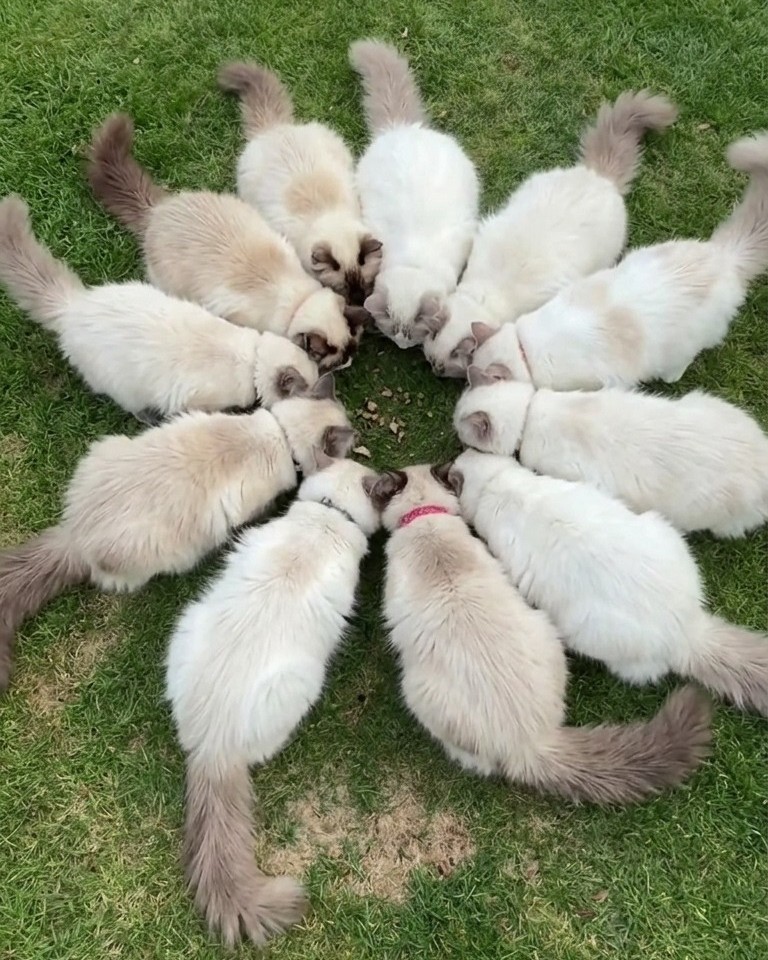
Dinner time in the colony. Most of good cat care is the same few things, done every day.
What every cat needs, by law
In the UK the Animal Welfare Act 2006 places a legal duty of care on anyone who keeps an animal. The vet charity PDSA sums it up as five welfare needs, and they make a useful checklist for a new owner.
- Health. Protection from pain, injury and disease, and treatment when ill.
- Behaviour. The chance to behave like a cat: to climb, scratch, hunt in play and hide.
- Companionship. The right company for the species and the individual. For a Ragdoll that means plenty.
- Diet. A suitable food in the right amount, and fresh water at all times.
- Environment. A suitable place to live, with somewhere comfortable to rest and hide and room to exercise.
Everything below is those five, turned into a timetable.
The daily routine
- Feed measured meals. A complete food suited to the cat's age, weighed or measured, in two or more meals for an adult and more for a kitten. Feeding a Ragdoll has the amounts.
- Refresh the water. Clean bowls, away from the food and the tray. Many cats drink more from a wide bowl or a fountain.
- Scoop the tray. At least once a day, twice if you can. It is also your daily health report: litter training explains what to look for.
- Play, twice. A wand toy session morning and evening, ending with a catch and a meal. An indoor cat's exercise is whatever you provide. See play and enrichment.
- Keep company. A Ragdoll wants to be where you are. Time on the sofa counts.
- Look the cat over. Bright eyes, clean nose, normal appetite, moving freely, coat lying well. You are not examining, only noticing.
What a day with a Ragdoll looks like
Cats like the same things to happen at the same times. A day that works for most households:
- Morning. Breakfast, fresh water, scoop the tray, and five to ten minutes with a wand toy before you start your own day.
- Daytime. Sleep, mostly, with a window to watch from, a scratching post and a puzzle feeder or a few hidden treats to find. Ragdoll sleeping habits explains how much is normal.
- Evening. The main play session, when cats are naturally most active, then dinner, then the sofa.
- Bedtime. A last scoop, a small supper if your feeding plan allows one, and lights out. A cat that has played and eaten sleeps.
A kitten's day is the same shape with more meals, more play and more naps, and somebody around for most of it. Cats for home workers and one kitten or two? are worth reading if the house is empty in the day.
The weekly routine
- Comb twice. A steel comb down to the skin, then a soft brush. Check behind the ears, the armpits, the trousers and the belly, where mats start. Go daily during the spring and autumn moults. How to groom a Ragdoll shows how.
- Brush the teeth, ideally daily and at least a few times a week. Dental care explains how to get a cat used to it.
- Wash the bowls and the bedding, and empty and wash the tray fully as often as your litter type needs.
- Check the claws. Indoor cats often need the tips trimmed. See scratching and claw care.
- Weigh a kitten. Every two to four weeks until six months. The Ragdoll kitten weight chart shows what to expect.
- Swap the toys. Put some away and bring others out. Old toys become new after a fortnight in a drawer.
The monthly routine
- Flea and worm treatment on the schedule your vet sets, indoor cats included. See fleas and worming.
- Weigh an adult and feel its shape. Ribs under a light covering and a waist from above. Ragdolls hide weight under their coats. The hands on body condition check takes a minute.
- Look in the ears and the mouth. Clean and pale pink is right. Dark wax, redness, a smell or red gums want a vet.
- Check the kit. Scratching posts that have gone smooth, a wobbly cat tree, frayed toys with loose threads.
- Walk the house for hazards. New plants, open windows, things that have appeared at cat height. Kitten proofing lists them.
The yearly routine
- A vet check and booster vaccinations. Twice a year from about ten years old, with blood and urine tests.
- A dental check at the same visit.
- Review the insurance before it renews, and read what has changed. Ragdoll insurance explains the small print.
- Check the microchip details are still right, especially after a move or a new phone number. Microchipping and the law explains the rules.
- Plan the holidays. Sitters and boarding places fill up months ahead.
In the first year only
- The vaccination course: two injections a few weeks apart, starting from about nine weeks.
- Neutering by about six months.
- Registering with a vet before collection day, a first check in the first days at home, and insurance in place before that visit.
The first year at the vet has the diary.
What a Ragdoll needs more of than most cats
- Company. This is the trait to plan around. A Ragdoll left alone all day, every day, is an unhappy cat. Households that are out at work do best with two. See can Ragdolls be left alone?
- Coat care. Less than a Persian, more than a moggy. Twice a week is enough if it is never skipped.
- Big kit. A large tray, an adult sized carrier, wide scratching posts and a cat tree that does not wobble under 7 kg.
- A safe life. Ragdolls are trusting and have little road sense, so most live indoors, with a catio, cat proof garden or harness for fresh air. See can Ragdolls go outside?
- Weight watching. A calm, indoor, neutered cat with a good appetite gains weight easily.
- Heart awareness. Buy from parents tested for HCM, insure early, and mention the breed at every vet check. HCM in Ragdolls explains the condition.
The mistakes first time Ragdoll owners make
- Leaving food down all day. Measured meals keep a Ragdoll lean. A full bowl does not.
- Buying kitten sized everything. It is outgrown in months.
- Skipping the comb until there is a mat. Five minutes twice a week prevents an hour with a groomer.
- Expecting the calm adult straight away. A Ragdoll kitten is a kitten for two or three years.
- Assuming an indoor cat needs no vaccines, flea treatment or microchip. It needs all three.
- Waiting to insure. No policy covers what a vet has already noted, so cover needs to start before the first visit.
- Letting it out because it asks. A Ragdoll at the door wants to explore, and does not understand cars.
- Telling a cat off. Cats do not connect punishment with what they did. Redirect and reward instead.
None of this is hard, and all of it becomes habit within a month. The kitten checklist covers what to buy before collection day and bringing a Ragdoll kitten home the first two weeks.
Quick questions, answered
Are Ragdolls easy to take care of?
Yes. They are good natured, tolerant of handling and forgiving of beginners. They need company, a comb twice a week and an interesting indoor life. Beyond that, the care is the same as for any cat.
Are Ragdolls high maintenance?
Moderately. The coat needs combing twice a week and daily in a moult, and the breed dislikes being alone. They are not demanding in other ways: quiet, calm and easy to handle.
Are Ragdolls good for first time owners?
Very. Their relaxed, people centred nature makes them one of the easier breeds to start with, provided someone is at home for much of the day or the cat has a companion.
How often should I brush my Ragdoll?
Twice a week with a steel comb that reaches the skin, and every day for a few minutes during the spring and autumn moults.
Can a Ragdoll be left alone all day?
An adult copes with a normal working day if it has things to do and, ideally, another cat for company. Long days alone, every day, do not suit the breed.
Do indoor Ragdolls need vaccinations and flea treatment?
Yes. Infections and parasites come in on shoes, clothes, visitors and other pets, and a cat may need to stay at the vet or in boarding at short notice. Follow the schedule your vet sets.
Sources and further reading
- PDSA: Your pet's five welfare needs: Health, behaviour, companionship, diet and environment, and the legal duty of care under the Animal Welfare Act 2006.
- Cat Fanciers' Association: Ragdoll breed profile and standard: The coat, the grooming it needs and the slow road to maturity.
Thinking about a Ragdoll kitten?
Our Ragdoll kittens grow up in our home in Ryde, Isle of Wight, with health tested parents and our support for life. See who is available now, or join the waiting list for the next litter.