
Ragdoll Kitten Checklist: What to Buy for a New Kitten
Everything a new kitten needs in the first weeks, grouped by job so you can shop it in an afternoon.
Last reviewed
What does a kitten need? Less than the pet shop suggests and more than a bowl and a box. This Ragdoll kitten checklist is the new kitten shopping list we give our own families for the week before collection: what to buy for a new kitten in the UK, grouped by job, with the things that matter most first. Our kitten pack already includes a scented blanket, a grooming brush, toys, treats and food samples, so do not double up on those. Everything else below is yours to sort, and most of it will still be in use when your kitten is a 7 kg adult.
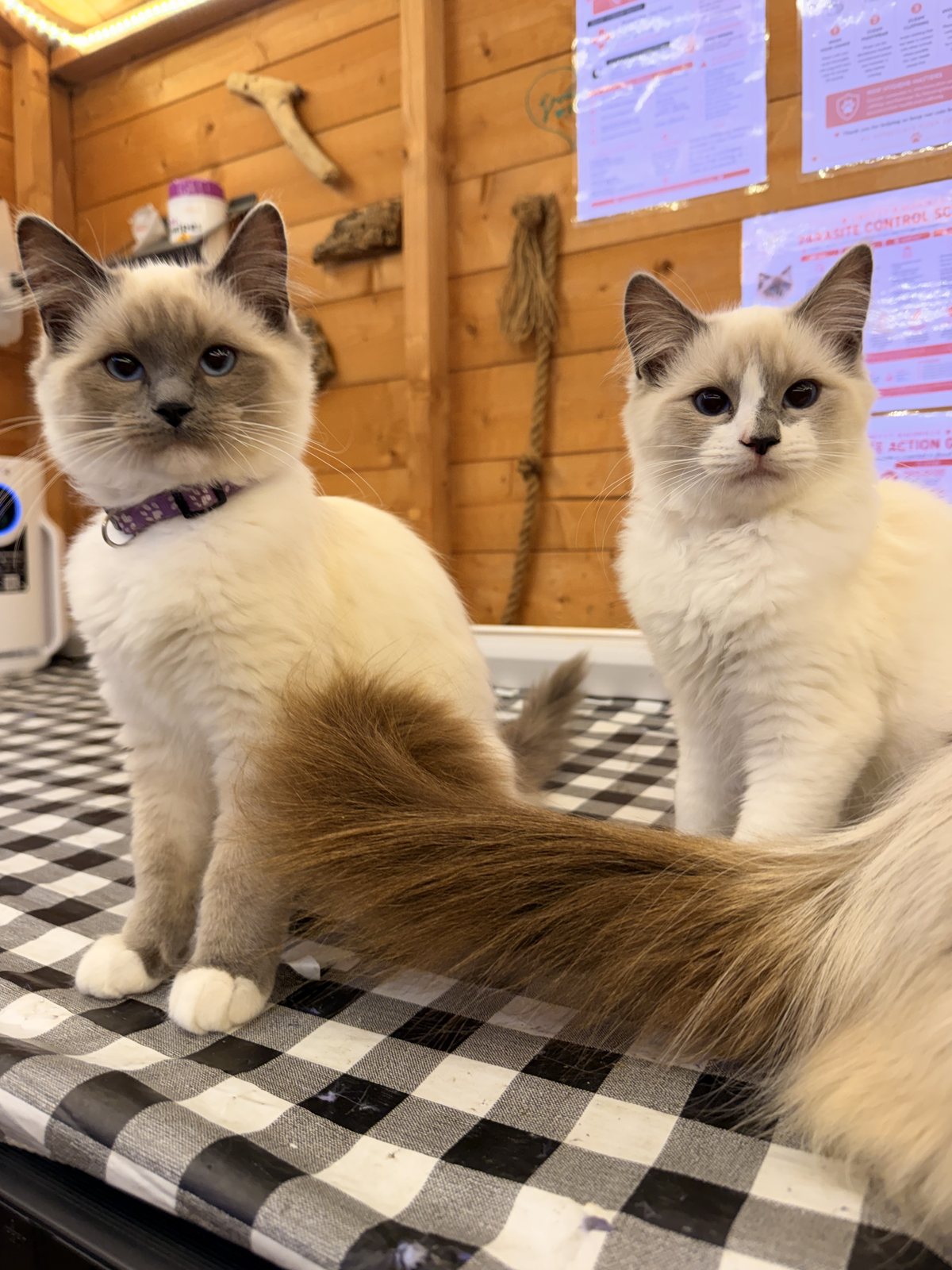
Kittens in the cat house. By collection day they know trays, posts and toys; your job is to have the same waiting.
What does a kitten need? The kitten essentials
Here is the whole list at a glance. Buy it in the week before collection, set the safe room up the day before, and you will spend the first evening watching a kitten rather than hunting for a tray.
- A secure carrier, sized for the adult cat it will become.
- The same food your kitten is eating now, plus wide shallow bowls or a fountain.
- Two litter trays, one low sided to start, and litter of the kind your kitten is used to.
- A bed, a scratching post of 80 cm or more, and in time a cat tree built for a big breed.
- Wand toys, a few small toys and a puzzle feeder.
- A metal comb, a soft brush and claw clippers.
- Insurance in place, a vet registered, the 48 hour check booked and the microchip transfer ready.
- Kitten proofing done: cables, windows, plants, cupboards, machines.
Our kitten pack covers the scented blanket, a brush, toys, treats and food samples, which takes the edge off the bill. The sections below take each line in turn: what to look for, what to skip, and which of our guides goes deeper.
Travel, the first day, food and water
Travel and the first day
Buy a carrier big enough for an adult Ragdoll, which means one sold for a large cat or a small dog, with a solid base, a door that latches properly and ideally a top that opens, so a reluctant cat can be lifted out rather than tipped. A 10 week old kitten rattles about in it; the 7 kg adult will thank you. Line it with a blanket for the journey and lay the scented blanket from the pack on top. Before the kitten arrives, set up one quiet room with everything in it: tray, food, water, bed, post and a hiding place. Settling in explains why one room beats the whole house for the first days.
Food and water
Buy the food your kitten is already eating. The feeding details and samples come in the kitten pack, and the first fortnight is no time for a menu change. Add two or three wide, shallow bowls in ceramic or stainless steel rather than plastic, which scratches and harbours bacteria, and consider a fountain: many cats drink more from moving water, and a Ragdoll that drinks well is less likely to need our urinary guide. Keep water away from the food and the tray. Feeding and wet vs dry cover what and how much.
Litter, sleeping and scratching
Litter
Two trays for one kitten: the usual rule is one per cat plus one, and a kitten with a tray in sight is a kitten that does not improvise behind the sofa. Start with a low sided tray, because a 10 week old Ragdoll is still small and a high wall is a reason to go elsewhere; the big hooded or high sided trays an adult needs can come later. Fill it with the litter your kitten is used to, or an unscented clumping litter, and buy a scoop. Perfumed litter is for people, not cats. Litter types compares the options and litter training deals with the rare accident.
Sleeping and scratching
A bed is cheap and will be ignored in favour of your pillow, but buy one anyway, washable, and put it where the kitten chooses to sleep. The scratching post is the purchase that saves the sofa: 80 cm or taller, so an adult can stretch to full height against it, sisal wrapped, on a base heavy enough not to tip. A cat tree can wait until the kitten has the run of the house, but when you buy one, buy it for the 8 or 9 kg cat it will hold in three years, not the kitten in front of you. Scratching and claw care and a cat friendly home have the detail.
Play and grooming
Play
Two or three wand toys, kept in a drawer between sessions so they stay exciting; a handful of small toys to bat about, which means crinkle balls, fabric mice and the inside of a kitchen roll as much as anything from a shop; and a puzzle feeder, which turns a bored kitten into an occupied one. The pack includes some toys, so start modest and see what your kitten actually likes. Keep string, elastic and ribbon out of reach: they are the classic swallowed object. Play and enrichment explains how much play a Ragdoll needs and how to do it well.
Grooming
A metal comb with wide and fine teeth, a soft brush so the kitten learns that grooming is pleasant, and a pair of small claw clippers. The pack has a brush in it, so the comb and the clippers are the purchases. Start with a few strokes a day in the first week, while the kitten is small enough to be unimpressed rather than unwilling, and the adult coat will never be a battle; Ragdoll grooming covers the routine from there.
Health admin and kitten proofing
Health admin
- Insurance, arranged so that cover starts on collection day rather than when you get round to it. The first weeks are when a swallowed hair bobble is most likely; cat insurance explains what to look for.
- A vet, registered in advance, with the 48 hour check booked. Your kitten leaves us microchipped and vet checked, with a 14 day health guarantee and the records in the pack; the first year at the vet sets out what follows.
- The microchip transfer. The transfer details come with the kitten's paperwork, and the chip must be moved to your name and address. In England keeping it up to date is the law; microchipping and the law explains how.
Kitten proofing
Do it before the kitten arrives, because a kitten finds the one gap you missed within the hour. Cables tidied or covered, windows fitted with locks or mesh, washing machine and tumble dryer doors kept shut, cupboards with cleaning products latched, lilies out of the house entirely and other plants checked. Kitten proofing is the room by room list and poisoning covers what in an ordinary house is dangerous to a cat.
What not to buy yet
A few things look essential in the shop and are not, or not yet.
- A harness. A kitten needs to be settled, vaccinated and a few months older before harness walking is worth starting, and some Ragdolls never take to it. Harness training explains when and how.
- A cat flap. Our kittens go to indoor homes, and a flap is an open door. If you have a catio or an enclosed garden, that is a later project, not a day one purchase; see indoor cats.
- Adult food. Kitten food until around 12 months. Ragdolls grow for three to four years and the kitten formula is doing the work.
- A collar. An indoor, microchipped kitten does not need one, and a growing neck outgrows a collar faster than you notice.
- Duplicates of the pack. Another blanket, more treats and a second brush can wait until you know what your kitten uses.
Buy the carrier, the trays, the post and the insurance first. The rest is detail, and the kitten will let you know what it thinks of your choices soon enough.
Quick questions, answered
When should I buy everything on the new kitten shopping list?
The week before collection, with the safe room set up the day before. Insurance and vet registration should be done earlier still, so cover starts the day the kitten comes home. Buying months ahead is harmless but unnecessary; buying on the way home from collection means a kitten sitting in a carrier while you queue, which is a poor start for everyone.
What are the cheapest things that matter most?
A second litter tray, a tall scratching post, a wide water bowl and a wand toy together cost little and prevent most first month problems: accidents, a shredded sofa, a cat that drinks too little and a bored kitten at midnight. Insurance is the other one. It feels like an extra until the first swallowed object, when it becomes the best money you spent.
Do I really need two litter trays for one kitten?
Yes. The rule is one tray per cat plus one, and for a kitten it matters more, not less: a small cat with a small bladder in a new house needs a tray within easy reach of wherever it is, and a second tray in a second room halves the distance. Two trays also cover you when one is being cleaned. Keep them away from food and water.
Do I need a cat tree straight away?
No. For the first fortnight your kitten lives in one room, and a bed, a post and a box do the job. The tree earns its place once the kitten has the run of the house. When you do buy one, buy it once: a heavy, stable tree built for an 8 or 9 kg adult rather than a light one the kitten outgrows by spring.
Sources and further reading
- Cats Protection: Kitten care advice, including the one litter tray per cat plus one rule.
- PDSA: What a new kitten needs at home and why insurance belongs on the list.
Thinking about a Ragdoll kitten?
Our Ragdoll and Ragcoon kittens grow up in our home in Ryde, Isle of Wight, with health tested parents and our support for life. See who is available now, or join the waiting list for the next litter.