
From our colony to your sofa
Home Alone: Ragdolls & Separation
The velcro breed, the working day, and the plan between them.
Last reviewed
The velcro breed, the working day, and the plan between them.
Last reviewed
Cats have a reputation for aloof independence that Ragdolls never read: this is a breed built for company, and the gap between the working day and the velcro temperament is a real welfare question, not a cute quirk. This page sizes it properly: how long is reasonable, what separation distress actually looks like, and the plan that makes absences boring instead of frightening.
A healthy adult cat with food, water, trays and entertainment handles a standard working day comfortably: the common sense ceiling for routine absence is the working day plus commute, with overnight absences needing cover and anything beyond twenty four hours needing a sitter or cattery, full stop.
Kittens shorten everything: small bodies need meals, supervision and company far more often, which is why our kitten questionnaire asks about household routine. The breed shortens it further in spirit, a Ragdoll copes with the hours; the plan on this page decides whether it merely copes or actually thrives.
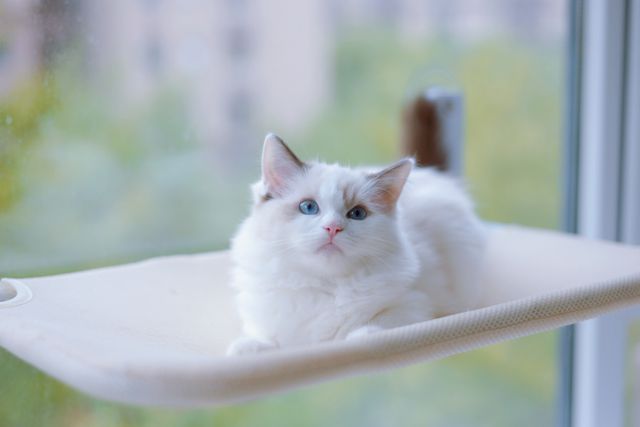
Ragdolls were bred for companionship and it shows: they follow, they supervise, they schedule their day around yours. That devotion is the breed’s glory and its vulnerability, because a cat whose main enrichment is you has a gap where you used to be.
It is why we talk routine with every family before homing and why the strongest single answer is built into our two kitten conversations: a bonded pair keeps the social channel open all day. One Ragdoll waits for you; two Ragdolls live a full feline social life that you rejoin at six.
True separation distress has a signature: vocalising as you leave and long after, door scratching, urinating or spraying on beds and clothing that smell of you, overgrooming bald patches, appetite refusal until you return, and greeting behaviour so intense it borders frantic.
The camera answers what the evening cannot: a cheap pet camera shows whether the day is spent sleeping, normal and reassuring, or pacing, calling and door sitting. Evidence beats guilt in both directions; many worried owners discover a cat who sleeps sixteen unbothered hours.
Before the behaviour plan, the vet check: urinating on soft furnishings is also cystitis and urinary disease, overgrooming is also skin allergies and pain, appetite loss and yowling are also thyroid and blood pressure in older cats. The overlap is nearly total.
The same rule as every behaviour page: one consult either finds the treatable body problem or clears the way for the psychology. Treating anxiety that is actually cystitis fails twice, once for the bladder and once for the trust.
The core fix is a home that runs a full programme without you: puzzle feeders loaded at departure so leaving predicts foraging, window perches over the day’s theatre, the catio open where one exists, rotation toys that reappear fresh, boxes and tunnels reconfigured weekly, radio or television murmuring for the sound sensitive.
Scatter the day: timed feeders firing mid absence break the wait into chapters, and food hidden around rooms turns hours into a hunt. The goal is a day with contents, so your return becomes the best event among several rather than the only event in a desert.
Dramatic goodbyes teach cats that departures are significant: leave boringly, no farewell ceremony, the puzzle feeder down as the coat goes on so the door closing starts something good. Vary the departure cues that trigger anticipatory anxiety, keys, shoes, bags, by handling them at random non leaving moments.
Return the same temperature: greet calmly after the coat is off, pay the calm cat rather than the frantic one, and put the real reunion, play, grooming, lap time, ten minutes in. Frantic greeting rewarded frantically trains tomorrow’s bigger performance.
Some gaps need people: a midday visit from a neighbour, family member or paid sitter transforms long days, cattery or house sitters cover nights away, and never leaving a cat unattended overnight is the line good welfare does not cross.
And the structural answer this breed keeps writing: the bonded pair. Two kittens raised together, or a well matched introduction later, dissolves most separation problems at the root, which is why the one kitten or two guide leans as it does and why so many of our families collect in pairs.
Genuine separation anxiety, distress that survives good enrichment, pairs and routine, earns professional help: vets can prescribe anti anxiety support for the rebuild period, and accredited behaviourists design gradual absence training, minutes stretched to hours, that rewires the fear itself.
Rehoming decisions get made over untreated separation distress, which is the real stake: the escalation path exists so it never gets that far. A Ragdoll’s attachment is trainable precisely because it is attachment; the same bond that feels the gap learns the gap is safe.
Adults handle a working day; nobody handles being an afterthought. Ragdolls feel absence more than most, so run the plan: puzzle feeders at departure, timed feeders mid day, window theatre, catio access, rotated toys, boring exits and calm returns. Camera evidence beats guilt, the vet check rules out the medical impostors, midday visits break long days, nights away always get cover, and the bonded pair remains the structural cure this breed keeps proving. True anxiety escalates to vets and behaviourists before it escalates to rehoming.
A well set up adult copes with the standard working day, and thrives with the enrichment shift, midday cover or a companion this page describes. A single kitten and a sixty hour week is a mismatch to solve before homing, not after.
Young kittens need someone every few hours for meals, safety and company, stretching gradually with age. Plan homing around leave, flexible weeks or family cover; the questionnaire conversation exists for this.
For company driven distress it is the closest thing to a cure, especially bonded siblings raised together. Introductions of a newcomer to an anxious resident need the slow protocol, but done right, the maths genuinely halves.
The bed wetting after your trip is stress and scent seeking, not revenge: your smell soothes, so your duvet gets chosen. It is a flag for better cover next time, never for punishment.
For sound sensitive cats a quiet murmur softens the silence and masks outside noises: it is one layer, not a plan. The feeders, perches and hunts carry the real weight.
One week of footage answers the only question that matters, what the day actually contains. Most owners watch less after the first reassuring week, which is itself the result.
Ragdolls generally prefer their own territory with a daily visitor or live in sitter; catteries suit cats who travel calmly. Either beats a neighbour glancing in; nothing licenses solo nights.
Cats sleep most of any day; the welfare question is what the waking hours hold. The camera shows whether yours wakes to a full house or an empty schedule.
A calm, cat literate dog can be genuine company, and the breed famously accepts them: it is a bigger project than a second cat and a real option for dog households. The introductions guide applies doubled.
The pair question is argued fully in one kitten or two, the day’s contents in play and enrichment, and the stress signals in stress in cats.
For deeper reading, International Cat Care covers cats and time alone, and Cats Protection publishes guidance on leaving cats and holiday care.