
From our colony to your sofa
Weight & Body Condition, Hands On
Hands tell the truth fur hides: the monthly check that catches trends.
Last reviewed
Hands tell the truth fur hides: the monthly check that catches trends.
Last reviewed
Scales tell you a number; hands tell you the truth. Ragdolls are big, slow maturing cats wearing generous fur coats, which makes eyes nearly useless and the monthly hands on check the honest measure of how a cat is really doing.
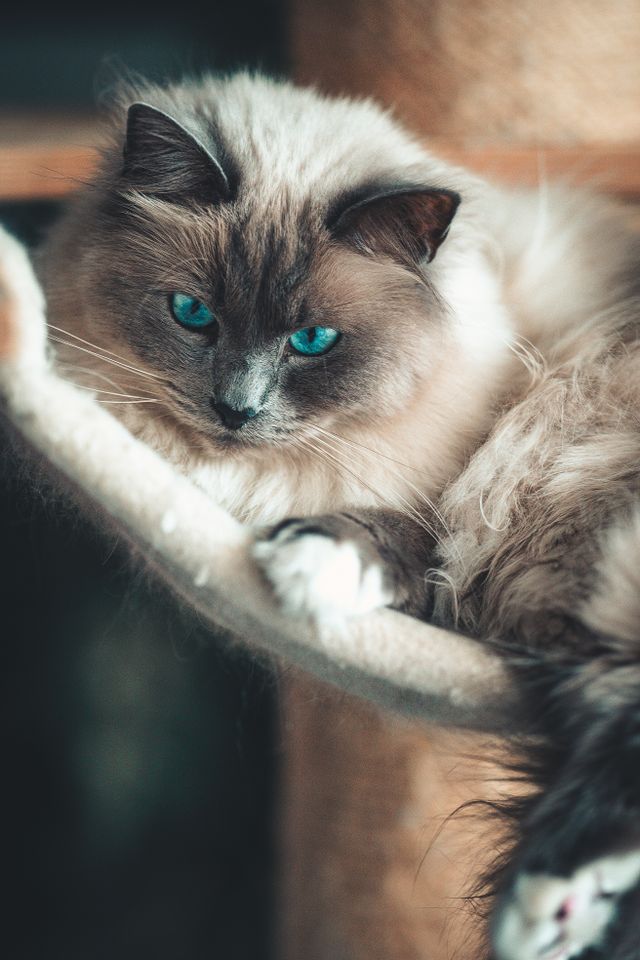
Scales tell you weight; hands tell you condition. The standard check has three stations: ribs, findable under a light stroke as if through a tea towel, not visible and not buried; the waist, a visible tuck when viewed from above; and the tummy, a modest pad being feline normal, a swinging apron being a project. Coat like a Ragdoll’s makes the hands compulsory, because fluff hides sins from the eye.
Run the three stations monthly at the weigh in and note both results. Body condition drifts a station at a time, and the owner who checks with hands catches the drift while it is one station, not three.
Here is the counterintuitive safety fact of feline weight loss: a fat cat that loses weight too fast can develop hepatic lipidosis, a life threatening liver crisis triggered when starvation forces fat through the liver faster than it can cope. Ambitious dieting, or a cat simply refusing an abrupt new regime, can create a genuine emergency out of good intentions.
So feline weight loss runs slow by design, on the order of one to two percent of body weight a week under a vet planned programme, with intake reduced gently and the cat watched for appetite strikes. Any dieting cat that stops eating for more than a day has triggered the exception clause: call the vet.
Portion control fails at the scoop: cups and eyeballs drift generous, so the winning tool is a cheap gram scale and the daily ration weighed once each morning into a container that is the day’s entire budget, treats included at no more than a tenth of it. What is in the container is the negotiation ceiling, however operatic the lobbying.
Then make the cat work pleasantly for it: puzzle feeders and scatter portions slow the gobble, stretch the satisfaction, and burn a little of the budget in the earning. Measured in, earned out, checked monthly by hand and scale: maintenance, solved with kitchen equipment.
Cat weight is rarely gained dramatically: it drifts, a few grams a day from an unmeasured scoop here, a treat surplus there, an activity dip after neutering or in winter, compounding invisibly under a semi long coat until the vet’s annual scales deliver the verdict as a surprise.
The mechanics are the argument for the monthly weigh: home scales catch drift at the hundred gram stage where the fix is a minor portion trim, not a diet project. Nobody notices two kilos arriving; everyone can notice two hundred grams if they actually look.
Feline weight loss has a hard safety rule: fast is dangerous. A cat’s liver responds to sudden calorie collapse by mobilising fat it cannot process, a genuinely life threatening condition, which is why starvation diets and drastic cuts are never the answer however impressive the before photo.
Proper feline weight loss is a vet partnered project: modest deficits, weight loss diets that protect muscle, progress weighed fortnightly, aiming at slow steady percentages. The destination matters less than the gradient; cats descend safely only on gentle slopes.
Portions control most of the ledger, but activity moves real entries too: two or three daily hunt sessions, food made to be worked for through puzzles and scatter feeding, vertical territory that invites climbing, and a household that plays on schedule rather than on guilt.
Activity buys more than calories: it preserves the muscle that dieting alone erodes and keeps joints moving in a breed whose frame appreciates the maintenance. The played with cat loses fat; the merely rationed cat loses fitness with it.
PDSA vet Olivia shows how to weigh a cat at home and what a healthy body shape looks and feels like, which is the monthly check this guide asks for. A number on the scales plus a hands on shape check catches drift months before the vet visit would.
Watch on YouTube PDSA Petwise Pet Health Hub
Scales tell a number; hands tell the truth. Learn the rib test, ribs under a thin, even layer, the waist from above and the tuck from the side, and score condition monthly rather than trusting fur hidden eyes. Ragdolls mature slowly, so lean and leggy at eighteen months is on track, and the drift mechanics run on unmeasured portions and quiet treats. Measured living keeps it stable; weight loss is done slowly and safely, never by crash, and play carries the activity side.
A standardised one to nine scale vets use, reading ribs, waist and belly by hand and eye, with the middle scores ideal. Ask for your cat’s number at every visit and write it down; it turns opinion into a trackable metric.
Hold the cat, weigh both, subtract yourself; or train the cat to sit on baby scales for a treat. Same scales, same time of month, logged somewhere permanent, is all the rigour required.
The breed’s size disguises padding, which is why hands decide: ribs findable under a light layer means big; ribs requiring an expedition means overweight. The frame is genetics; the layer over it is the menu.
Neutering trims calorie needs while appetite persists, so unadjusted portions add weight, which is a maths problem rather than destiny. A modest post neuter portion review prevents the cliche.
Spread the ration across more, smaller meals, employ puzzle feeders to slow and occupy, and pay attention in play instead of food. Begging peaks in week one and fades as the routine convinces.
Slow, steady, vet supervised percentages of body weight per week, reviewed fortnightly, no crash phases ever. The safe gradient is unglamorous and it is the entire method.
Wet’s portion honesty and water content help many dieters feel fuller per calorie, while measured dry works fine in disciplined households. Format is a tool; the measuring is the method.
Lay a flat hand along the ribcage and stroke gently: healthy ribs feel like the bones on the back of your hand, easily found under a light cover. Ribs like bare knuckles mean too thin; ribs lost under cushion mean too heavy. From above there should be a visible waist behind the ribs, and from the side a gentle tuck of the belly. The swinging pouch low on the belly is the primordial pouch, standard feline equipment and not fat, however comical it looks at a trot.
This is a genuinely large breed, males especially, and Ragdolls mature slowly, filling out for three to four years, so a growing yearling is not automatically getting fat. The coat hides gains and losses in both directions, which is why we track trends rather than single numbers: weigh monthly on the bathroom scales, yourself with and without the cat, note it somewhere, and pair the number with the hands on check. The body condition chart on our health page shows exactly what you are feeling for.
Never crash diet a cat: rapid weight loss is genuinely dangerous for feline livers, so all slimming is gradual and ideally vet guided. Weigh food on a digital scale rather than trusting a scoop, move from free feeding to scheduled meals as our multi cat feeding guide recommends, keep treats inside the budget from our treats guide, and prescribe daily wand games from the play guide as the exercise plan with the best attendance record.
Weight loss with a normal or even hungry appetite is a prompt vet visit, because thyroid trouble, diabetes and their friends all begin exactly that way. In older cats, thinning is never just age, as our senior guide insists. Any downward trend across two monthly weigh ins earns a phone call, and that is the quiet payoff of the fridge door weight note: trends caught early are cheap, small problems, and trends caught late are neither.
For structured weight management help, International Cat Care publishes body condition guides with images, and the PDSA offers a free vet designed weight programme.