
From our colony to your sofa
Feeding, from Kitten to Cat
Growth months, complete foods, water, weight, and the never foods.
Last reviewed
Growth months, complete foods, water, weight, and the never foods.
Last reviewed
Ragdolls are big cats that grow slowly, still filling out at three or four years old, so how you feed the first year quietly shapes the cat you get. This guide covers what to feed, how much, and the foods that must never reach a cat bowl. For settling a brand new kitten, the golden rule lives in our settling in guide: change nothing for the first fortnight.
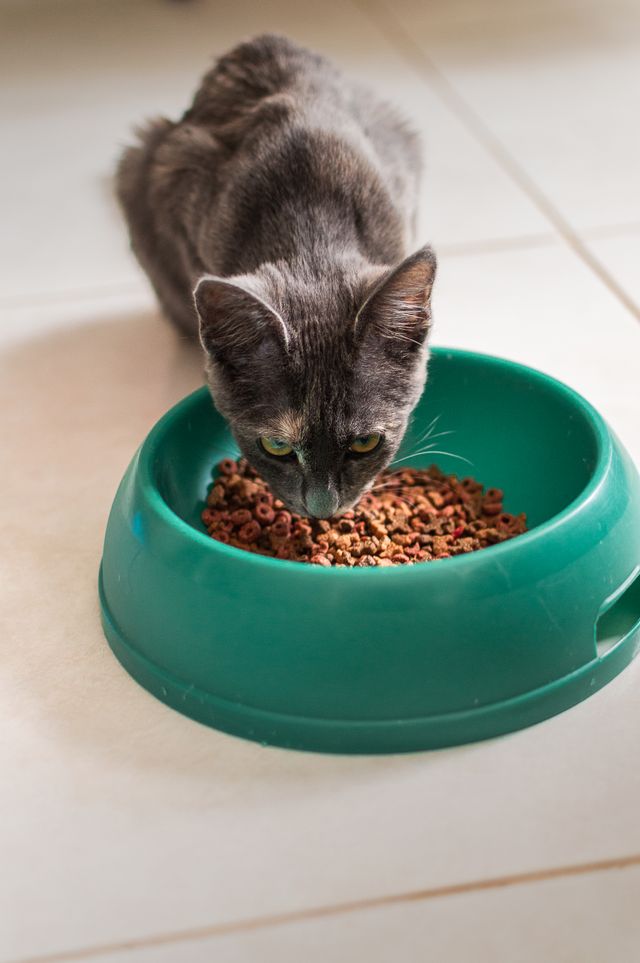
Cats are obligate carnivores, a phrase with teeth in it: their bodies require nutrients that in nature only come packaged in prey, taurine for hearts and eyes, preformed vitamin A, particular fatty acids, and protein in quantities that would surprise a dog owner. They cannot manufacture these from plant ingredients the way omnivores manage.
This is why dog food is not an economy but a slow deficiency, why vegetarian diets and cats are a veterinary hard no, and why complete cat food is the phrase to trust on a label: it is a legal promise that the whole contract has been met, every nutrient, every bowl.
Whatever a kitten or new cat ate before arriving is, for the first fortnight, the correct food, full stop: a house move is upheaval enough for a small digestive system without a menu revolution on top. Continuity is why good breeders tell you exactly what a kitten has been raised on and send the details home in the paperwork.
After the settling fortnight, any change you fancy runs on the gradual gearbox: a quarter new for a few days, then half, then three quarters, watching the litter tray as the referee throughout. The tray votes on every transition, and its verdict overrules the calendar.
The feeding guide on the packet is a starting bid, not a verdict: it is calculated for an average cat, and your cat is a specific one. Begin there, then let the monthly weigh and the hands on condition check adjust the number, down for the sofa athlete, up for the growing, the pregnant and the genuinely busy.
Life stage matters as much as amount: kittens need kitten formulation’s density for growth, adults need maintenance, and seniors often benefit from tailored recipes, with each shift timed with your vet rather than the marketing calendar. Feed the animal in front of you, weigh the results, repeat.
Every complete food carries a feeding table, and the table’s number is where you start, not where you finish: guides are averages across cats of wildly different builds and engines. Feed the printed amount for your cat’s target weight, then let the monthly weigh and the body check overrule the print.
Adjustments are small and patient, a modest change held for a fortnight before judging, because weight moves slowly in both directions. The cat in front of you is the only authority the packet defers to.
Feline stomachs vote on sudden menu changes, and they vote messily, so every food switch runs the seven day glide: three quarters old to one quarter new for a couple of days, then half and half, then the balance reversed, then fully across, slowing at any sign of protest.
The same glide applies when a kitten graduates to adult food and when medical diets arrive, unless your vet directs otherwise. There is no prize for a fast transition, and the slow one costs nothing but patience.
Cats descend from desert animals with a famously weak thirst drive, so hydration is engineered rather than assumed: bowls in several rooms, wide and shallow so whiskers clear the rim, refreshed daily, and stationed away from food and trays because instinct distrusts water near either.
Wet food is the quiet hero, carrying most of a meal’s water inside it, and fountains genuinely help the running water enthusiasts. The habit worth building is noticing: a cat suddenly drinking conspicuously more or less has said something worth repeating to a vet.
Ragdolls are accomplished beggars with tragic faces, and the household’s job is monetary policy: meals and measured treats are the currency, and the human resolve is the central bank. Feeding the face teaches the face to work harder, and the arithmetic of a few extra biscuits a day compounds into a waistline problem by year’s end.
The workable compromise is ritual: a tiny, counted treat moment at fixed points in the day, attention and play offered generously in place of snacks, and the treat allowance carved out of the daily total rather than added to it. The cat keeps the ceremony; the vet keeps approving the weigh in.
Cats Protection’s behaviour team cover the eating habits behind this guide: why cats graze, why bowl position matters and how feeding fits their solitary hunter wiring. A useful watch before you settle on a feeding routine.
Watch on YouTube Cats Protection
Ragdolls grow slowly, filling out over three to four years, so the first year’s feeding quietly shapes the adult. Honour the carnivore contract with meat led complete food, keep continuity through the move with the pack’s samples, and change foods gradually over a week or more. Portion by body condition rather than the packet’s generosity, treat water as the silent half of the diet, and refuse to fund the begging economy. The label skills live next door in food labels.
Two to three measured meals suits most adults, with the day’s total fixed regardless of how it is split. Grazing from an always full bowl is the pattern that quietly builds weight in less active indoor cats.
Either can be complete on a good quality food, and many households land on a mix: wet for hydration and appeal, dry for convenience. Our wet versus dry guide walks the trade offs in full.
For adults holding a healthy weight, a small measured portion is fine if mornings are desperate; for the well padded, an empty bowl overnight does no harm at all. Kittens are the exception and keep their little and often schedule.
Milk troubles most adult cats’ digestion, tuna is a treat not a diet, and human plates carry seasoning, onion and richness cats should not share. Plain cooked meat as an occasional counted treat is the safe end of the spectrum.
Slow the delivery: puzzle feeders, a slow bowl, or the portion spread across a flat tray all force pacing. If gulping and regurgitation persist despite pacing, mention it at the vet, because occasionally there is more to it than enthusiasm.
Cats are obligate carnivores, built to run on meat, so a complete commercial cat food does the nutritional heavy lifting for you. We feed a mix of wet and dry: wet food carries water into a species that famously drinks too little, and dry food suits grazing and keeps teeth busier. The word to look for on any packet is complete, which means it contains everything a cat needs with nothing to add. That is also why healthy cats on complete food do not need vitamin supplements, whatever the internet sells.
Kittens have tiny stomachs and enormous ambitions, so they eat small meals frequently: around four a day at twelve weeks, easing to three, then two or three by six months. Kitten food matters, because it is denser in the protein, fat and minerals a growing body demands. Keep fresh water in more than one spot, away from food and trays, and skip milk entirely, since most cats are lactose intolerant and cows’ milk means upset tummies.
Feeding guides on packets are starting points, not gospel, so let body shape guide you: you should feel ribs easily under a light fur layer and see a waist from above. Treats live inside a ten percent ceiling of daily food, and the fastest eaters in our colony taught us the value of slow feeder bowls, which turn inhaling into dining. Everything we feed, from kitten food to the adult version they graduate onto, stays stocked on the Cat Shop page so continuity is easy.
Onion and garlic in all forms, chocolate, grapes and raisins, alcohol, caffeine, raw dough, and cooked bones are the classic dangers, and dog food fails cats over time because it lacks taurine. Tuna as an occasional treat is fine; tuna as a lifestyle is not. If something dodgy has already been eaten, the emergency numbers and red flags live in our health basics guide.
Wondering about a specific food or a fussy phase? Message us, we have seen every kind of eater.
For feeding science in owner language, International Cat Care maintains an excellent nutrition hub, and the PDSA publishes free vet written diet guides.