
From our colony to your sofa
The First Year at the Vet
Vaccinations, microchip law, neutering and insurance, mapped simply.
Last reviewed
Vaccinations, microchip law, neutering and insurance, mapped simply.
Last reviewed
A kitten’s first year has a rhythm of vet visits, and knowing the map in advance turns them from worries into routine. Here is what the year usually holds, and the questions worth asking at each stop.
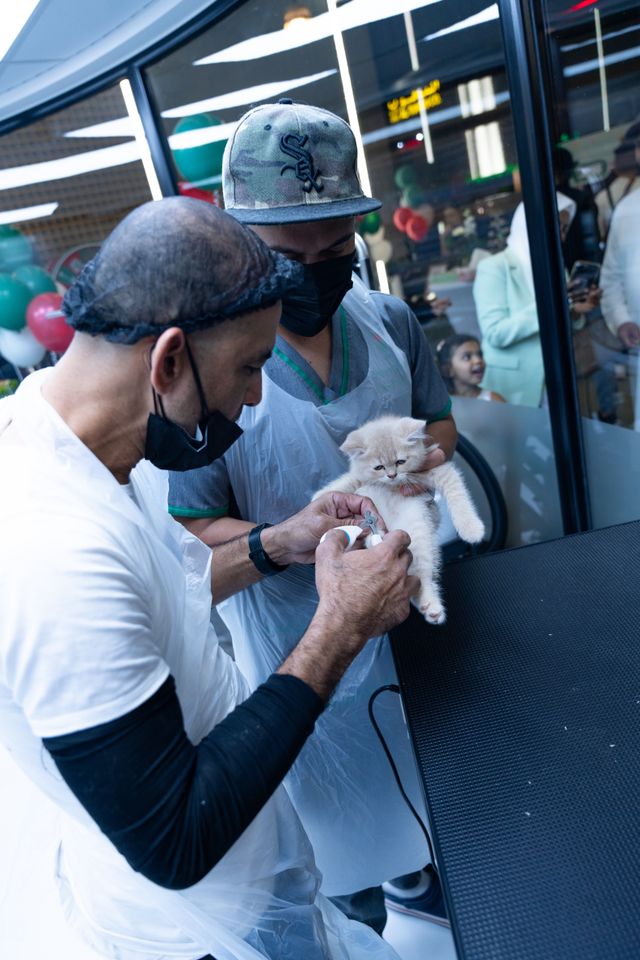
The first year’s vet rhythm has a logic worth seeing whole: the primary vaccination course builds the immune foundations on a schedule your practice sets, the check ups around it let a professional watch growth, teeth and development while problems are small, and somewhere in the middle sits the neutering conversation, timed to your kitten rather than to folklore.
Microchipping threads through it too, now a legal requirement for owned cats in England, with the details registered and kept current when you move. One year of showing up on schedule buys a baseline the next fifteen years of care will lean on.
Neutering earns its place through health and household maths: it removes whole categories of disease and dramatically calms the behaviours that make entire cats hard to live with, from spraying to wandering. The interesting question is not whether but when, and for a slow maturing, larger framed cat the timing conversation genuinely belongs with your vet, who weighs growth, behaviour and household risk for the individual in front of them.
The useful preparation is honesty about your setup: other cats, outdoor access plans, any escape artistry already displayed. Those facts move the recommendation more than anything a forum thread will tell you.
The unglamorous first year decision with the longest shadow is insurance, and its central mechanic is simple: policies exclude conditions that appear before cover starts, so the value of insuring is highest at the exact moment the medical history is one blank page. Waiting for the first problem is precisely backwards.
The policy type matters as much as the timing: lifetime cover renews ongoing conditions year after year, while cheaper annual policies can wave goodbye to a condition at renewal. Read for that difference, set the excess where a bad month could actually pay it, and file the documents with the vaccination card, because the two work as a set.
The first visit is really a survey: weight logged as the baseline every later number refers to, heart listened to, mouth, ears, eyes and coat checked, worming and parasite cover reviewed, and your questions, written down beforehand, answered while the kitten charms the nurses.
It is also the visit where the relationship starts being built deliberately: treats from the staff, unhurried handling, the carrier praised rather than snatched away. A kitten whose first appointments were pleasant becomes a cat whose lifetime of vet care is manageable.
The difference between a cat who tolerates the vet and one who dreads it is mostly manufactured in year one: the carrier living in the home as furniture, short happy visits where nothing medical happens if your practice offers them, calm car journeys that end in treats, and appointments booked at quiet times.
Ask whether your practice runs cat friendly or cat only clinics; many do, with feline waiting areas away from dogs. Every pleasant early visit is a deposit in an account the cat will draw on for sixteen years of check ups.
Year one carries a small stack of administration that matters enormously later: the microchip’s registration transferred into your name and address, insurance activated early while the medical history is spotless, and a single folder, paper or digital, holding every record the kitten accumulates.
The transfer step is the one most often missed: a chip registered to a previous keeper is a lost cat’s worst paperwork. Ten minutes on the database website closes the gap, and the annual renewal email becomes your reminder to keep details current.
Appointments run better with a short written agenda: what weight should this kitten be at the next visit, what parasite cover suits our household, when would you time neutering for this cat, what out of hours service covers us, and what would make you want to see this kitten sooner?
Vets consistently say the same thing: they would rather answer five small questions than untangle one neglected problem. The owner with a list is not a nuisance; they are the practice’s favourite kind of client, and their cat collects the benefit.
A kitten’s first year has a rhythm of visits: the early health check, the vaccination course, the neutering conversation by six months, then the settling into annual boosters. Use the first appointment to make the practice a friend, ask the money questions about health plans and insurance out loud, and keep the admin year tidy, records filed, microchip details current. A kitten who learns that vet trips are boring and paid in treats stays easy to protect for life.
The course and its timing are your vet’s call, mapped at the first visit around your kitten’s start and your household’s risks. Bring whatever paperwork came with the kitten so the plan continues rather than restarts.
Before the first symptom of anything: policies exclude pre existing conditions, so the cleanest cover is bought while the history is one line long. Compare lifetime policies specifically; they matter most in later years.
Annually for most healthy adults, moving to twice yearly in the senior years. The rhythm matters because cats hide illness, and the scheduled check is where hidden things get found.
For nearly all pet cats, yes: beyond preventing litters it removes hormone driven behaviours, roaming urges and several health risks. Timing is individual, which is exactly what the neutering conversation with your vet decides.
It varies by area and choices, so ask your practice for their kitten package pricing and build a small monthly buffer besides. Budgeting realistically in year one is easier than every alternative.
Register with a practice before you collect your kitten and book a check for the first week home. The vet will listen to the heart, check eyes, ears and tummy, and set the plan for everything below. Bring your kitten’s paperwork, ask about the practice’s out of hours cover, and use the visit to make the carrier and the vet table boring, treats included, which pays off for a lifetime.
Kitten vaccination is a short primary course of injections a few weeks apart, protecting against the serious feline infectious diseases, followed by boosters your vet will schedule. Your own vet sets the right timings for your kitten, and keeping that schedule is one of the biggest single things an owner does for lifelong health. Ask them what is covered and note the dates somewhere you will actually look.
In England, microchipping is a legal requirement for pet cats, with kittens to be chipped by twenty weeks old, and keeping your contact details current on the database matters just as much as the chip itself. Neutering commonly happens from around four to six months and your vet will advise the right timing for your kitten; it prevents unwanted litters, ends the drama of calling and spraying, and supports long term health. Flea and worm cover runs on a schedule your practice will set, and vet supplied products beat supermarket spot ons comfortably.
Insure while your kitten is young and premiums are kindest, before anything is ever on the record, and choose lifetime cover if you can. Then build the habit that outlasts year one: a weight check whenever you pass the practice, and the weekly hands on fuss from our health basics guide that doubles as an early warning system. A kitten who finds the vet boring at one becomes a cat who is easy to help at ten.
For the official view on kitten care schedules, the PDSA covers vaccinations and neutering plainly, and Cats Protection publishes practical kitten timelines.