
From our colony to your sofa
Indoor Cats, Genuinely Happy
Why safe beats roaming for trusting breeds, and enrichment that works.
Last reviewed
Why safe beats roaming for trusting breeds, and enrichment that works.
Last reviewed
The question behind the question is usually guilt: is it fair to keep a cat indoors? For breeds like ours the honest answer is that indoors, done properly, is both the safer and the kinder life. The doing properly part is this guide.
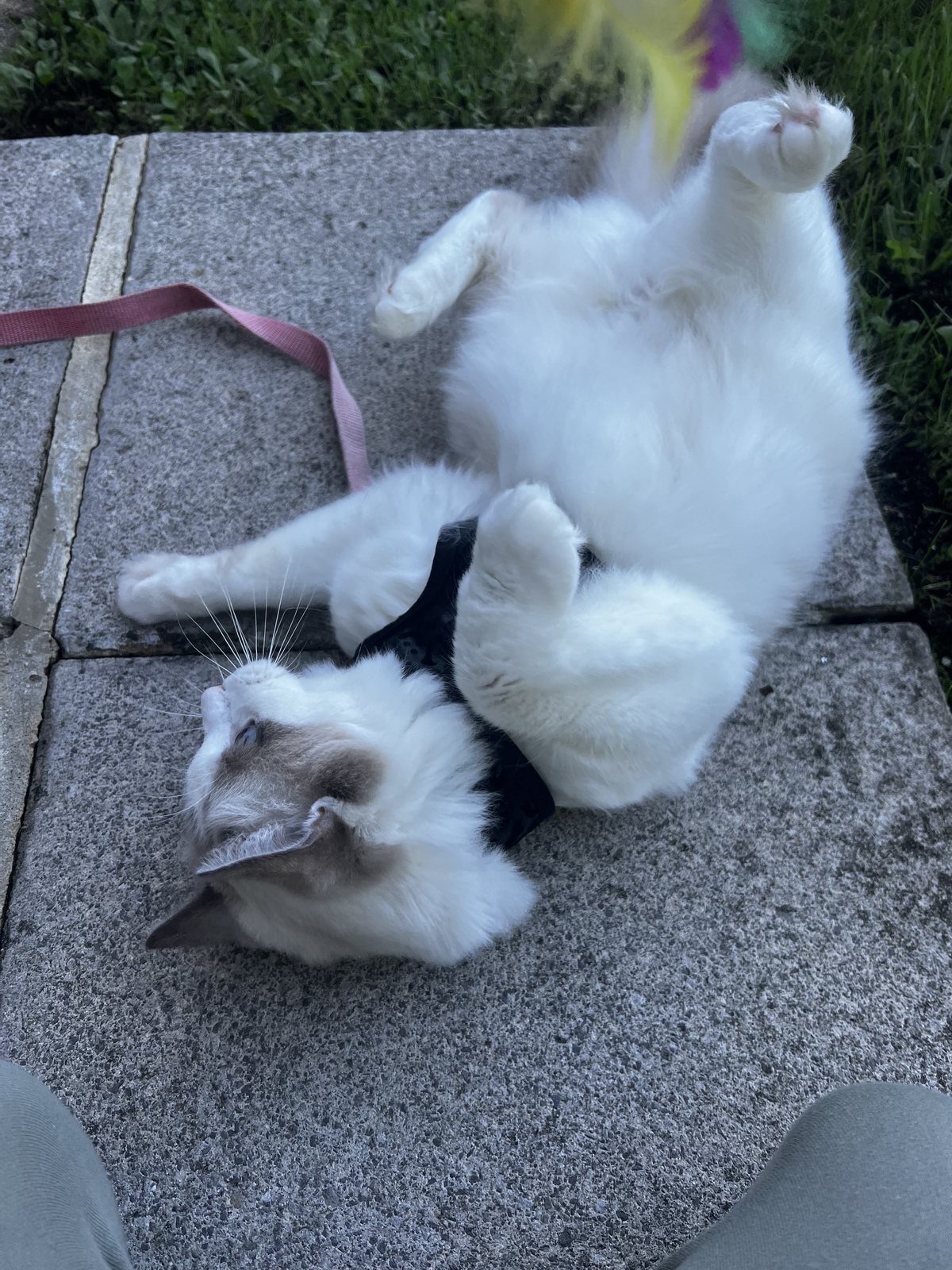
Choosing indoor living signs a contract: the risks of roads, fights and theft are cancelled, and in exchange the owner takes over the stimulation the outdoors used to provide. An indoor cat’s hunting hours, puzzle solving and novelty budget become household responsibilities, scheduled like feeding.
The contract in practice: daily interactive play that ends in a catch, foraging built into meals, rotation of toys so Tuesday smells different from Monday, and training minutes that give the clever brain employment. Indoor cats do not need less life; they need it delivered.
A window with a comfortable perch is indoor television, and its programming can be improved: a bird feeder placed safely beyond reach outside turns a blank pane into a wildlife documentary with seasons, plot and matinees. Sunbeam scheduling comes free with the listing.
Multiply channels through the house, different rooms, different aspects, different shows, and add a pot of cat grass for the interactive segment. The cheapest enrichment in this library is a bag of bird seed and a windowsill cushion.
Unmet stimulation posts its complaints predictably: overgrooming stripes on flanks, night choir performances, door dashing, drapery mountaineering, and the ambushing of ankles by a predator with no other employment. These are not naughtiness; they are a jobs shortage.
The response is auditing the contract, more hunts, more foraging, more novelty, more altitude, and where one cat’s appetite for life outruns one household’s hours, the honest considerations are a feline colleague or safe outside access by catio or harness. Boredom is the one indoor disease that is entirely curable.
An outdoor cat’s day is structured by hunting: patrol, stalk, pounce, eat, groom, sleep, repeat. Indoor life removes the structure and leaves the drive, and the difference between a contented indoor cat and a frustrated one is largely whether the household rebuilds that cycle on purpose.
Rebuild it with routine: interactive wand play that ends in a catch, followed by a meal, followed by the long wash and sleep, run at roughly the same times daily. Ten minutes twice a day of proper hunt simulation defuses more indoor mischief than any purchase in the pet shop.
Scratching is non negotiable feline maintenance, claw care, stretching, and territorial signage, so the indoor question is never whether but where. The treaty terms: tall, genuinely stable posts a full adult Ragdoll can stretch against, horizontal boards for the floor scratchers, placed where the cat actually lives, beside sleeping spots and room entrances, not hidden in utility corners.
Material matters, sisal and corrugated card outperforming carpet remnants that teach exactly the wrong lesson. Defend the sofa by outcompeting it: better textures, better locations, praise on use, and the furniture conversation largely ends.
Indoor territory is small, so its resources carry weight: the working formula is one resource set per cat plus one spare, trays, water, beds, scratchers, all spread through the home rather than clustered. Even a single cat benefits from choices; multi cat homes depend on them.
Duplication prevents the quiet resource guarding that reads as randomness: the ambush by the tray corridor, the bullied cat drinking at strange hours. Geography does the diplomacy, and the spare of everything is the cheapest peace treaty in cat keeping.
Indoor only need not mean air locked: a secure catio delivers sunshine, breezes and bird television with the risks fenced out, harness and lead training suits the patient minority, and even a supervised garden potter on a long line offers sensory variety some cats relish.
Every middle path keeps the core promise, no unsupervised roaming, while widening the sensory diet. Our catio guide covers the gold standard; the point here is that the indoor decision is a spectrum with several safe stops, not a binary between bubble and traffic.
Cats Protection’s indoor cat film covers the things to think about before deciding a cat will live inside and how to care for one well once it does, which is the enrichment and outlet argument this guide makes. Watch it before the first week, not after the first scratched sofa.
Watch on YouTube Cats Protection
Indoor life suits Ragdolls superbly when the home works for its living: vertical territory, daily interactive play, scratching real estate, puzzle feeding and window entertainment replacing what the streets would have offered, minus the cars, fights and diseases. The indoor contract is enrichment in exchange for safety, and a bored cat is the sign the contract needs renegotiating.
No, the reverse: the breed’s trusting, placid nature makes unsupervised roaming genuinely dangerous, and Ragdolls adapt to enriched indoor life exceptionally well. The cruelty question attaches to bare rooms, not closed doors.
Two or three short interactive sessions daily, ten minutes or so each, beats an hour of ignored toys: it is the human on the wand that makes play hunting. Rotate solo toys weekly so novelty survives.
Upgrade the indoors instead: more vertical space, window perches, scheduled play before the crying hour, and a catio if feasible. Door dashing rewarded once becomes a campaign; enrichment addresses the appetite behind it.
Yes: viruses travel on shoes and clothes, fleas commute on visitors, and open windows admit more than air. The schedule may adjust to lifestyle, but that calibration is your vet’s, not the sofa’s.
Only if calories ignore the activity level: measured meals, puzzle feeders and real play keep indoor waistlines honest. The monthly weigh catches drift while it is still a tweak rather than a diet.
Many Ragdolls genuinely thrive with a feline friend, especially in households out all day, but pairing is about matched temperaments rather than blanket rules. Our one kitten or two guide walks that decision through.
Outdoor life shortens feline lives through roads, other cats, disease and misadventure, and it lands hardest on trusting, people orientated breeds with no streetwise instincts, which describes a Ragdoll exactly, as our temperament guide explains. Ours live indoor lives with a catio, and the fifteen of them constitute a fairly persuasive study in feline contentment.
Territory in three dimensions: perches, shelves and a window seat with something moving outside. Legal outlets for instinct: daily hunting play from our play guide, scratchers in the living spaces, puzzle feeders that make food an occupation. Choice and privacy: more than one cosy retreat, trays in calm spots, and the option to be alone. And company, because the true enemy of the indoor cat is not the closed door but the empty house, which is where a second cat earns their keep, as covered in one kitten or two.
Outdoors and safety are not opposites. A catio, from a window box to a walk in run, delivers sunshine, breezes and bird television with none of the roads. Harness training works surprisingly well started young, ten patient minutes at a time. Secure garden fencing systems exist for the committed. All of it is bonus rather than requirement: an enriched indoor cat is not a deprived cat waiting for parole.
If your indoor cat plays daily, scratches the scratcher and not the sofa, keeps a healthy weight per our feeding guide, and greets you at the door with tail up, you are not failing them by keeping them safe. You are the reason they will still be doing all of it at fifteen.
For indoor enrichment programmes, International Cat Care covers the subject superbly, and Cats Protection adds practical activity ideas.