
From our colony to your sofa
Fleas: Spotting & Stopping Them
The itch, the check, the fix and the follow through.
Last reviewed
The itch, the check, the fix and the follow through.
Last reviewed
Fleas are tiny, fast and remarkably good at staying hidden. By the time you see one, there are usually many more, because adult fleas on the cat are only a small fraction of the problem: the eggs, larvae and pupae live in carpets, bedding and skirting boards, waiting their turn.
They bite, they itch, they can trigger genuine skin allergies, and in kittens a heavy burden can even cause anaemia. They also carry tapeworm eggs, which is why the two problems so often arrive together.
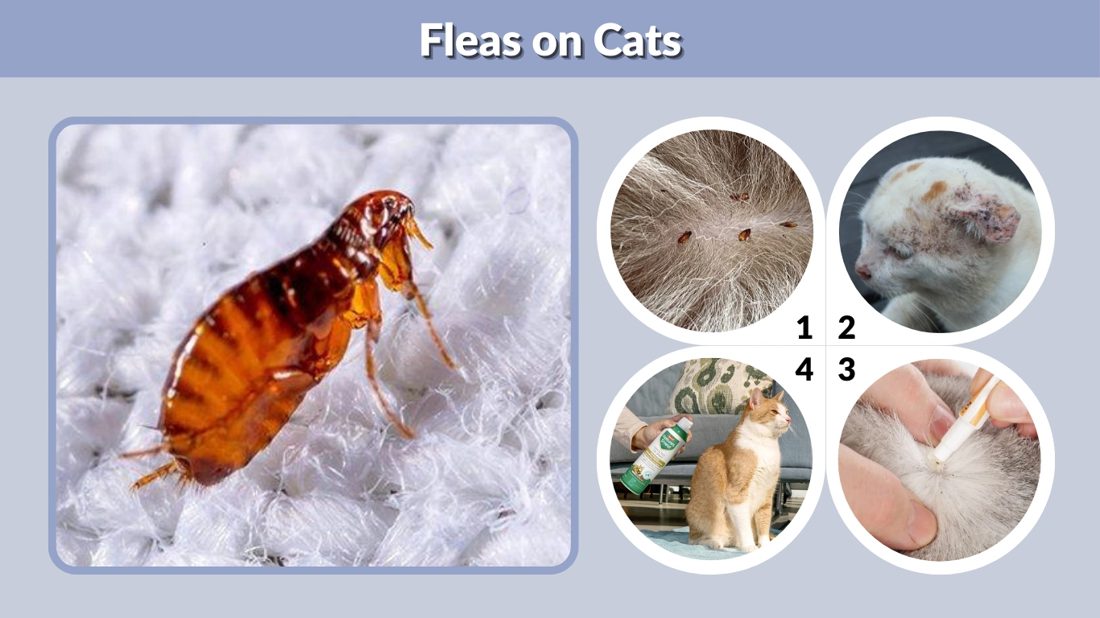
Sit your cat on a white towel or sheet of paper and comb through the coat with a fine flea comb, concentrating on the base of the tail, the neck and the tummy. You are looking for two things: the fleas themselves, fast brown specks that dive for cover, and flea dirt, tiny black grains that look like ground pepper.
The classic test: dab any black specks with a damp cotton pad. Flea dirt smears reddish brown, because it is digested blood. Ordinary garden dirt stays black. That smear is your answer even if you never see a single live flea.
Treat every animal in the house with a vet recommended product, on the schedule your vet sets, because pet shop and supermarket products vary wildly in how well they work and a few are genuinely unsafe for cats. Never use a dog flea product on a cat: some contain permethrin, which is toxic to felines.
Then treat the house, because most of the flea population is living in your soft furnishings: wash bedding hot, vacuum thoroughly and daily for a couple of weeks including under furniture, and empty the vacuum outside. Expect stragglers for a few weeks as pupae hatch; that is the cycle emptying, not the treatment failing.
Year round prevention beats firefighting, and modern central heating means fleas no longer take winters off. A regular vet prescribed preventative, a weekly flea comb habit and hot washing of favourite bedding keeps the door shut.
In our colony, parasite prevention runs on a written rota, which is exactly the level of boring consistency fleas cannot survive.
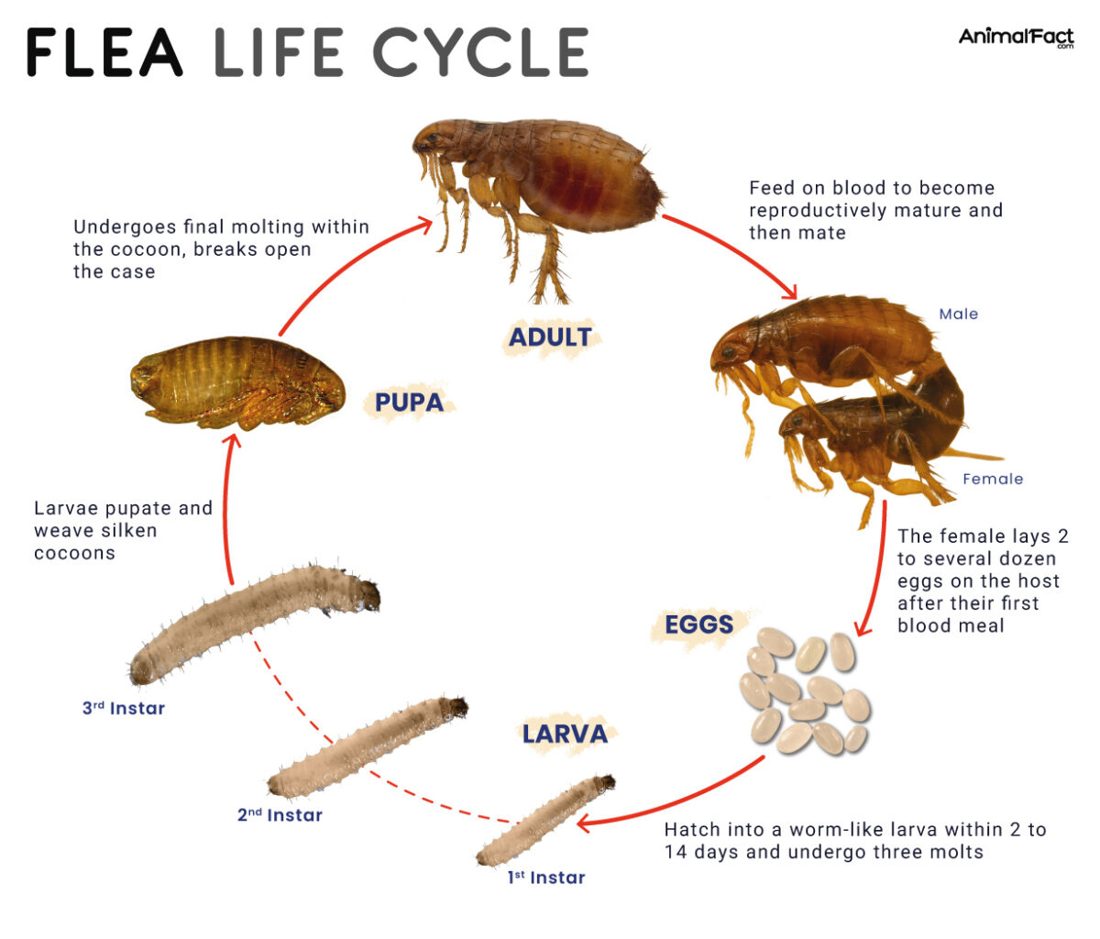
A flea’s life runs egg, larva, pupa, adult, and only the adults live on your cat. The eggs roll off into carpets and bedding within hours of being laid, the larvae burrow away from light into fibres and floorboard gaps, and the pupae wrap themselves in sticky cocoons that hoovers and treatments cannot touch.
Those pupae are the whole reason flea problems feel endless. They can wait for months, hatching only when warmth, vibration and breath announce a host, which is why an empty house can produce a welcoming committee the day you move in, and why new fleas keep appearing for weeks after a perfectly good treatment. Around ninety five percent of the population is always in the home rather than on the cat, so the house is the battlefield and the cat is simply where the winners go to eat.
Garlic, brewer’s yeast, vinegar rinses and citrus sprays have devoted fans and no meaningful evidence, and garlic is actively toxic to cats in quantity. Money spent on folklore is money the flea population survives.
The other great myths: that indoor cats cannot get fleas, when fleas commute happily on trousers and second hand furniture; that you would surely see them, when cats groom out most of the evidence and an allergic cat can be driven wild by a single bite an hour; and that winter is safe, when central heating turned every British living room into flea summer decades ago. Year round prevention exists precisely because the off season no longer does.
Tiny kittens change the rules completely. Most flea products carry minimum ages and weights for good reason, and using an adult product on a two week old kitten is genuinely dangerous. For very young litters the safe toolkit is a flea comb, a bowl of warm soapy water for the catch, warmth afterwards, and treating the mother with an age appropriate vet product so she stops being the buffet.
Any breeder or rescuer facing fleas on a young litter should have the vet on the phone the same day, both for safe product choices and because flea anaemia in kittens escalates quietly. This is one of those corners of cat care where improvising is the expensive option.
A fine toothed flea comb is the cheapest diagnostic in pet care: worked slowly through the coat over a sheet of white paper, especially around the neck and tail base, it harvests either fleas themselves or their droppings, black specks that smear rust red on damp paper because they are digested blood.
That red smear test settles the is it fleas question in five minutes, distinguishing flea dirt from ordinary garden grime, and repeat combing sessions become your progress meter during a campaign. The comb never lies, which is more than can be said for a quick visual once over of a plush Ragdoll coat.
Some cats develop flea allergic dermatitis, an allergy to flea saliva in which a single bite ignites weeks of misery: frantic scratching, scabby rice grain crusts along the back and tail base, overgrooming down to bald patches. In these cats the visible flea count is irrelevant; one visitor is one too many.
Allergic cats change the strategy from control to exclusion: rigorous year round prevention for every pet in the house, no gaps, no seasonal pauses, plus veterinary help calming the skin when a breach happens. If your cat scabs at the tail base every summer, this paragraph is probably about your cat.
The idea that fleas are a summer problem predates central heating: modern homes hold flea friendly temperatures all year, and the pupae dozing in carpets hatch happily in January. Vets see flea cases every month of the calendar, often worst in autumn when heating comes on and wakes the household’s dormant stock.
The practical conclusion is unglamorous: prevention runs year round, on the schedule your vet recommends, because the gap month is when the cycle restarts. Stopping treatment in November is the single most common way a cured house relapses by February.
PDSA vets show how to apply a spot on flea treatment correctly so it does its job. Watch it once and the monthly routine in this guide becomes a thirty second task.
Watch on YouTube PDSA Petwise Pet Health Hub
Fleas are the itch with a life cycle: adults on the cat are a fraction of the problem, because eggs and larvae carpet the house. The comb over damp white paper is the truth teller, black specks turning rusty red confirm it. Fix means vet grade treatment for every pet on the same day plus treating the home, since shelf products fail often enough to cost the campaign. Fleas ferry tapeworms, so the worming calendar joins in, and prevention is cheaper than any infestation.
They bite people, usually around ankles, but cannot live and breed on us; we are the snack, not the home. Human bites during an infestation simply confirm the carpet population is thriving.
Modern products start killing within hours, but expect to see stragglers for weeks: those are new hatchlings from the carpet dying on schedule, not treatment failure. The campaign is won at the six to eight week mark, not day two.
Traditional pet shop collars achieve little beyond a chemical smell; one veterinary prescription collar is a genuine exception. Ask your vet rather than the supermarket shelf, and never double up products without advice.
Fleas and tapeworms travel together, so read our tapeworm guide next, and our worming routine guide ties the whole parasite calendar together.
Beyond our library, ESCCAP, Europe’s independent parasite advisory body, publishes the flea control guidelines vets follow, and International Cat Care keeps a plain English flea library worth an evening. See the culprit itself: the flea page carries clear photographs of the enemy at every stage.