
From our colony to your sofa
Inside Your Kitten Pack
The documents, food samples and one precious blanket every kitten leaves with.
Last reviewed
The documents, food samples and one precious blanket every kitten leaves with.
Last reviewed
Every kitten leaves us with a pack, and families sometimes picture a goody bag. It is closer to a small briefcase: the documents, samples and one precious blanket that turn a house into your kitten’s home, and the first fortnight into a plan.
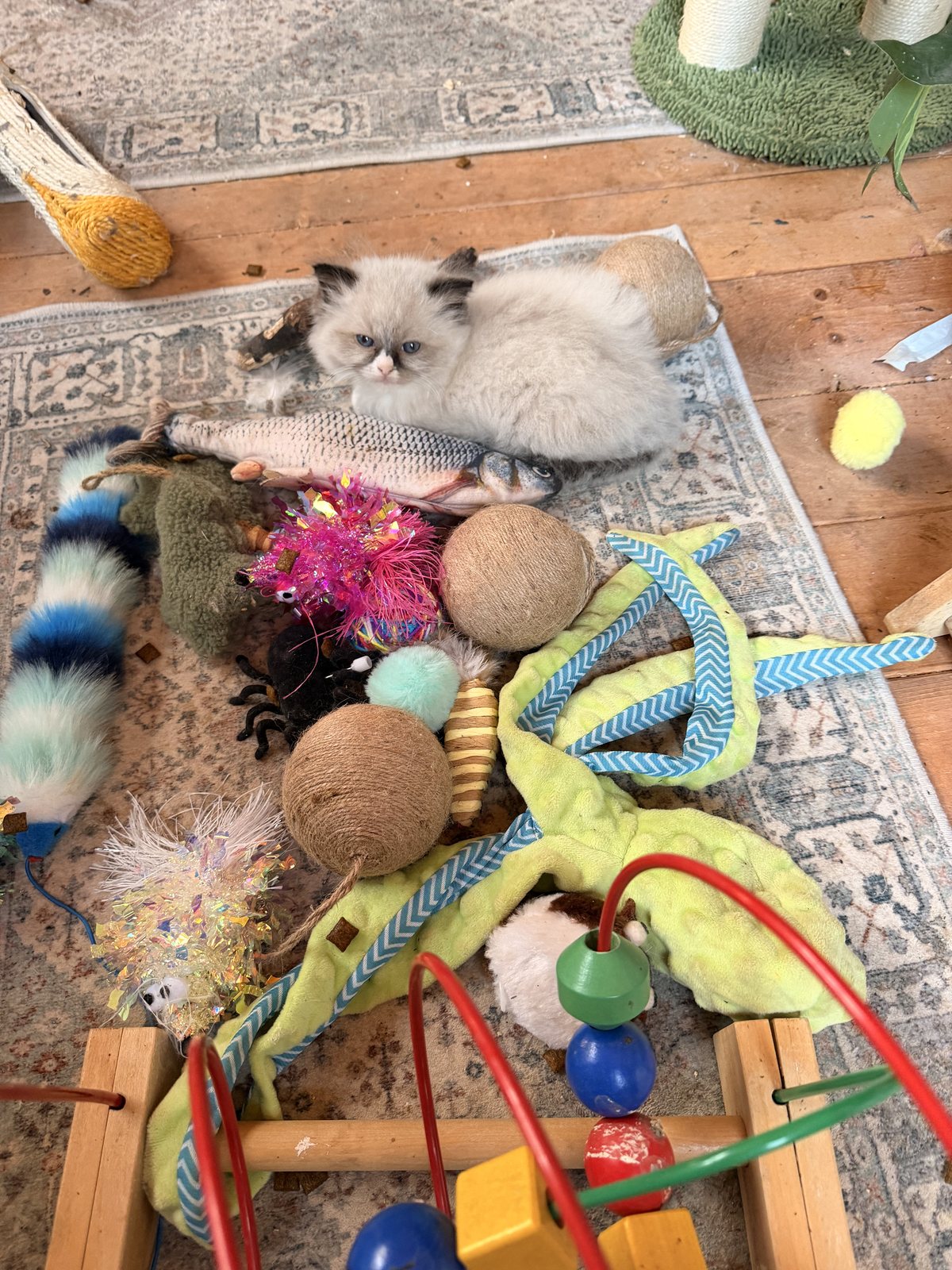
The humblest items in the pack do the biggest psychological job: anything carrying the scent of mum, littermates and the only home a kitten has known becomes a portable piece of safety in a world that has just changed completely. Scent is a kitten’s primary reassurance channel, and a familiar smelling bed corner lowers the volume of the whole first week.
Deploy it deliberately: into the settling room before the kitten arrives, into the carrier for the journey home, and left unwashed through the early days however tempting the laundry basket, because clean smells like nowhere, and nowhere is the problem.
The paperwork bundle is the kitten’s biography and instruction manual in one: health and treatment records that let your vet continue seamlessly rather than start blind, the feeding details that make week one’s continuity possible, the agreement setting out what each side has promised, and the contacts that keep the door open for questions.
Handle it like it matters, because it does: photograph everything the day you get home, take the records to the first vet visit, and file the originals with the insurance documents. Ten minutes of admin turns the folder into fifteen years of continuity.
The pack is designed to be used in sequence: scent items straight into the settling room, the familiar food served without experiments while everything else is new, the play items becoming the bridge between hiding and bonding, and the paperwork actioned in the first days rather than discovered in a drawer at Christmas.
By the end of week one the pack should look raided, not preserved: that is success. Its whole purpose is smoothing the join between our home and yours, and a smooth join is one you stop noticing quickly.
The single most functional item in the pack is the food your kitten already eats: rehoming stresses digestion enough without a menu change on top, so the packed supply holds the diet steady through the settling weeks. Same food, same portions, same little and often rhythm.
If you plan to move to a different food eventually, do it later and gradually, over a week of mixed bowls once the kitten is fully settled. The pack buys you that runway deliberately; spending it in the first fortnight is the classic avoidable tummy upset.
Book the first vet visit for soon after arrival and bring the pack’s records: what care the kitten has had and when, so your practice continues a plan rather than guessing at one. Protection scheduling stays exactly what it should be, your vet’s decision made with full information.
Registering with a practice before collection day is the quiet professional move: records handed over, first appointment already in the diary, and the out of hours number saved before it is ever needed. The folder does its best work when it arrives ahead of any drama.
The pack covers continuity; the home supplies the rest: trays and litter matching what the kitten knows, bowls, bedding, a scratching post, safe toys and a room prepared as the landing zone. Our kitten checklist guide walks the full shopping list room by room.
The other thing no box can hold is pace: quiet first days, visitors rationed, children coached, resident pets introduced slowly. The pack is a bridge from our home to yours; how gently the bridge is crossed is in your hands, and gently wins every time.
A few small rituals extend the pack’s soft landing through the first month: the scent item stays in the bed unwashed while the kitten builds its own scent map, feeding times stay fixed, and the same word and treat mark every positive moment so your household’s language starts consistent.
Keep the paperwork folder live too, adding the first vet visit’s notes and the weight log’s opening entries. A kitten arrives with a history two pages long; the habit of keeping it current is the cheapest gift you can give the adult cat it becomes.
The kitten pack is closer to a small briefcase than a goody bag: microchip and registration documents, birth certificate and family tree, health and treatment records, the signed agreement and care guide, food samples for continuity, and the scent blanket that smells of mum and does more settling work than anything money buys. Deploy it in week one: blanket in the bed, records to the first vet visit, food rules followed. The paperwork matters most exactly when you least expect to need it.
Quiet, warmth and the familiar packed food usually solve it: appetite commonly returns within a day as adrenaline settles. A kitten refusing all food beyond twenty four hours, or lethargic with it, is a same day vet call.
Not in the first weeks unless hygiene truly demands it: the smell is the point, a portable piece of the only home the kitten has known. Once fully settled, it becomes an ordinary blanket and the washing machine can have it.
Match what the kitten knows first, then transition gradually once tray habits are rock solid. Changing surface and home simultaneously is how accidents start; the tray is not the place for week one experiments.
Everything official: vet visit summaries, weight entries, insurance documents, microchip confirmation in your name. One folder, kept current, means every future appointment, cattery stay or emergency starts with answers instead of archaeology.
Yes: every Pretty Ragdolls kitten leaves with the full pack as standard. It exists because soft landings are in everyone’s interest, most of all the kitten’s.
Inside the folder sit your kitten’s microchip and chip registration documents, with the chip registered to you at handover, the birth certificate and family tree, full health records and veterinary check information, flea and worming treatment records, your signed sales agreement, and a detailed care guide with a handover checklist to work through in the first days. It reads like a lot because it is a lot: everything a new family and a new vet could ask for, answered in writing, exactly as promised on our policies page.
The pack carries samples of the very food your kitten has been weaned onto, and the rule that comes with them is simple: keep to that food for at least the first fourteen days. A kitten’s stomach hates surprises at the best of times, and moving house is not the best of times. Once your kitten is settled and thriving, any change happens slowly and deliberately, the way our feeding guide describes, one spoonful at a time.
The soft blanket in the pack is the quiet hero: it carries the smell of mum, of littermates, of the colony and of home. Lay it in the bed in your kitten’s safe room and the strange new world immediately contains one square of absolute familiarity, which is worth more than any toy. Scent is a kitten’s first language, as our settling in guide explains, and resist washing the blanket for those first weeks: to you it smells of cat, to your kitten it smells of everything safe.
Book a veterinary health check within 48 hours of collection and take the health records from the pack with you, so your own vet starts your kitten’s file from a full picture rather than a blank page. Behind the pack stands the rest of the promise from our policies: kittens never leave before 8 weeks of age, every kitten goes home microchipped, a 14 day health guarantee, and lifetime support, which means the WhatsApp line stays open for your kitten’s whole life. The full first fortnight is walked through step by step in our kitten guide.
For settling in reading beyond our own guides, Cats Protection publishes excellent first week resources.