
Why Is My Ragdoll Not Eating? Causes and When to Worry
A cat that eats nothing for a day needs a vet call, a kitten the same day. Here is what sits behind it.
Last reviewed
A cat that eats nothing for 24 hours needs a vet call, and a kitten under six months needs one the same day. Cats are not built to fast: an adult, especially an overweight one, can tip into hepatic lipidosis, a fatty liver condition, after only a few days without food, and that is far harder to treat than whatever stopped them eating. Short of that line there is a long list of ordinary reasons a Ragdoll loses its appetite, from a new sofa to a sore tooth, and a fair amount you can do about them. Here is how to tell them apart.
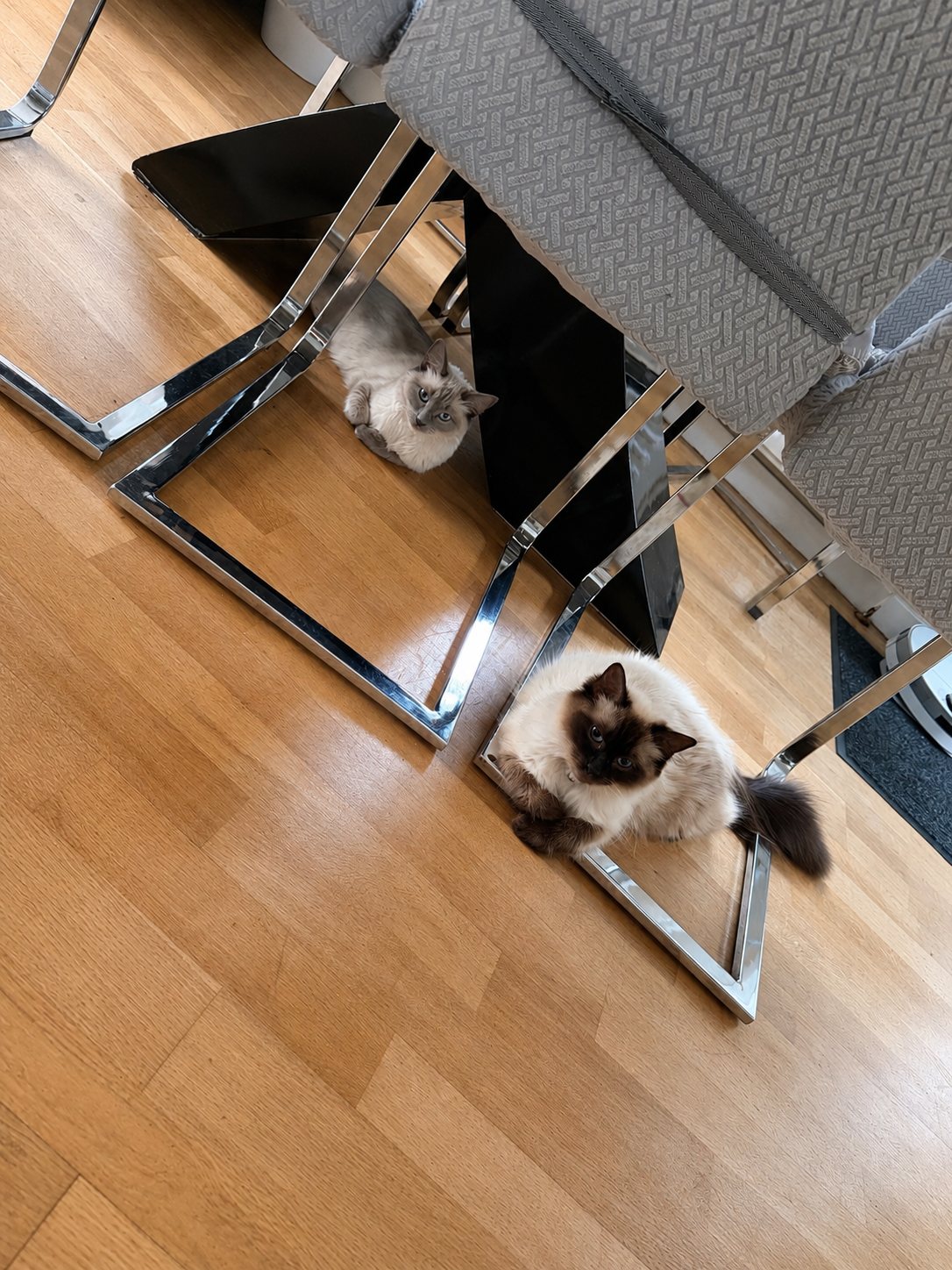
Cats that eat in a group can hide a poor appetite, so we watch who turns up to meals.
How long can a cat go without eating?
Not long, and less than most owners assume. A healthy adult cat that has eaten nothing for 24 hours needs a phone call to the vet that day, whether or not it is still drinking. A kitten under six months has almost no reserves and can crash within hours, so a kitten that misses more than a meal or two needs the vet the same day. A cat that is picking at food but eating well under half its usual amount for two days belongs in the same category as one eating nothing.
The reason for the hard line is the liver. When a cat stops eating, its body starts moving fat into the liver to burn, and a cat's liver, unlike ours, handles this badly. After a few days the fat clogs it and you have hepatic lipidosis, fatty liver disease, which is serious, slow to treat and often needs a feeding tube. Overweight cats, which includes a fair few Ragdolls, are at the highest risk because they have the most fat to move. This is why wait and see is a safe plan for a day and a dangerous one beyond it.
Everything below is about what you can do inside that first day, and what should send you to the vet sooner.
Ragdoll lost appetite: the common causes
Most of the time the cause is ordinary. Roughly in order of how often we hear it raised:
- Stress and change. A new home, a new pet, a new baby, builders, a house move. Ragdolls are sensitive to upheaval and a day of refusing food is a common response. See settling in and stress and calming.
- Dental pain. A cat with a sore mouth approaches the bowl, sniffs, takes a piece and drops it. Dental care covers what to look for.
- The food or the bowl. A sudden change of food, a dirty bowl, a deep narrow bowl that presses the whiskers, or a bowl sat next to the litter tray. Whisker fatigue is debated, but a wide shallow dish costs nothing to try.
- Something in the way. A hairball on the move, or something swallowed, which can become an emergency.
- Nausea from illness. Kidney disease, pancreatitis and infections all take the appetite first. Poorly tummy covers the digestive ones.
- A blocked nose. A cat with cat flu cannot smell its food, and a cat that cannot smell does not eat.
- Heat. Appetite drops in a heatwave; watch the water instead.
- Pain anywhere. A limp, a bite wound, a sore back. Cats hide pain, and not eating is often the first clue.
- Boredom, or too many treats. A cat full of treats is not off its food. It is full.
Cat not eating but drinking: when it is the vet now
Not eating but drinking is reassuring on hydration and nothing else; a cat can be drinking normally and still be in trouble. Drinking far more than usual while refusing food is itself worth mentioning to the vet, because thirst goes up in several conditions that also kill the appetite.
Do not wait out the 24 hours if any of these come with it:
- Vomiting more than once, or any vomiting with no interest in food afterwards.
- Lethargy or hiding, a cat that will not come out for the sound of the fridge.
- Not drinking either, or drinking and then bringing it back up.
- Yellow gums, ears or whites of the eyes, which is jaundice and can mean the liver is already struggling.
- Straining in the litter tray, especially a male, which can be a blocked bladder and is an emergency.
- Laboured or open mouthed breathing.
- A swollen or painful belly, or drooling.
- Any kitten, and any senior cat with a known condition.
Ring the vet and describe exactly what you see, including the last meal eaten, the last tray visit and anything the cat might have swallowed. The vet would far rather hear about a cat that turns out to be sulking than meet one on day four. Dehydration explains the skin tent and gum checks you can do while you wait.
What you can try at home for a healthy adult
For an otherwise bright adult with none of the red flags, the first day is for making food easier to say yes to.
- Warm it. A few seconds in the microwave, stirred, until it is body warm. Heat releases smell, and smell is what a cat eats with first.
- Go strong. A pungent wet food, a fishy one if the cat is normally a chicken eater, or a spoon of the juice from a tin of tuna in spring water, not brine.
- Change the bowl. Wide, shallow, clean, and well away from the litter tray.
- Feed alone. In a multi cat house, a shut door and a quiet room remove a surprising number of refusals.
- Hand feed. A little on your finger, or dabbed on the back of a paw to be licked off. A cat that takes three licks has told you something useful.
- Keep it calm. No hovering, no coaxing in a worried voice. Put it down, sit nearby, read something.
Two things never to do. Never force feed, by syringe or by pushing food into the mouth; it deepens the aversion and risks food going into the lungs. And never give a human medicine of any kind. Paracetamol is lethal to cats in tiny amounts, ibuprofen is not far behind, and a cat already poorly has no margin. If the vet wants an appetite stimulant or an anti sickness drug, they have cat safe ones.
Ragdoll kitten not eating, and the group dinner problem
Sixteen cats eat in our house, and the thing about a group meal is that it hides a poor appetite beautifully. A bowl that empties tells you the colony ate, not that every cat did. So we watch who turns up. Mealtimes here are a roll call as much as a feed, and a cat that normally arrives first and is instead sitting on the stairs has told us something before it has missed a mouthful. If you have more than one cat, feeding them apart for a day or two is the quickest way to find out which one is off, and feeding multiple cats covers how.
Kittens are their own case. A Ragdoll kitten not eating in its first days with you is usually the move: the house smells wrong, the people are strange and the food may be new. Keep it on the food it is used to, feed little and often in a quiet room, and most are eating within a day. The same day rule still stands though. A kitten that misses more than a meal or two, or is quiet, cold or wobbly, needs the vet now, not tomorrow. Small bodies run out of fuel fast, and fading kitten syndrome explains why we take it so seriously.
Quick questions, answered
How long can a cat go without eating?
Treat 24 hours with no food as the limit for a healthy adult, and ring the vet that day. A kitten under six months needs the vet the same day it stops eating. Cats that fast for more than a few days risk hepatic lipidosis, fatty liver disease, and overweight cats are at the highest risk. Do not wait and see beyond a day.
Why is my cat not eating but drinking water?
Drinking is good news for hydration, but it rules nothing out. Stress, dental pain, nausea, a blocked nose from cat flu, a hairball or a change of food can all stop a cat eating while it still drinks. Drinking much more than usual alongside no appetite is worth reporting, as several illnesses raise thirst and kill appetite together.
My Ragdoll kitten is not eating, what should I do?
If the kitten has just arrived, keep it on the food it knows, feed little and often in a quiet room and give it a day to settle. If it misses more than a meal or two, or seems quiet, cold or wobbly, ring the vet the same day. Kittens have no reserves and can go downhill in hours.
Can I give my cat something to bring its appetite back?
Not from the medicine cabinet. Paracetamol is lethal to cats and ibuprofen is nearly as bad, so never give a human drug. At home you can warm the food, offer a strong smelling wet food in a shallow bowl, feed away from other cats and hand feed a little. If that fails within a day, the vet has cat safe appetite stimulants and anti sickness drugs.
Sources and further reading
- International Cat Care: Cat welfare charity with owner advice on appetite loss and hepatic lipidosis.
- PDSA: UK vet charity guidance on cats not eating and when to see a vet.
Thinking about a Ragdoll kitten?
Our Ragdoll and Ragcoon kittens grow up in our home in Ryde, Isle of Wight, with health tested parents and our support for life. See who is available now, or join the waiting list for the next litter.