
From our colony to your sofa
Treats & the 10% Rule
The daily treat budget, safe choices and the never list.
Last reviewed
The daily treat budget, safe choices and the never list.
Last reviewed
Treats are how love gets expressed in most cat households, ours very much included, and the whole art is keeping them a seasoning rather than a course. One simple rule keeps everybody honest, cat and human alike.
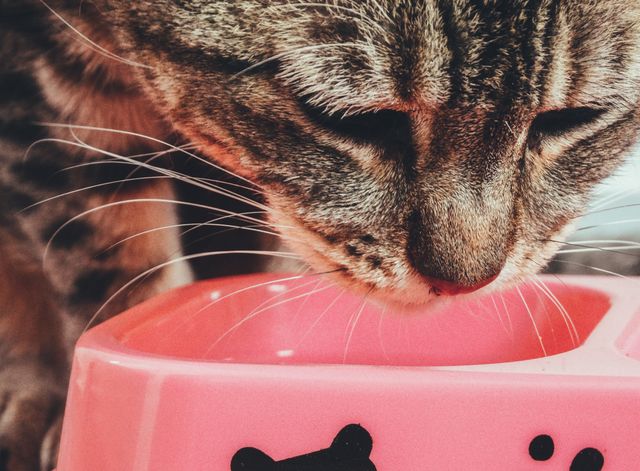
The working rule across feline nutrition is that treats should stay within about a tenth of daily calories, because every treat calorie displaces a complete food calorie without carrying the same nutrition. In practice that tenth is smaller than it feels: a few industrial treats can spend it entirely, which is how generous households build round cats out of pure affection.
The ledger trick makes it painless: count the day’s treat allowance out into a little pot each morning, and when the pot is empty the bank is closed, however eloquent the lobbying. Affection can then switch currencies, to play, grooming and lap time, which spend nothing.
Treat labels obey the same rules as food labels, just in miniature: ingredients ranked by weight, named meats beating vague derivatives, and the crucial complementary marking confirming this is a garnish, not a diet. Calorie counts per treat, where given, turn the ten percent ledger from a vibe into a number.
The freezer aisle’s simplest treats often win on ingredients: plain cooked chicken or a lick of the water from canned fish in spring water outclasses many engineered snacks at a fraction of the price, with a recognisable ingredient list of one.
A treat budget spent deliberately buys real things: recall to a name and a shaken pot, calm through claw trims and brushing, friendship from a settling newcomer, and the medicated cat’s cooperation via the time honoured pill in a treat manoeuvre, rehearsed sometimes with empty treats so the loaded one arouses no suspicion.
The mechanism is timing: a treat within a second or two of the behaviour you liked is information, the same treat at random is merely calories. Same budget, entirely different purchase.
The treat ledger’s biggest leak is rarely the treat jar: it is the licked yoghurt pot, the saucer of milk folklore insists on, gravy dipped fingers, the butter wrapper won from the recycling. Household generosity distributed across family members adds a stealth meal a day.
Audit it once properly and assign a policy: which human foods, if any, are permitted, in what portion, granted by whom. Plain cooked chicken beats processed scraps every time, and most dairy beats a path to digestive protest; the audit usually retires more than it approves.
Some generous instincts are genuinely dangerous: onion and garlic in any form including gravy and stock, chocolate, grapes and raisins, alcohol soaked anything, cooked bones, and dough. The dose makes some poisons, but several on the list have no safe portion worth testing.
Post the never list where treats get dispensed, brief children and visitors, and treat suspected ingestions as same day vet calls with the packaging in hand. The safest treat drawer contains treats designed for cats, which sidesteps the entire chemistry exam.
Age rewrites treat maths: senior metabolisms often need calories protected rather than restricted, medications multiply and want disguising, and chewing comfort changes what textures work. The treat budget becomes a clinical tool, softer formats, warmed offerings, lickable treats that carry pills.
Treats also keep their oldest job in the senior years: sweetening grooming assistance, claw trims and the increased vet traffic of age. A senior with a strong treat association for handling is a senior whose care is simply easier, which is worth every calorie in the allowance.
A treat spent thoughtlessly buys a swallow; spent well it buys behaviour: scattered across a snuffle mat it becomes ten minutes of foraging, stuffed in a puzzle it becomes employment, tossed up the stairs it becomes cardio, delivered after the claw trim it becomes consent renewed.
The principle is simple: never spend the allowance on mere proximity to the cupboard. Attach every treat to something, work, calm, tolerance, recall, and the same daily calories return several times their weight in trained, confident, cooperative cat.
Treats are how love gets expressed, and the art is keeping them a seasoning rather than a meal: hold the ten percent ledger, count what actually crosses the bowl rim, and read treat packets with the same eyes as food labels. Put treats to work in training, grooming, carriers and medicating, audit the kitchen for the human foods that harm, and mind the toxic items disguised as treats. Seniors get their own softer strategy, and hand fed moments make every calorie work twice.
Count calories, not pieces: a tenth of the daily total at most, subtracted from meals rather than added. For most Ragdolls that is a small handful of commercial treats or a few pieces of plain chicken, not both.
Credible dental treats do modest genuine work and earn their slot best in mouths the vet has flagged. They supplement brushing economics; they never replace them.
Many adult cats handle a pea sized piece; many do not handle more, lactose being the issue. If cheese is your pill vehicle, keep portions tiny and watch the tray for the verdict.
Plain cooked chicken, a lick of pate style wet food from a spoon, or freeze dried single protein pieces convert most sceptics. Some cats simply prefer play or brushing as currency; pay in what they value.
They are useful currency, high value, portion controllable, excellent for medicating and vet visits, and they are still treats: count them in the allowance. Choose reputable brands with short ingredient lists.
Genuinely yes: sit, recall, carrier entry and harness tolerance all train readily with treat timing. The breed’s food motivation plus its biddable streak make it one of the more trainable cats going.
Overspent allowances do exactly that, which doubles as the diagnostic: a cat picky at mealtimes but keen on treats is usually running a treat surplus, not an appetite problem. Rebalance the ledger and dinner recovers.
Treats should supply no more than a tenth of a cat’s daily calories. A typical adult cat runs on roughly 200 calories a day, which makes the treat budget about 20, and that is a couple of dental sticks or a pinch of freeze dried chicken, not a saucer of anything. The complete food does the nutrition; treats do the joy. Kittens have even less room in the budget, because every calorie is busy building a cat.
Single ingredient freeze dried meats are as clean as treats get, dental treats earn their keep twice over, and lick style treats in moderation are wonderful for grooming bribes and vet table diplomacy. Cheese and a saucer of milk belong to films rather than feline nutrition: most adult cats are lactose intolerant, and their stomachs vote accordingly. Every treat pack carries the word complementary, which our food label guide explains, and it is the label’s polite way of saying this is pudding.
Onion and garlic in any form, chocolate, grapes and raisins, alcohol, caffeine, cooked bones and raw dough are not treats, they are hazards, and some of them are emergencies in a small body. A shred of plain cooked chicken or a flake of plain cooked fish is fine; anything sauced, seasoned or cured is not. When in doubt, the answer is no, delivered with a clear conscience and a proper treat instead.
Spent cleverly, the daily budget buys real things: a carrier that means good news, a comb tolerated for one stroke longer as our grooming guide suggests, a kitten who comes when called, a pill smuggled past a connoisseur, and a grand finale to the wand game from our play guide. A treat that buys calm at the vet is worth ten spent on the sofa, though we still spend a few there too.
For healthy treating ideas and calorie context, International Cat Care keeps practical feeding guidance worth a browse.