
From our colony to your sofa
Stress in Cats & How to Calm It
How worry shows sideways in a cat, and rebuilding the calm house.
Last reviewed
How worry shows sideways in a cat, and rebuilding the calm house.
Last reviewed
Cats are creatures of habit wearing a poker face, so stress shows up sideways: in trays, appetites, coats and hiding places, long before anything looks dramatic. The calm house is built, not found, and it can always be rebuilt.
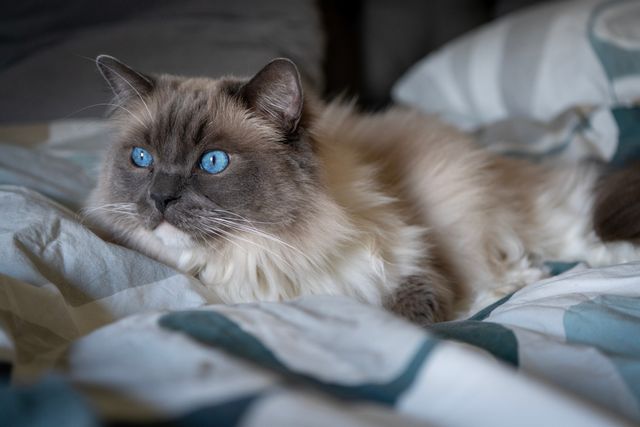
Feline stress publishes in behaviour long before drama: more hiding and less patrolling, overgrooming that thins flanks and tummies, appetite dips, tray lapses from a previously tidy citizen, more startle at ordinary sounds, and sometimes the opposite mask, a cat gone unusually still and small. Any of these sustained for days is a ledger entry worth reading.
The reading rule has one iron clause: sudden behaviour change gets the medical question first, because pain and illness wear stress’s costume constantly. The vet rules out the body; then the environment audit begins.
The genuinely effective tools are unglamorous: predictable routine, meals and play at reliable times, because predictability is feline currency; guaranteed retreat rights in a quiet refuge; resources multiplied so nothing needs competing for; daily play that discharges the pressure through the prey sequence; and slow, protocol led change management for anything new arriving in the territory.
Plug in aids can help at the margins: pheromone diffusers have reasonable evidence as a supporting act and work best deployed alongside the environmental fixes rather than instead of them. What has no place in the toolkit is punishment, which adds fear to stress and pays compound interest.
Persistent stress signs that survive a medical all clear and a proper environment audit have earned professional help: your vet first, always, and then, for the behavioural deep end, a referral to an accredited behaviourist, the kind who takes a full history and builds a plan rather than selling a gadget.
Go sooner rather than later, because stress behaviours rehearse themselves into habits, and early cases resolve faster. Asking for that referral is not defeat; it is exactly how the difficult ten percent of cases get their good ending.
Cat calm is built from predictability: meals landing at the same times, humans leaving and returning on legible patterns, furniture staying put, the same door policies daily. To a territorial animal that maps its world precisely, sameness is not boredom; it is safety confirmed hourly.
Deploy routine deliberately in stressful seasons: guests, building work and festive chaos land softer when meals, play sessions and quiet hours hold their schedule like a spine. The household’s most powerful calming product is its own timetable, administered consistently.
Cats read security by nose: their own facial scent on furniture edges means claimed and safe, which is why washing every blanket before guests, deep cleaning with citrus products, or redecorating whole rooms at once can destabilise a sensitive cat completely.
Work with the nose: leave some unwashed familiar bedding through upheavals, clean in stages rather than sweeps, let new furniture acquire cheek rubs before evicting old pieces, and use synthetic facial pheromone diffusers to underwrite the message in changed rooms. Smell is territory; manage it like the asset it is.
Feline stress often invoices late: the vet visit passes calmly, then hiding starts that evening; the guests leave Sunday, and Monday brings the tray lapse. Cats hold composure through events and process afterwards, so the cause and the symptom sit hours or days apart.
The pattern matters for diagnosis at home: when behaviour changes, audit the previous week, not just the previous hour. It also shapes aftercare, the day after any big event is the day for quiet rooms, familiar routines and unhurried company, not the return to full speed.
The commonest chronic stressor in feline life is other cats: subtle resource guarding, corridor ambushes and stare wars that owners read as coexistence. A stressed cat in a multi cat home earns a politics audit before any other explanation, watching who controls routes, trays and doorways.
Relief is architectural, resources duplicated and dispersed, sight lines broken, height added, plus the separate play sessions that drain hunting charge. Our multi cat harmony guide runs the full protocol; stress treatment in company is mostly territory reform.
Battersea’s behaviour team show how to spot what an individual cat likes and dislikes during everyday interaction, which is the quiet foundation of the whole calm toolkit on this page. Short, gentle and immediately usable.
Watch on YouTube Battersea Dogs & Cats Home
Cats wear a poker face, so stress shows sideways: tray lapses, appetite shifts, overgrooming, hiding and a coat gone dull, long before anything dramatic. Keep the stress ledger of what changed and when, then answer with the calm toolkit: predictability above all, resource abundance, retreat rights, play as a pressure valve and pheromone support. Guard the scent passport after vet trips, expect wobbles after events like moves and visitors, and escalate to the vet when signs persist, because stress and illness share a wardrobe.
You often cannot from the sofa, which is the point: stress signs and sickness signs overlap almost completely. Persistent changes get the vet visit first, and stress becomes the diagnosis after medicine is excluded.
Some have modest evidence and help some cats at the margins; none fix an unaddressed cause. Use them, if at all, alongside territory and routine work, ideally on your vet’s suggestion.
Play swaps roles, includes pauses and ends with both relaxed; bullying runs one direction with a loser who hides, waits to eat or avoids rooms. Watch who controls space over a week and the answer emerges.
Yes: for genuine clinical anxiety, vets prescribe effective modern options alongside behaviour plans. Medication is a legitimate tool at the persistent end, not a failure and never a first resort.
A sanctuary room far from the noise, sealed against escapes, stocked completely, pheromone supported and kept boring, with visits and meals on schedule. Move the cat in before the work starts, not after the fear does.
Catnip is arousal, not calm, energising responders and doing nothing for the rest. For settling effects, look to pheromones, routine and quiet territory instead.
Cats read household tone and their people’s patterns closely, and tense seasons in the humans often echo in the animals. Caring for your own routine is, conveniently, cat care too.
Over grooming that thins a belly or stripes the front legs, tray misses that people misread as protest, hiding beyond the usual naps, a changed appetite, extra vocalising or sudden scratching of furniture: these are the language of a worried cat. Tray trouble in particular is distress or a medical matter, never revenge, as our litter guide explains. The first rule never changes: any sudden change of behaviour earns a vet check, because our pain guide and stress share most of their symptoms.
Change is the great enemy of feline peace: rearranged furniture, building work, a new baby or lodger, a new pet, or a neighbourhood cat patrolling outside the window can all start it. So can emptiness, because an understimulated cat is a stressed cat, which is where our play guide earns its keep. In multi cat homes, too few resources create a polite, invisible queue, and queues corrode nerves, as our harmony guide sets out.
Predictability is the medicine: meals at the same times, litter in the same quiet places, and a high perch or covered hideout that is never disturbed by anyone, visitors and children included. Scratching posts are stress valves, so add one near the tension rather than removing the outlet. Pheromone diffusers help some cats and do nothing for others, which is an honest sentence you will rarely read on the box. Introduce any change you control at a drip: new furniture one room at a time, new people at the cat’s pace.
If tray habits, appetite or grooming change for more than a couple of days, book the vet, and if the body checks out, ask for a referral to a qualified behaviourist rather than the internet’s loudest voice. Never punish a stressed cat; punishment adds fear to worry and teaches nothing. Ragdolls are placid by breeding but sensitive by nature, and although colony raised kittens take busy family life in their stride, every cat has a limit, and the kind trick is noticing the whisper before it becomes a shout.
For feline stress science and solutions, International Cat Care is the outstanding resource, with behaviourist directories via your vet.