
From our colony to your sofa
Hairballs Explained
What is normal, the comb that prevents most of it, and when it is the vet.
Last reviewed
What is normal, the comb that prevents most of it, and when it is the vet.
Last reviewed
A cat’s tongue is a comb that swallows what it collects, and in a semi longhaired breed that arithmetic occasionally produces the least glamorous sound in cat ownership. The good news: hairballs are largely preventable, and the ones that are not preventable are at least predictable.
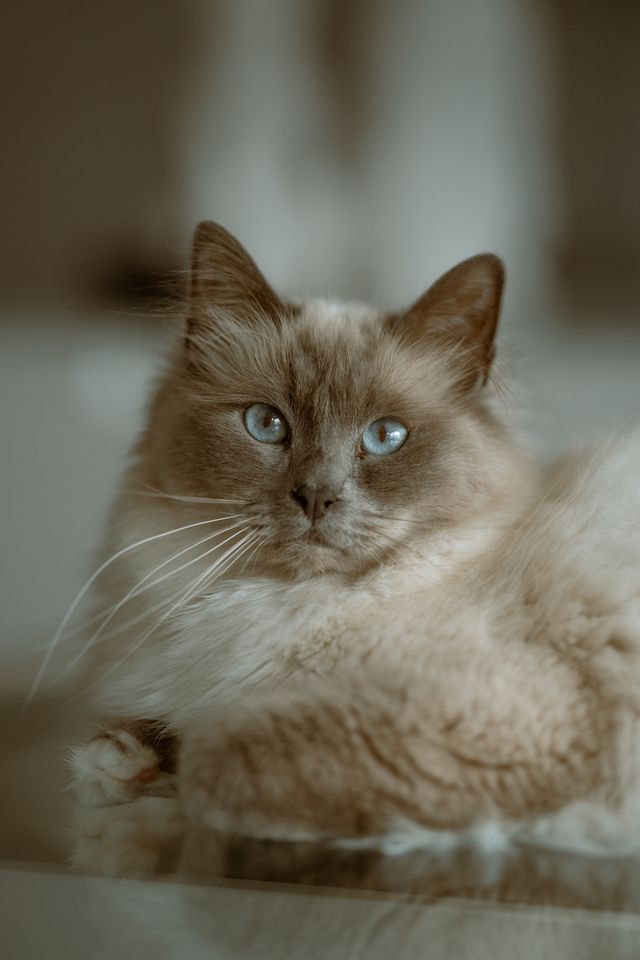
A healthy cat swallows fur constantly and passes nearly all of it unremarkably in the litter tray: the gut is a conveyor, and hair is designed cargo. The occasional hairball is the tolerance margin, not the mechanism, which reframes the folklore completely: frequent hairballs are not a quirky cat fact, they are a flag that either too much hair is going in or the conveyor is moving too slowly.
That flag has a short list behind it: overgrooming from stress, itch or pain loading the intake side, and digestive motility or inflammation slowing the output side. Weekly hairballs earn a vet conversation, not a shrug and a kitchen roll.
Grooming beyond maintenance is a message: itchy skin from fleas or allergy, pain being licked at, especially over joints and the tummy, or stress being self soothed one lick at a time. The pattern often points to the cause, with barbered stripes along the flanks and thighs reading stress, and focused licking of one spot reading pain or itch beneath it.
So the frequent hairball investigation starts on the outside: a flea comb session, a skin inspection, a think about household changes, and a vet check where the licking maps to a place rather than a mood. Fix the reason for the extra intake and the conveyor usually copes again.
The cheapest hairball medicine is the brush: every hair on the brush is a hair not swallowed, and in a Ragdoll coat a few minutes daily removes a startling harvest, doubling as the bonding and surveillance ritual this library keeps recommending. During seasonal moults, the few minutes earn their keep twice over.
Of the remedies, fibre has the best case, whether through diet formulations or vet suggested additions, easing cargo through the conveyor; malt pastes are palatable lubrication with modest evidence and no harm in moderation. Anything sold as dissolving hairballs is selling hope, and a cat retching without producing anything has left hairball territory for the emergency chapter.
Hairballs run on a calendar: as days lengthen, cats drop their winter undercoat in weeks of heavy moult, the tongue harvests the surplus, and April’s carpet collects what January’s never saw. A Ragdoll’s dense double coat makes the seasonal surge especially visible.
The countermeasure is anticipatory: brushing stepped up to daily as the moult begins, before the hairballs announce it, and kept there until the coat settles into summer order. Groom to the season’s schedule rather than the cat’s protests and the spring surge largely disappears.
A cat can only swallow the hair its tongue collects, so a sudden hairball uptick sometimes measures grooming time rather than coat volume: stress, boredom and itchiness all drive licking, and the barbered belly or inner thigh stripe often accompanies the evidence on the rug.
Read the whole pattern: new hairballs plus thinning patches, plus a house move, new pet or flea gap, points at the cause behind the cause. Fixing the itch or the anxiety fixes the hairballs, and our stress and parasite guides pick up that thread.
Very occasionally swallowed hair compacts into a mass that cannot pass, and the picture changes from undignified to urgent: repeated unproductive retching, vomiting that brings food but no hair, appetite loss, a tender belly, lethargy or constipation together spell a possible obstruction.
That cluster is a same day veterinary call, not a wait for the hairball to sort itself. Obstruction is the rare exception that gives hairballs their only real danger, and knowing its face means you will never confuse it with the ordinary Tuesday morning offering.
Hairball formula foods add fibre designed to escort swallowed hair through the gut, and they help at the margins, as do vet approved hairball pastes used as directed rather than as daily sweets. Hydration helps more than either: moisture keeps everything moving.
What diet cannot do is outwork a neglected brush: no kibble removes hair from a coat. The honest hierarchy is grooming first, water second, diet third, and the paste tube a distant, occasional fourth on your vet’s advice.
The occasional hairball is feline plumbing working as designed; frequent ones are a workload problem you can fix. Daily brushing removes coat before the tongue collects it, hydration and diet keep swallowed hair moving, and play burns the overgrooming of boredom. Retching that produces nothing, appetite loss or repeated vomiting is a vet visit, not a hairball.
An occasional offering, every few weeks in moulting season, sits within normal for a long haired cat. Weekly or accelerating hairballs are a workload problem to fix, not a personality trait to mop up after.
Grass eating is normal feline behaviour that often triggers vomiting and sometimes carries hair out with it. Providing safe cat grass indoors is fine; astonishing grass consumption alongside other signs is a vet question.
The theatrical hacking looks worse than it is: an ordinary hairball passes in moments and the cat strolls off unbothered. Distress that continues after production, or retching that produces nothing, is the different, serious picture.
Yes, just less often: every cat grooms and swallows hair. Long coats simply raise the volume, which is why the Ragdoll owner’s brush earns its keep.
Genuine coughing, crouched, neck extended, repeated, is usually airway rather than stomach, and chronic cough has its own causes including asthma. Filming an episode for your vet distinguishes the two better than description ever manages.
No: paste helps hair already swallowed slide through, while brushing stops it being swallowed at all. Use paste as your vet directs during heavy moults; use the brush every day regardless.
The occasional hairball, an elongated felt of fur brought up with minimal drama, is ordinary housekeeping, most common during spring and autumn shedding when the coat turns over. A cat who produces one now and then, eats well and behaves normally is fine. Daily hairballs, or lots of retching that produces nothing, is not normal, and belongs in the last section of this guide.
Every hair you remove is a hair never swallowed, which makes the weekly routine in our grooming guide the single best hairball treatment ever invented. Step it up to daily during shedding season, when the undercoat lets go in earnest, and the dematting comb earns its keep twice over.
Hydration keeps swallowed hair moving, which is one more argument for wet food in the daily diet and appealing water stations, as our feeding guide covers. Regular play keeps the gut motoring too. Specialist hairball diets and fibre supplements exist for the frequent producers, and they are a conversation to have with your vet rather than a shelf to guess from.
Repeated unproductive retching, a cat off their food, lethargy, constipation or swallowing difficulties can mean hair has stopped moving where it should, which in rare cases becomes a blockage needing treatment. Same day vet advice applies, and the general red flag rules from our health basics guide stand. For the record, our own fifteen produce remarkably few, and the comb takes the credit.
For more on grooming, skin and digestion, International Cat Care keeps a thorough owner library on all three.