
Why Is My Ragdoll Always Hungry? Causes and What to Do
The scales tell you more than the shouting does.
Last reviewed
A Ragdoll that is always hungry is usually one of four things: growing, greedy, bored or unwell. The way to tell them apart is not the noise at the food cupboard but the scales. A hungry cat that is gaining weight is being overfed or has trained you well. A hungry cat that is holding or losing weight needs a vet, because an overactive thyroid, diabetes and worms all make a cat ravenous while the weight falls off. This guide goes through the normal reasons, the habits, the illnesses and the feeding routine that keeps a big, food loving breed satisfied and lean.
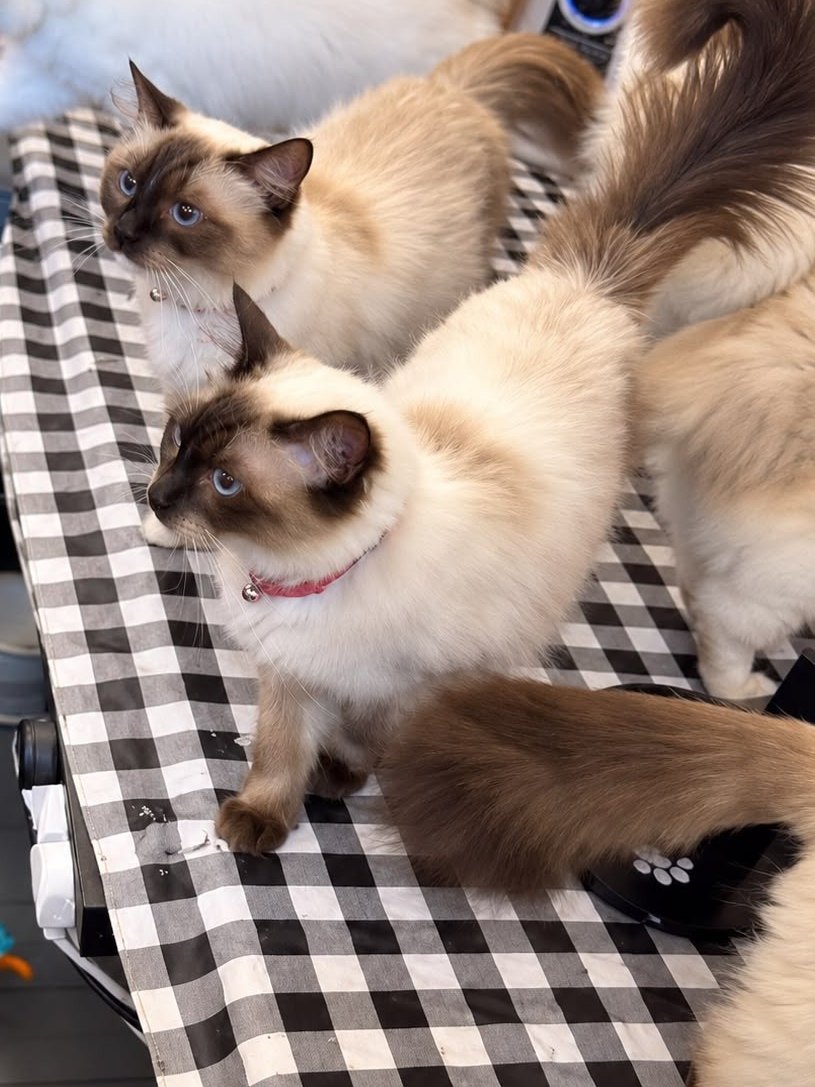
The colony when dinner is running late. A good appetite is one thing. A cat that is never full is another.
Hungry, greedy or ill? Three questions
- Is this new? A cat that has always loved its food is a character. A cat that has become ravenous over a few weeks has a reason.
- What is the weight doing? Weigh the cat now and again in a fortnight, on the same scales. Up, steady or down decides almost everything that follows.
- Is anything else different? Drinking, the litter tray, the coat, energy, vomiting or diarrhoea.
- Hungrier and losing weight: ring the vet this week.
- Hungrier, with more drinking and bigger clumps in the tray: ring the vet this week.
- Hungrier and gaining weight: look at the feeding, the treats and the begging.
- A growing kitten or young Ragdoll that is lean and lively: probably just hungry.
PDSA's advice is to contact your vet whenever a cat is hungrier than usual or constantly looking for food, and not to cut the food down before you have spoken to them.
Normal reasons for a big appetite
- Growing. Kittens need a great deal of food for their size, and a Ragdoll goes on growing until three or four. The Ragdoll kitten weight chart shows the pace.
- Pregnancy and nursing. A queen feeding kittens needs far more than usual. See pregnancy and queening.
- More exercise. A cat that has started using a catio or a garden, or has a new playmate.
- Cold weather. Cats eat more when their surroundings are colder.
- A change of food. A lower quality food, or one that is not complete and balanced, can leave a cat looking for more. Reading food labels shows what to check.
- Not enough food. The amount on the packet is for the weight the cat should be, and a large, lean adult male needs more than a small female.
- The way cats eat. Left to themselves cats take many small meals, roughly eight to sixteen in a day. Two meals in a bowl and nothing in between leaves long gaps.
After neutering a cat needs less food than before, though many go on asking for the same amount. Unless the portions come down, the weight goes up. Neutering and spaying explains what to change.
Habit, boredom and stress
- Learned begging. A cat that was fed once for shouting at 5am will shout at 5am for the rest of its life. From the cat's side this is not greed. It is a method that works.
- Boredom. For an indoor cat with little to do, food is the most interesting event of the day.
- Stress. A new pet, a new baby or building work can show up as overeating.
- Competition. In a house with several cats, some bolt their food and then go looking for everyone else's. See feeding a multi cat household.
- Attention. Many cats ask for food when what they want is you. Try a game or a fuss before you reach for the bowl.
Some cats are simply keener on food than others. Ragdolls are calm cats that mostly live indoors, so a keen eater gains weight easily, and that is why the scales matter.
Illnesses that make a cat ravenous
Vets call a raised appetite polyphagia. The commoner medical causes are:
- An overactive thyroid. The classic picture is a middle aged or older cat that eats everything and still loses weight, often restless and noisy with it. See hyperthyroidism.
- Diabetes. Hunger with heavy drinking, big wet patches in the tray and weight loss. See diabetes.
- Worms. Worms take a share of what the cat eats. A hungry kitten with a pot belly needs worming. See worming.
- Poor absorption. Gut disease that stops food being digested or absorbed properly, usually with loose stools or weight loss.
- Medicines. Steroids and some drugs used for seizures increase appetite. Tell the vet who prescribed them.
Rarer causes include hormone disorders such as Cushing's disease and acromegaly.
Signs to report with the hunger
- Weight loss, or weight gain
- Drinking and passing urine more than usual
- A dull, greasy or unkempt coat
- Being unusually active or irritable, or unusually flat
- Vomiting or diarrhoea
Most of these are found with an examination and blood and urine tests, and the common ones are treatable, the more easily the earlier they are caught.
How much should a Ragdoll eat?
- Weigh the food on kitchen scales. Scoops and handfuls creep.
- Feed for the ideal weight, not the current one, using the guide on the packet as a starting point.
- Count the treats. PDSA's rule is that treats should be no more than a tenth of the day's food, and the meals should come down by the same amount. See treats.
- Check the body, not the bowl. You should feel the ribs under a light covering and see a waist from above. The hands on body condition check takes a minute.
- Adjust slowly, and ask your vet for a target weight and a daily amount if you are unsure.
Feeding a Ragdoll has the full routine by age, and wet or dry? explains how the two compare for a cat that wants a full bowl.
How to feed a cat that is never full
- Split the same amount into more meals. Four or five small meals suit a cat better than two large ones.
- Use a timed feeder for the early morning meal. The cat learns to wait for the machine and not to wake you.
- Make food take longer. Puzzle feeders, a slow bowl, biscuits scattered across the floor or hidden round the room.
- Play before meals. Hunt, catch, eat, sleep is the order cats are built for. See play and enrichment.
- Never feed in answer to shouting. Wait for a quiet moment, even a few seconds, and then feed. Everyone in the house has to keep to it.
- Feed cats apart if one is stealing.
- Keep water fresh and plentiful.
- Do not put a cat on a crash diet. Cutting food sharply is dangerous for cats. Weight should come off slowly, on a plan from your vet.
Is my Ragdoll kitten eating too much?
Probably not. A growing kitten is meant to be hungry, and holding food back from one risks its growth.
- Feed a complete kitten food in several small meals a day.
- Weigh every week or two. Steady gain with a lean, lively kitten is what you want.
- Keep worming up to date. A kitten that eats and eats, stays thin and has a round belly should be wormed and checked.
- Expect the appetite to stay keen well past the first birthday. A Ragdoll is still filling out at two and three.
- Move to measured adult portions as growth slows, with your vet's advice on timing.
A kitten that suddenly stops being hungry is the one to worry about. Cat not eating explains why that needs a vet the same day.
Quick questions, answered
Why is my Ragdoll always hungry?
Usually because it is still growing, has learned that asking works, is bored, or is being fed less than a large cat needs. If the hunger is new, or the cat is losing weight or drinking more, see a vet.
Why is my cat always hungry but losing weight?
That combination points to illness, most often an overactive thyroid, diabetes, worms or a gut problem. Book a vet appointment this week.
Is it normal for a Ragdoll kitten to be hungry all the time?
Yes. Kittens need a lot of food for their size and Ragdolls grow until three or four. Feed kitten food in several meals a day, keep worming up to date and check the weight is rising steadily.
How many times a day should I feed my Ragdoll?
Split the day's measured amount into at least two or three meals, and more if you can manage it. Cats naturally eat little and often, so more meals of the same total keep them more satisfied.
Should I leave food down all day?
Only if the day's amount has been weighed out and your cat does not overeat. A full bowl that is topped up whenever it empties is how indoor cats become overweight.
Do cats eat more after being neutered?
A neutered cat needs less food than before, so the same portions lead to weight gain. Reduce the amount as your vet advises and weigh the cat monthly.
Sources and further reading
- PDSA: Why is my cat always hungry?: The vet charity's list of causes, the other signs to watch for, and its feeding advice.
Thinking about a Ragdoll kitten?
Our Ragdoll kittens grow up in our home in Ryde, Isle of Wight, with health tested parents and our support for life. See who is available now, or join the waiting list for the next litter.