
From our colony to your sofa
How to Read a Cat Food Label
Complete vs complementary, ingredient order and the words that mean nothing.
Last reviewed
Complete vs complementary, ingredient order and the words that mean nothing.
Last reviewed
Cat food packaging is designed to catch a human eye, and the truthful part lives in small print on the back. Feeding fifteen cats has made us fluent in that small print, and the whole language takes about five minutes to learn.
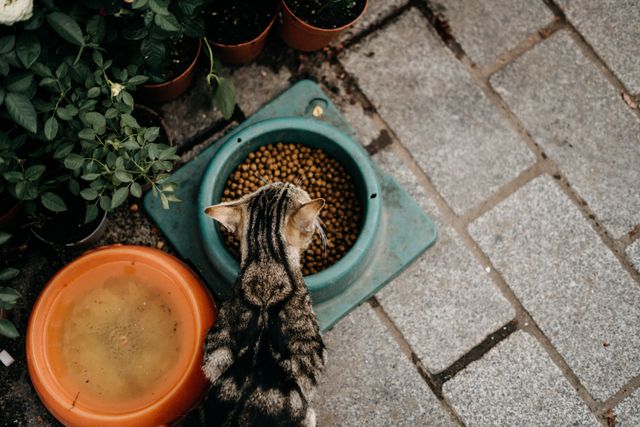
Ingredient lists are ranked by weight, so the first five entries are the recipe’s honest summary. Named ingredients, chicken, salmon, turkey, tell you what animal you are buying; vaguer terms like meat and animal derivatives are legally permitted catch alls that can vary batch to batch. Neither is poison, but one lets you know what changed when a fussy cat suddenly refuses an old favourite.
Percentages carry legal weight too: phrases like with chicken and rich in chicken correspond to defined minimum contents, and the gap between with and rich in is larger than the shelf ticket admits. Reading five lines takes ten seconds and repays it in fewer surprises.
The analytical constituents box lists protein, fat, fibre and ash, and hides one trap: those figures are quoted as fed, including water, so a wet food’s protein looks tiny beside a kibble’s purely because wet food is mostly moisture. Comparing the two straight off the tin is comparing soup to biscuits.
The fair comparison removes the water: as a rule of thumb, divide the wet food’s figure by its dry matter share and it lines up beside the kibble fairly, at which point many wet foods reveal themselves as the higher protein choice. Ash, while we are here, is simply the mineral content measured by burning, not an ingredient anyone added.
Two label phrases carry legal force: complete, meaning the food alone sustains a cat fully, and complementary, meaning treats and toppers that must not be the whole diet. That single distinction outranks every other word on the packet, and checking for it is the fastest quality filter there is.
Most of the rest, natural, holistic, premium, ancestral, is perfume: unregulated vocabulary any brand may spray at will. It does not make the food bad; it makes the word uninformative, which is worth remembering when two bags differ mainly in adjectives and price.
The single most important word on any cat food label is complete: it is a legal claim that the food contains everything a cat needs in the right proportions to be the entire diet. Its counterpart, complementary, marks toppers, treats and mixers that must not be the main menu.
The trap is that complementary products often look like meals, pouches of glistening fillets that read as dinner but are legally garnish. A cat fed largely on complementary food eats deliciously and slides toward deficiency, so the word check is the first thing your eyes do on any new packet.
Beside complete sits the life stage claim: kitten, adult, senior, or the catch all for all life stages. Kittens genuinely need kitten formulation, with the energy and mineral density growth demands, and a growing Ragdoll on adult rations is being quietly shortchanged.
At the other end, senior recipes adjust for aging bodies, and all life stages means formulated to satisfy the most demanding stage, effectively kitten food, which can be generous for a sedate adult. Match the bag to the birthday and revisit at each life transition, ideally with the vet’s input at the annual check.
The analytical constituents panel lists protein, fat, fibre, ash and moisture, and the classic beginner’s error is comparing wet and dry foods directly: wet food’s numbers are diluted by its high water content, so its protein percentage looks tiny beside kibble while often being comparable once water is removed.
You do not need the full dry matter arithmetic at the shelf; you need the principle: compare wet with wet and dry with dry, look for protein leading the story, and treat ash as a routine mineral measure rather than the alarming word it sounds. The panel rewards a calm minute more than a suspicious glare.
The additives list, vitamins, minerals, preservatives, is the label’s most feared and least deserving section: added vitamins and minerals are what makes a food complete, taurine among them being genuinely life critical for cats, and preservatives in regulated doses are why the food is safe on your shelf.
The names look industrial because chemistry names things that way; vitamin E can appear as tocopherol extracts and sound sinister doing it. Scepticism is better spent on the front of the packet’s marketing than the back’s chemistry, which is the most regulated text in the building.
Cat food packaging is designed for human eyes; the truth lives in the small print. Learn the ingredient grammar, order by weight, named meats over vague derivatives, and read the numbers panel for what actually matters. Complete means a food can be the whole diet; complementary means treats and toppers only, whatever the front implies. Match the life stage line to your cat, decode the percentages trick where flavours mean tiny fractions, and let marketing words like natural and premium carry exactly no weight.
No: grain free describes a recipe choice, not a quality level, and cats have no blanket grain problem. Judge the food on complete status, named ingredients and how your actual cat does on it.
Percentage rules mean with chicken can be a small fraction of the recipe, while chicken rich or chicken as the first ingredient means more. The ingredient list order tells the honest version of the front label’s story.
They are a broad legal category covering variable by products, which makes quality hard to judge batch to batch. Named sources, chicken, salmon, turkey, tell you more, and clarity is generally worth paying for.
It is a marketing term, not a medical guarantee: genuinely allergic cats need veterinary elimination diets, not shelf labels. For everyday cats the word mostly signals a recipe without common triggers.
Weigh, at least until you have calibrated your scoop: cup measures over pour dry food notoriously, and a daily overshoot of a few grams compounds into a waistline. Digital scales cost little and end the argument.
Somewhere on every pack, the law requires one of two words. Complete means the food is a full diet on its own, everything a cat needs in the right proportions. Complementary means it is a topper, a treat or a side dish, and a cat fed only complementary food will slowly run short of essentials. Your kitten’s everyday food must say complete, matched to their life stage, and once you know to look for the word you will spot some surprisingly famous pouches that do not carry it.
Ingredients are listed by weight, so the first entry tells most of the story. A named meat with a percentage, such as chicken 26%, beats the vaguer meat and animal derivatives, which is legal shorthand for whatever was available that week. Phrasing matters too: a food called with chicken may contain as little as 4%, and chicken flavour promises even less. None of this automatically makes a food bad, but it should make the price tag make sense.
The percentage table looks scientific and mostly is. Protein and fat are the engine of a carnivore’s diet, fibre aids digestion, and ash is not a filler scandal, simply the mineral content left if the food were burned away. The quiet trick is moisture: wet food is roughly four fifths water and dry food almost none, so their percentages cannot be compared side by side. Our wet versus dry guide walks through that sum properly.
Premium, natural, holistic and gourmet have no legal definition on a cat food label, and grain free is a fashion rather than a guarantee of quality. What we actually look for is short: the word complete, a named meat at the top of the list, taurine present, and a life stage that matches the cat in front of us. Our feeding guide covers the routines, and our treats guide covers the fun that sits on top.
For decoding pet food regulation further, the PDSA explains labelling plainly, and International Cat Care covers choosing a diet without the marketing.