
From our colony to your sofa
Neutering & Spaying, Explained
The kindest routine operation in cat ownership.
Last reviewed
The kindest routine operation in cat ownership.
Last reviewed
Neutering, castration for males, spaying for females, is the most common operation in veterinary practice and one of the biggest single kindnesses in cat ownership: it prevents unwanted litters, removes whole categories of disease, and retires the behaviours that make unneutered cats hard to live with. This page explains the what, when and why, calmly.
Castration is brief, external and remarkably minor: both testicles removed under general anaesthetic through tiny incisions, often without stitches, day surgery from drop off to teatime collection. Most males behave as if nothing happened, which becomes its own management problem.
Spaying is abdominal surgery, removing the ovaries and usually the uterus through a small flank or midline incision, still routine, still day surgery in most practices, with stitches or glue and a recovery measured in days rather than weeks. Both operations are the bread and butter of every practice in the country.
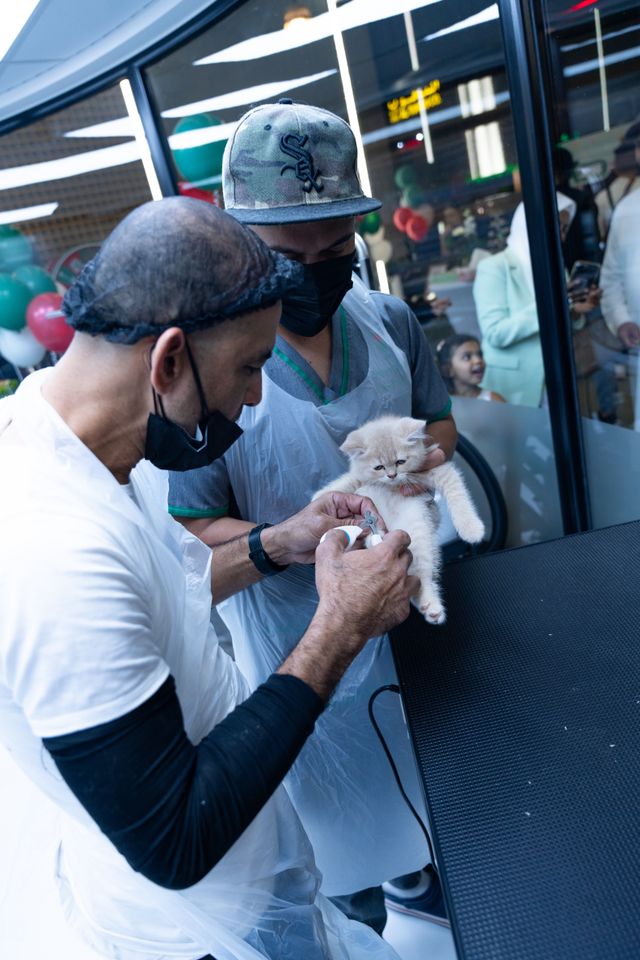
Standard UK guidance has shifted earlier: around four months old, before puberty, is now widely recommended by the major feline bodies, and kittens handle the anaesthetic and recovery famously well at that age. Waiting for a first season or a first litter carries zero benefit and real cost.
Our sales agreement asks families to have neutering completed by six months, which sits comfortably inside that guidance, and your vet will set the exact date around vaccinations and your kitten’s size. Book it at the first vaccination visit and the whole subject is done before adolescence complicates it.
An unspayed female is run by her hormones: seasons every few weeks through the breeding year, calling, restlessness, escape attempts, and the constant risk of pregnancy from any intact male within earshot. Our cat in heat guide describes that reality in full.
The medical case is stronger still: spaying eliminates pyometra, a life threatening womb infection that stalks older unspayed females, removes ovarian and uterine disease outright, and slashes mammary tumour risk when done young. It is preventative medicine dressed as convenience.
An intact tom is a cat with an agenda: roaming miles after females, fighting rivals with the abscesses and FIV risk that carries, spraying pungent urine to advertise, and living a statistically shorter, harder life. Even devoted indoor toms make difficult housemates once hormones arrive.
Castration retires the agenda: roaming shrinks to garden patrols, spraying almost always stops or never starts, fighting loses its fuel, and the famous tom cat smell leaves the litter tray. What remains is the actual cat, usually sweeter and more settled than the hormones ever allowed.
The folklore dies hard, so plainly: a female does not need one litter first, there is no health or temperament benefit and the guidance is firmly against it. Neutering does not change personality; it removes hormonal behaviours and leaves character intact. Your cat does not mourn anything.
The weight myth holds a grain of truth worth managing: metabolism drops after neutering while appetite persists, so unadjusted portions add weight. The fix is a modest portion review at the operation, covered in our weight guide, not avoiding the operation.
The anaesthetic worry is every owner’s, and modern feline anaesthesia deserves its reputation: tailored drug combinations, monitoring throughout, and complication rates in healthy young cats that are genuinely tiny. Pre operation checks exist to catch the exceptions.
You can shrink the small risk further: follow the fasting instructions exactly, mention every quirk and past reaction, and ask whether pre anaesthetic blood testing is offered, sensible insurance in any cat with a question mark. The practice wants the boring outcome as much as you do.
Neutering is among the best value procedures in medicine, and help exists in layers: many practice health plans discount it, ours locally takes a substantial slice off, charities support qualifying households, and the operation costs a fraction of raising one unplanned litter, never mind the complications an intact life invites.
Book it early and the budgeting is easy; delay it and the costs arrive anyway, as seasons, sprays, scraps or kittens. There is no version of cat ownership where the operation avoided stays avoided cheaply.
Every kitten leaves us as a cherished pet and non breeding companion, with neutering by six months written into the sales agreement: it protects the kitten’s health, protects you from the realities this page describes, and protects the breed from the casual breeding that fills rescues.
It is welfare policy, not small print. We are happy to talk timing, practices and recovery with any of our families, and the after neutering guide beside this one covers the recovery week in detail, cone politics included.
Cats Protection sets the record straight on why neutering matters, what the operation involves and the worries owners most often raise, in a few clear minutes. Watch it before the four month mark so the decision is made on evidence.
Watch on YouTube Cats Protection
Castration is a ten minute day surgery; spaying is routine abdominal day surgery; both are safest and easiest young, with UK guidance around four months and our agreement asking for completion by six. Females gain freedom from seasons, pyometra and most mammary disease; males retire roaming, spraying and fighting. The myths, the needed litter, the changed personality, are folklore. Adjust portions afterwards, follow the recovery week, and the whole subject is closed for life.
Males are typically themselves within a day or two; females need a week or so of taking it easy while the incision heals. The full recovery manual is our after neutering guide, cone politics and all.
Yes: pre pubertal neutering is endorsed by the major UK feline organisations, and young kittens recover notably faster than adults do. Your vet confirms readiness on weight and health at the vaccination visits.
Growth continues on the breed’s usual slow timetable, and coats stay Ragdoll silky; neutered cats sometimes grow slightly larger as growth plates close later. Nothing about the look you chose is at risk.
Established spraying can persist as habit, and stress can drive spraying in neutered cats of both sexes: it becomes a behaviour question rather than a hormone one. Our spraying guide takes over from there.
Yes: seasons, calling, spraying and pyometra do not check the cat flap policy, and indoor escapes happen precisely when hormones demand it. Indoor life changes none of the arithmetic.
Flank and midline approaches both work well; practices choose by preference and case. Ask yours which they use and what aftercare differs; outcomes are excellent either way.
Absolutely, at any age after a health check, and older newcomers, rescues and rehomes are done routinely. The benefits arrive whenever the operation does, though the youngest patients bank the most.
It removes hormonal drives, not kitten energy: adolescent zoomies survive the operation entirely. Play schedules do the calming; the surgery does the rest of the job.
Some practices offer laparoscopic spaying; conventional spaying remains the excellent standard. If the option interests you, ask locally about availability and pricing.
A retained testicle needs removing too, from the abdomen or groin, a slightly longer operation your vet will explain. Leaving it risks disease later, so it is always completed.
It prevents or stops the overwhelming majority, especially done young before the habit forms. The exceptions are stress driven and belong to the behaviour guides, not to regret about the surgery.
The recovery week lives in our after neutering guide, the unspayed reality in cat in heat, and the post-op portion review in weight and body condition.
For deeper reading, International Cat Care leads the early neutering evidence, and Cats Protection runs neutering support schemes across the UK.