
Why Is My Ragdoll Aggressive? Biting, Hissing and Attacks
Ragdolls are among the gentlest breeds, so biting, hissing or swatting is nearly always a message.
Last reviewed
Why is my Ragdoll aggressive? Because something is wrong, nearly always. Ragdolls are among the least aggressive breeds there are, selected for decades for a cat that would rather walk away than fight, so a Ragdoll that is hissing, biting and scratching or suddenly attacking is not showing you its character. It is showing you pain, fear, frustration, a cat outside the window or a kitten that was taught to hunt hands. Can Ragdolls be aggressive? Yes, any cat can. The job is to work out what the aggression is saying, and this guide takes the causes in the order a vet would.
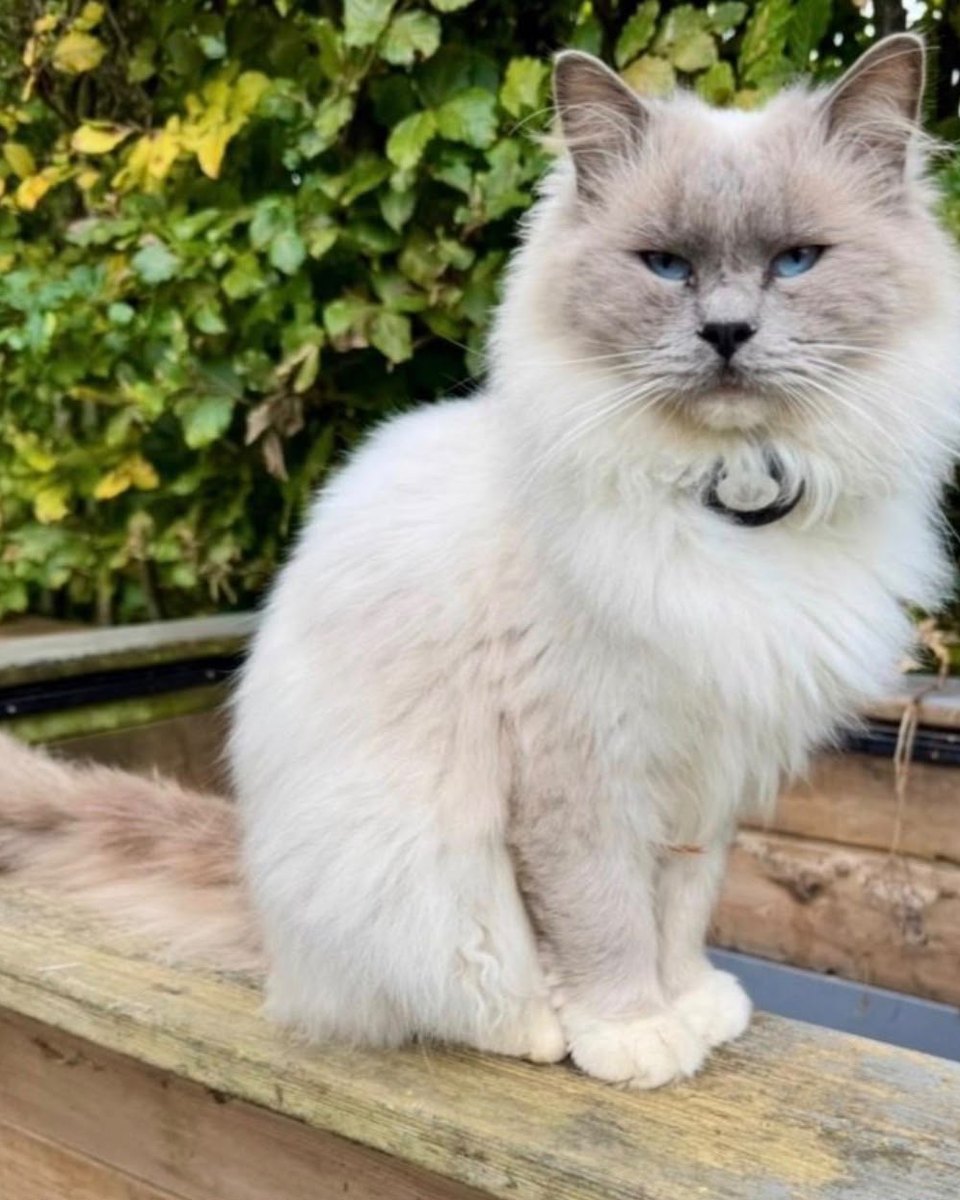
Dunston, our blue mitted stud. Sixteen cats produce a certain amount of hissing; he has never once commented.
Can Ragdolls be aggressive, and why?
Any cat can be aggressive, Ragdolls included, but the breed sits at the gentle end of every temperament survey, and in our experience a Ragdoll in a bad mood walks off rather than squaring up. So when a Ragdoll does bite, scratch, hiss or lunge, treat it as information. The usual causes, roughly in the order worth considering:
- Pain or illness, the first thing to rule out, especially in a cat that was gentle last month.
- Fear: new people, noise, being cornered, the carrier, the vet.
- Play aggression in kittens and young cats that have learned that hands and ankles are prey.
- Petting induced aggression, the bite that arrives after ten lovely minutes of stroking.
- Redirected aggression: a cat outside the window, and the nearest person gets the fury.
- Territorial or inter cat tension in a multi cat home.
- Hormones in an unneutered cat, and maternal protectiveness in a queen with kittens.
Each has a different fix, and punishment fixes none of them. The sections below take them in turn. If the change was sudden, start with the vet rather than the behaviourist.
Ragdoll suddenly aggressive: check for pain first
A previously gentle cat that starts swiping when touched, biting when picked up or growling when approached is hurting until proven otherwise. Cats hide pain well and a Ragdoll hides it better than most, so aggression is often the first sign anyone notices. The common culprits: dental disease, which makes the whole head sore; arthritis in older cats, so being lifted or stroked over the hips hurts; urinary problems, which can make a cat snap when its belly is touched; and hyperthyroidism in older cats, which can turn a placid cat irritable and restless. Ear infections, an abscess, a skin problem and a torn claw all do it too.
Watch for the pattern: aggression only when a particular area is touched, only when lifted, or only at certain times of day. Recognising pain lists the quieter signs that go with it, from a hunched posture to a change in grooming. Book a vet check, describe exactly when the aggression happens, and ask for a proper look at teeth, joints and bladder. Hyperthyroidism and dental care cover two of the likeliest findings. Most sudden aggression in a middle aged or older Ragdoll ends with treatment, not training.
Ragdoll biting and scratching in play
A kitten that ambushes ankles on the stairs, grabs a hand and bunny kicks it, or launches at your legs as you walk past is not aggressive. It is hunting, and it is hunting the only prey it has been given. Play aggression is by far the commonest reason a young Ragdoll bites, and it is nearly always taught, by hands and feet being used as toys while the kitten was small enough for it to be funny.
The fix is consistent and dull. Hands are never toys, from day one. Every play session uses a wand toy, a kicker or a thrown ball, so the kitten learns that prey lives on the end of a string. Two or three proper hunts a day burn off the energy that would otherwise be spent on you, and a session before bed heads off the night ambush. When teeth touch skin, go still, say nothing and withdraw the hand; a kitten that loses the game the moment it bites learns fast. Never shout, tap or push, which to a kitten is more play. Teething and biting covers the sore gum weeks and play and enrichment has the routine. A second kitten helps too: siblings teach bite inhibition better than any human can.
Petting bites, fear and redirected aggression
Petting induced aggression is the bite that comes out of nowhere after minutes of purring. It is not out of nowhere. The tail starts to twitch, the skin along the back ripples, the ears flatten, the cat looks round at your hand. Stop at the first sign, not the last, and most cats never get as far as the bite. Keep sessions short, stroke the head and chin rather than the belly and the base of the tail, and let the cat leave when it wants to. Cat body language teaches the warning signs.
Fear aggression is a cornered cat defending itself: hissing, flattened ears, a crouched body, then a strike. Give an escape route, get lower, do not reach in, and let the cat come to you. A Ragdoll frightened by the vet is covered in vet visits without stress.
Redirected aggression is the strangest to live with: the cat sees a rival through the window, cannot reach it, and turns on whoever is nearest with full force. Do not pick the cat up. Leave the room, close the door, let it settle for an hour or more, and block the view of the trigger. The cat is not angry with you; you were simply there.
Aggression between cats, and unneutered cats
In a multi cat home, hissing and swatting are normal communication. Our sixteen conduct a certain amount of it every day, over a sunny spot, a basket or who reached the bowl first, and it ends in seconds with nobody hurt. Real trouble looks different: one cat stalking or ambushing another, a cat that stops using the tray or hides all day, chasing that does not end, and injuries. That is territorial stress, and it needs more resources, more vertical space and sometimes a slow reintroduction. Multi cat harmony and adding a second cat explain how. A cat that holds a grudge for days is, in our experience, a cat that is unwell or frightened rather than a bully.
Unneutered cats are a separate matter. An entire male fights, sprays and roams, and an entire female in heat is restless and can be short tempered; both calm down sharply after neutering. A queen with kittens will defend them against anyone she does not trust, which is normal and temporary, and the reason strangers are kept away from a nursery in the first weeks.
What to do about an aggressive Ragdoll
- Vet first for any sudden change, before anything else.
- Never punish. Shouting, water sprays and smacking teach fear, and fear is behind half the aggression on this page.
- Never use hands as toys, and make sure visitors and children know it.
- Give an escape route. A frightened cat with a way out rarely needs to fight.
- Keep a routine. Meals, play and bedtime at the same times; Ragdolls dislike surprises.
- Play daily with a wand toy until the cat is tired, then feed.
- Try a pheromone diffuser in the room the cat uses most. Stress and calming covers the options.
- Then a behaviourist. If the vet finds nothing and the problem persists, ask for a referral to a qualified behaviourist; in the UK look for one registered with the Animal Behaviour and Training Council, the ABTC.
If a bite breaks the skin, wash it well under running water, cover it, and see a GP if it swells, reddens or throbs over the next day, because cat bites infect easily and often need antibiotics. For the cat's side of a fight, abscesses and bite wounds explains what to watch for.
Quick questions, answered
Can Ragdolls be aggressive?
Yes, any cat can be, but Ragdolls are among the least aggressive breeds and a gentle Ragdoll that turns aggressive is almost always reacting to something: pain, fear, over stimulation, a rival cat, hormones or play that got out of hand. Treat the aggression as a message and start with a vet check.
Why is my Ragdoll suddenly aggressive?
Sudden aggression in a previously gentle cat usually means pain or illness. Dental disease, arthritis, urinary problems and an overactive thyroid in older cats are the common causes, and all of them make a cat snap when touched or lifted. Book a vet check first and describe exactly when the aggression happens.
Why does my Ragdoll bite when being stroked?
That is petting induced aggression: the cat enjoys the stroking until it does not, and the bite is the last of several warnings. Watch for a twitching tail, rippling skin, flattened ears and a glance at your hand, and stop before those appear. Keep sessions short and stick to the head and chin.
Why is my Ragdoll hissing at me?
A hiss is a request for distance, not an attack. Common reasons are fear of something new, being cornered or picked up when the cat did not want it, pain, or a rival cat glimpsed through the window. Back off, give the cat a way out, and if the hissing is new and persistent, see your vet.
Sources and further reading
- International Cat Care: Advice on aggression and other behaviour problems in cats.
- Cats Protection: Guidance on feline behaviour, play and multi cat households.
Thinking about a Ragdoll kitten?
Our Ragdoll and Ragcoon kittens grow up in our home in Ryde, Isle of Wight, with health tested parents and our support for life. See who is available now, or join the waiting list for the next litter.