
From our colony to your sofa
Teething, Biting & Teaching Gentle
The timeline, the littermate method, and raising a soft mouthed cat.
Last reviewed
The timeline, the littermate method, and raising a soft mouthed cat.
Last reviewed
Every kitten bites; it is how they learn what teeth are for and how much is too much. Your job is not to stop the mouth, it is to finish the lesson their littermates started. Here is how to raise a soft mouthed cat, and survive the teething months with your ankles intact.
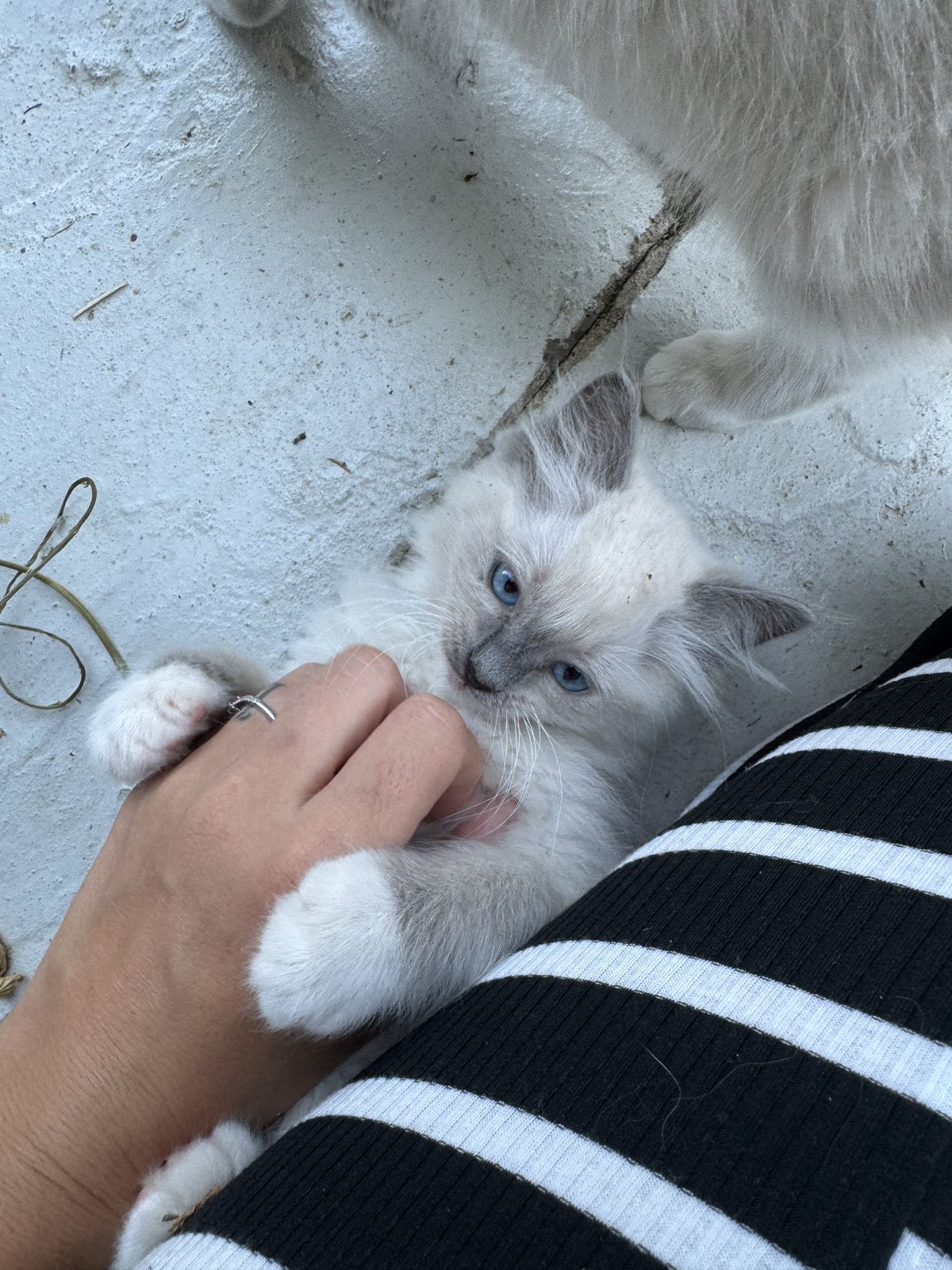
Kittens run two sets of teeth: the baby set arrives in the early weeks, and from around three or four months the adult set pushes through, shedding tiny needle teeth you occasionally find in the carpet, with gums that ache along the way. The chewing phase peaks exactly here, and it is dental, not disciplinary.
Relief is legitimate: soft rubber kitten chews, a cool damp flannel to gnaw, and meals softened if crunching provokes drama. A kitten whose mouth genuinely hurts, drooling, refusing food, pawing, gets a vet look, since retained baby teeth occasionally need help leaving.
Every hand game teaches a lifelong rule the wrong way, so the policy starts on day one: hands are for stroking, wands and kicker toys are for murdering. When the ambush lands on skin anyway, the winning response is a flat quiet sound and total stillness, then the game moving instantly to a legal target, because prey that stops being fun teaches faster than any punishment.
Consistency is the entire currency, across every human in the house including the one who thinks it is cute. It is cute for six months; it is a bruising habit for fifteen years.
Not all teeth are play. The petting bite has a signature, tail flicks and skin ripples building before a sudden strike, and its cure is quitting while ahead, learning your cat’s stroke budget and stopping short of it. Fear biting comes cornered and wide eyed, and asks for space and slower introductions, never reprimand.
And any adult cat whose biting is new deserves the pain question before the behaviour one, because sore mouths and aching joints answer handling with teeth. New bite patterns in a settled cat are a vet conversation first.
Teething kittens show their gums’ opinion: chewing everything textured, drooling a little, going briefly picky about hard kibble, pawing at the mouth, and occasionally leaving a tiny milk tooth in the carpet or a spot of blood on a toy. It is a passing season, but a real one.
Comfort is practical: soft food or moistened kibble on the sore days, chilled but never frozen chew toys, and rough tug games retired for a few weeks. A kitten that stops eating outright, or whose mouth smells foul, has crossed from teething to vet visit.
Sometimes a milk tooth refuses to leave as its adult replacement arrives, and the mouth briefly runs double rows, most visibly at the fangs. Crowded teeth trap food, misalign the bite and can deflect the adult tooth’s path, so retained baby teeth are worth a deliberate look during the teething months.
The check is a two second lip lift: one tooth per position is the rule. Doubles that persist more than a week or two go on the vet’s list, often resolved at neutering time under the same anaesthetic, which is tidy scheduling rather than an emergency.
Some biting survives the teeth: adolescent cats test the world and its rules, and a six to twelve month old ambushing ankles is usually running unspent hunting energy through the only moving targets available. It is behaviour with a fuel source, and the fuel is boredom.
The fix is employment, not punishment: two or three genuine wand hunts daily, food made to be worked for, ambush energy redirected onto kicker toys the moment it aims at humans. Adolescents with a full hunting schedule retire from ankle work remarkably fast.
Litters teach bite pressure through consequences, play stops when teeth land hard, and households continue the course with the same physics: teeth on skin ends the game instantly, calmly, every time, with attention returning a minute later via a toy. No shouting, no nose taps, no drama, just a boringly reliable rule.
Consistency across the whole household is the entire trick, one hand wrestling enthusiast undoes everyone else’s teaching. A kitten taught soft mouths by six months carries it for life, which is precisely why we start the lesson here and hand you the baton.
Kitten Lady shows how she teaches kittens not to bite people, finishing the lesson their littermates started with play that is kind, practical and free of punishment. Watch it before the teething months rather than during them.
Watch on YouTube Kitten Lady
Every kitten bites; teaching where teeth belong is the job, not stopping the mouth. Teething runs to around six months with sore gum weeks in the middle, so stock chewable outlets and check for retained baby teeth at the vet visits. Run the redirect economy: bites on skin end the game instantly, wands and kickers earn it back. Never punish, never play with bare hands, expect the adolescent to retest the rules, and know when biting means pain or fear rather than play.
Adult teeth are generally all in by six or seven months, with the itchiest chewing weeks between three and five months. Your kitten arrives from us mid curriculum; the settling weeks overlap the sore gum season.
As a supporting act: they make the wrong target unpleasant while chew toys make the right target available. Sprays alone just relocate the chewing.
Usually overstimulation instead: petting past tolerance ends in a corrective nip, flagged in advance by tail flicks and skin ripples. Shorter sessions ended before the ripple are the fix; teething is the gums, not the stroking.
Choose dedicated chew items instead: kittens do not distinguish retired slippers from current ones, and textures teach categories. Rubbery kitten chews and fabric kickers keep the categories clean.
Kitten biting with loose bouncy body language is play; flattened ears, hissing, and stiff bodies signal fear or pain instead. The second pattern, or any sudden adult onset biting, earns a vet conversation before a training one.
With the hands are not toys rule held, the breed’s soft mouthed adult temperament arrives on schedule. Without the rule, playful biting simply graduates into a larger cat; the growing out is taught.
Better to remove hands from the game entirely: gloves teach that hands are armoured toys. Wands and kickers put the right distance between teeth and skin from the start.
Baby teeth arrive in the early weeks and fall out again from around four to six months as thirty adult teeth push through, which brings sore gums, extra chewing, and the occasional tiny tooth found in a food bowl, all completely normal. Soft chew toys help, cold ones help more, and food may be approached gingerly for a day or two. Bad breath, refusing food or a very sore mouth are vet checks rather than teething.
In the litter, bite too hard and your sibling squeals and quits the game, which is how bite pressure gets calibrated. A kitten homed alone continues the coursework on the nearest warm thing, you, and hands that wiggle like prey enrol themselves. None of it is aggression; it is unfinished education, and it responds beautifully to consistent teaching.
Rule one, hands are never toys: no wrestling a kitten with bare hands, however cute, because it licenses exactly the behaviour you least want in an adult cat. When teeth land on skin, do as a littermate would: a short high ow, go still, and end the game for a minute. Calm returns, play resumes with a proper toy. Redirect every ankle ambush onto a wand toy from our play guide, drain the energy with real hunting sessions daily, and never punish, which teaches fear of hands rather than softness of mouth. Consistency from everyone in the house does the rest within weeks.
Kittens raised in a litter to a proper age arrive with most of this lesson pre installed by their siblings, which is one more argument for the timelines in our development guide, and for a pair, as our one kitten or two guide argues, since two kittens keep teaching each other long after homing. A Ragdoll’s gentle temperament stacks the deck further; you are mostly maintaining softness this breed already prefers.
For play biting and teething detail, International Cat Care keeps clear behaviour guides free to read.