
From our colony to your sofa
Reading Cat Body Language
Tails, ears, slow blinks and the belly trap, translated.
Last reviewed
Tails, ears, slow blinks and the belly trap, translated.
Last reviewed
Cats talk constantly; most humans just never learned the vocabulary. Ten minutes with this guide and you will understand more of what your cat has been saying all along, which makes everything from grooming to vet trips gentler for you both.
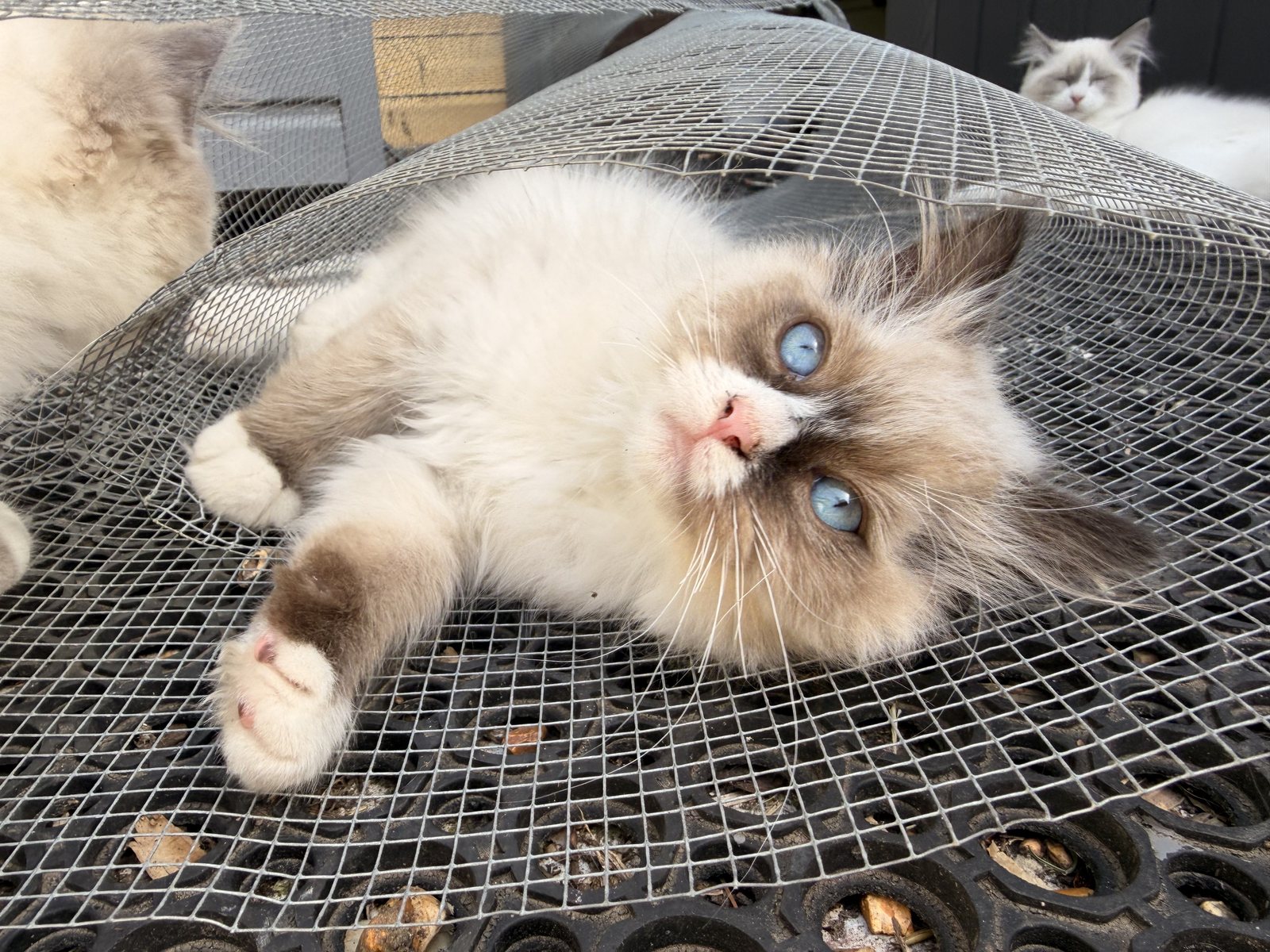
Soft eyes, easy ears, loose body: the baseline every other signal is read against.
The tail is the sentence ending: straight up with a curled tip is the friendly question mark of greeting, a gentle sway is engaged interest, a low hard flicking is irritation filing its first warning, and a fully puffed bottlebrush is fear announcing emergency measures. Wrapped neatly around seated paws reads as composed; clamped tight under the body reads as worried.
Speed carries the grammar: slow movements accompany relaxed states, fast ones arousal. A thumping tail on a stroked cat is not enjoying it emphatically; it is a countdown, and respecting it is how you stay on the right side of the teeth.
Ears report attention and mood in real time: forward is interest, swivelling is monitoring, flattening sideways into aeroplane wings is annoyance rising, and pinned flat back is fear or fury with contact inadvisable. Because ears move faster than posture, they are usually your earliest edition of the news.
Whiskers publish alongside: relaxed and neutral in calm, fanned forward in hunting focus and play, pulled back along the face in anxiety. Put ears and whiskers together and you can read a cat across a room before a paw has moved.
The slow blink is a conversation you can start: catch a soft gaze, close your eyes unhurriedly, hold a beat, reopen. A returned slow blink is the feline signal of peaceable intent, and collecting one from your own cat never stops feeling like an honour.
The second experiment governs touching: offer a still finger at nose height and let the cat vote. A cheek rub against it is yes, please proceed to the approved zones behind the ears and under the chin; a lean away or a sniff and retreat is not now, and honouring the no is precisely what makes the next yes more likely. Consent tested affection is the whole secret of being liked by cats.
A cat rolling onto its back and showing you its tummy is paying you an enormous compliment, and the compliment is almost never touch me there. The exposed belly is a display of trust, the most vulnerable surface offered because the cat feels no threat, and for most cats a hand accepting the apparent invitation converts trust into a reflex grab of claws and teeth.
The fluent response is to accept the compliment in its own currency: a slow blink, a soft word, perhaps a cheek or head rub if the cat leans in. A minority of individuals genuinely enjoy belly strokes, and they will teach you so unmistakably; until a cat has, the belly is display, not doorbell.
Approaching a cat fluently means doing less: soften your gaze rather than staring, offer a slow blink, then look casually away, the feline signal that you are no threat and applying no pressure. Crouch side on, extend a still finger at nose height, and let the cat close the final distance on its own schedule.
The sequence works because it mirrors polite cat to cat introductions, where direct stares are rude and pressure is provocation. It is also why cats so famously target the one visitor who ignores them: that person is, entirely by accident, speaking perfect cat.
Beyond mood, posture reports health: the hunched loaf with feet tucked and back rounded held for hours, the head low crouch, sitting upright with elbows lifted to ease breathing, or a sudden refusal to lie on one side all say body before they say mood. So does a coat gone unkempt on a previously immaculate cat, because grooming is the first budget cut of an unwell animal.
Read alongside the facial signs covered in our pain guide, posture turns an owner into an early warning system. The cat that has been sitting oddly for two days is telling you something it cannot say louder; the fluent household hears it the first day.
Feline sounds only translate fully alongside the body carrying them: the same trill means delight from a cat trotting toward you with tail up, and unease from one crouched low with ears sideways. Chatter at the window pairs with hunting focus; a long low yowl pairs with stiffness and wide pupils and means back away.
So the reading rule is always both channels at once, sound as the words, body as the tone of voice. When the two seem to disagree, believe the body, because cats can vocalise from habit but posture never lies.
Battersea’s feline behaviour team walk through ears, tails, whiskers and posture on real cats, putting moving pictures to everything this guide describes. A few minutes that make the consent test and the greeting sequence much easier to spot at home.
Watch on YouTube Battersea Dogs & Cats Home
Cats talk constantly with tail, ears, whiskers and posture: the upright question mark tail greets, flattened ears warn, and slow blinks are affection you can return. Run the consent test before stroking, let the cat sniff and choose, and never take an exposed belly as an invitation. Watch the greeting sequence, learn your cat’s baseline, and remember posture doubles as a health report: a hunched, tucked or suddenly still cat is saying something the recognising pain guide can translate.
Head bunting is scent gland affection: your cat is marking you as family and safe territory, using the glands on its face. It is one of the highest compliments in the feline vocabulary, best answered with the cheek rub it is usually requesting.
In cats, unlike dogs, a swishing or thumping tail during fuss signals rising irritation: the stroke budget is nearly spent. End the session while things are still friendly and the budget refills; ignore the tail and the teeth deliver the invoice.
Kneading is kittenhood muscle memory: the paddling motion kittens use while nursing, carried into adulthood as a signal of deep comfort and contentment. A folded blanket on your lap keeps the ritual and blunts the claws.
Usually, but not always: cats also purr to self soothe when frightened, in pain or unwell. Read the purr with the rest of the body: purring plus relaxation is contentment, purring plus hiding or appetite loss is a cat comforting itself through trouble.
That sequence is feline politeness: acknowledging you, then breaking the stare to signal no pressure and no threat. Returning it, soft gaze, slow blink, casual look away, is a whole friendly conversation in three moves.
A tail held high with a soft curve at the tip is the feline hello, confidence and friendliness in one flag. A gentle swish means interest, a fast thrash means irritation building, and a puffed bottlebrush tail means genuinely frightened. Wrapped neatly around a sitting cat, the tail reads as content and composed. Learn the tail first and you will rarely be surprised by a cat again.
Ears forward means engaged, swivelling means listening, flattened sideways or back means stressed or cross, and airplane ears are your cue to give space. Slow blinking is real affection, and returning a slow blink is the politest thing you can say to a cat. Wide pupils signal excitement or fear depending on context, while relaxed, half closed eyes mean deep trust. Whiskers pushed forward show curiosity; pinned back against the face shows worry.
The belly display is trust, not an invitation: most cats showing you their tummy are saying I feel safe, and answering with a belly rub often ends in a polite bite. Purring usually means contentment but can accompany pain or fear, so a purring cat who is also hiding or off food still needs attention. And a cat who suddenly grooms mid interaction is often self soothing, taking a breather rather than snubbing you.
Ragdolls speak this language with the volume turned soft: fewer dramatics, more leaning, following and flopping, which is body language for you are my person. The going loose in your arms that names the breed is the ultimate trust signal, covered in our temperament guide. When even a Ragdoll flattens ears or thrashes a tail, believe them the first time, and they will trust you more for it.
For more on feline communication, International Cat Care publishes superb behaviour guides, and Cats Protection offers free body language resources with photographs.