
Can Cats Eat That? Human Foods, Safe and Unsafe
A Ragdoll will ask for all of it. Here is what to say.
Last reviewed
Can cats eat human food? Some of it, in small amounts, and some of it can kill them. A cat needs nothing from your plate if it is fed a complete cat food, so everything here is a treat at most. Plain cooked meat, fish and egg are fine in small amounts. Dairy, raw food and salty or fatty leftovers are best avoided. Chocolate, onions and garlic, grapes and raisins, alcohol and raw dough are toxic. The table below gives the answer for the foods people ask about most, from two UK sources, Cats Protection and the vets at Animal Trust. If your cat has eaten something from the toxic list, ring your vet.
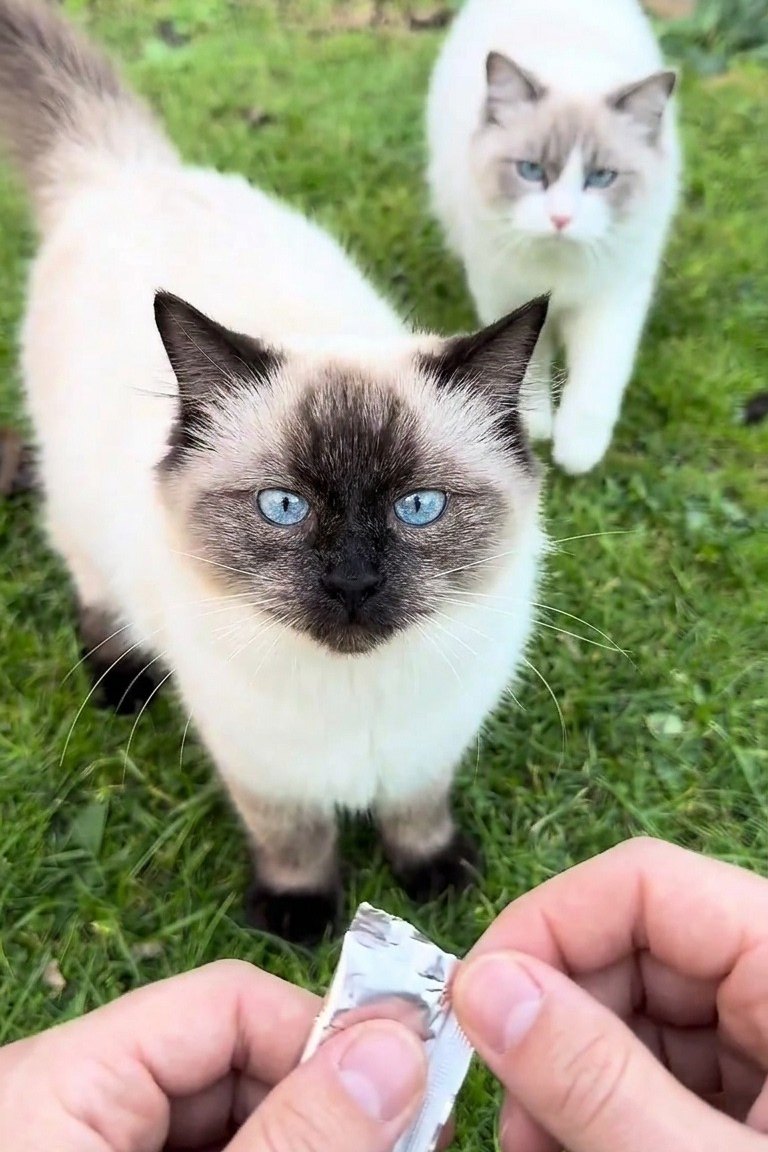
Two of the colony arriving at the sound of a wrapper. A cat on a complete food needs nothing from the table, whatever it tells you.
Can cats eat that? The quick list
| Food | Verdict | What to know |
|---|---|---|
| Cooked chicken, turkey, beef | Fine, a little | Plain, boneless, no skin, sauce or seasoning |
| Cooked fish | Fine, now and then | Bones out. Too much unbalances the diet |
| Tinned tuna | A little, not regularly | In spring water, not brine or oil. Can be high in salt and mercury |
| Cooked egg | Fine, a little | Scrambled or boiled, nothing added |
| Carrot, peas, green beans, broccoli | Fine if the cat likes them | Cooked and cut small. Cats do not need vegetables |
| Apple, banana, pear, blueberries, strawberries, watermelon | Fine, a tiny amount | No seeds, stalks or skin. Sugary |
| Plain yoghurt | A little may be tolerated | Most cats cannot digest lactose |
| Cheese, milk, cream | Best avoided | Most cats are lactose intolerant, and dairy upsets the stomach |
| Raw meat, raw fish, raw egg | Best avoided | Bacteria and parasites. Meat sold for people is meant to be cooked |
| Ham, bacon, sausages, crisps | Best avoided | Too much salt and fat |
| Bones, raw or cooked | Avoid | Choking, blockage and internal injury |
| Nuts | Avoid | Oily and fatty, and make cats unwell |
| Avocado | Avoid | Fatty, and contains a toxin called persin |
| Chocolate, coffee, caffeine | Toxic | As little as 2 g of chocolate can cause serious harm |
| Onions, garlic, leeks, chives | Toxic | Fresh, cooked or dried. Cause anaemia |
| Grapes, raisins, currants | Toxic | Can cause kidney failure |
| Alcohol | Toxic | Extremely toxic even in tiny amounts |
| Raw bread or pizza dough | Toxic | Swells in the stomach and produces alcohol |
| Mouldy food | Toxic | Keep the food waste bin shut |
Peanut butter, bread and rice are not on either list. None is known as a poison, and none gives a cat anything it needs. Peanut butter is fatty and salty, so it is best left out.
Why cats cannot eat like us
- They are meat eaters by design. A cat's body is built to run on animal protein and fat, with nutrients it can only get from meat. A complete cat food supplies all of them in the right amounts.
- They are small. A cube of cheese to a 5 kg cat is a large snack, and a square of chocolate is a dose.
- They process some things differently. Substances that people and dogs handle easily can build up in a cat.
- Extras displace the real diet. A cat that fills up on chicken eats less of the food that is balanced. Cats Protection warns that feeding only cooked chicken over time leads to deficiencies.
Feeding a Ragdoll sets out the main diet, and reading food labels explains what complete means on a packet.
Human foods cats can eat, and how to give them
- Plain. No salt, butter, oil, gravy, stuffing, onion or garlic. Most of what makes food taste good to us is what makes it unsuitable.
- Cooked. Meat, fish and egg cooked through.
- Boneless. Check fish twice.
- Small. A piece the size of your fingertip is a treat to a cat.
- Counted. Treats should stay within the day's food allowance, not on top of it. PDSA's rule is no more than a tenth of the day's food, with meals cut back to match.
- Occasional. A habit at the table is hard to undo. Why is my Ragdoll always hungry? explains how begging is trained.
Our own cats have the chickens' eggs once a week and the occasional tin of sardines. Treats has more on what to offer and how often.
Cheese, milk, tuna and raw chicken
Can cats eat cheese or drink milk?
They will, and most should not. Kittens digest their mother's milk, and most adult cats lose the ability to digest lactose. The result of a saucer of milk is often diarrhoea a few hours later. Lactose free and plant based cheeses are not a safe swap, because they can contain ingredients that are toxic to cats. Water is the only drink a cat needs.
Can cats eat tuna?
A little tuna in spring water now and then will not hurt. Tuna meant for people should not be a regular meal: it can be high in salt and mercury, it is not a complete food, and too much puts weight on. Tuna made into complete cat food is a different thing.
Can cats eat raw chicken?
Raw meat from a supermarket or a butcher is sold to be cooked, and it can carry bacteria and parasites that make cats, and the people handling it, ill. Both sources advise against it. Raw diets made for pets are a separate subject with their own rules: raw feeding goes through them. Cooked bones splinter and raw ones can choke or block, so no bones either way.
Foods that are toxic to cats
- Chocolate, coffee and anything with caffeine. They contain substances that affect the heart and the nervous system. Dark chocolate is the worst. Ring the vet straight away.
- Onions, garlic, leeks and chives. The whole family, in any form, including the powder in gravy, stock, baby food and takeaway leftovers. They destroy red blood cells. See anaemia.
- Grapes, raisins and currants. Including in cakes, mince pies and hot cross buns. They can cause kidney failure.
- Alcohol. In drinks, and in desserts, sauces and some household products.
- Raw yeast dough. It goes on rising in a warm stomach.
- Mouldy food from the bin or the compost.
Cats are fussier than dogs and less likely to wolf down a box of chocolates, but kittens try everything, and a cat will lick gravy, butter and cream off almost anything. Christmas hazards covers the time of year when most of these are on the table at once.
Roast dinners, takeaways and other real life questions
- The Sunday roast. A little plain meat is fine. Gravy, stuffing and anything cooked with the onions are not.
- Fish and chips. A flake of fish from the middle, no batter, no salt, no vinegar.
- Takeaways. Curries, Chinese food and pizza are full of onion, garlic and salt. Keep the cartons shut and the bin lid down.
- Breakfast. A little plain scrambled egg, yes. Bacon, sausage and the milk from the cereal bowl, no.
- Baking. Raw dough, raisins, chocolate chips and the bowl to lick are all on the wrong list.
- Christmas. Plain turkey, yes. Mince pies, Christmas pudding, pigs in blankets and the cheeseboard, no.
- Kittens. Leave human food out altogether. A kitten's stomach is easily upset and it needs every mouthful to be kitten food.
What to do if your cat eats something it should not
- Work out what, how much and when. Keep the packaging.
- Ring your vet if it is on the toxic list, or if you are not sure. For chocolate, ring straight away.
- Do not make the cat sick and do not give salt water, milk or anything else as a remedy.
- Watch for vomiting, diarrhoea, dribbling, restlessness, wobbliness, fast breathing or a cat that goes quiet.
- For a food from the middle of the table, such as a lick of cream or a stolen piece of ham, expect a possible upset stomach and offer water. The poorly tummy explains when that needs a vet.
Poisoning: the golden hours guide covers the non food poisons, and plants poisonous to cats the ones that grow.
Quick questions, answered
Can cats eat cheese?
It is best avoided. Most adult cats are lactose intolerant, so cheese and milk often cause an upset stomach. Lactose free and plant based cheeses can contain ingredients that are toxic to cats.
Can cats eat eggs?
Yes, cooked. A little plain scrambled or boiled egg is fine as a treat. Raw egg is not advised because of the bacteria it can carry.
Can cats eat chocolate?
No. Chocolate is toxic to cats, and as little as 2 g can cause serious harm. Ring your vet straight away if your cat has eaten any.
Can cats eat grapes or raisins?
No. Grapes, raisins and currants can cause kidney failure in cats. That includes cakes, mince pies and hot cross buns.
Can cats eat watermelon, blueberries or apple?
A tiny amount is fine, with seeds, stalks and skin removed. Fruit is sugary and cats do not need it, so keep it to an occasional taste.
Can Ragdolls eat raw chicken?
Raw chicken sold for people is not advised: it can carry bacteria and parasites. Plain cooked chicken, boneless, is a safe treat. Raw diets made for pets are a separate subject.
Can cats eat peanut butter?
It is not a recognised poison, but it is fatty and salty and gives a cat nothing it needs. It is best left out.
Sources and further reading
- Cats Protection: Cats and human foods: Which foods are harmful and why, what is acceptable in small amounts, and what to do if a cat eats something toxic.
- Animal Trust: What food can my cat eat?: Written by a vet at the not for profit vet group: cooked meat, fish, egg, vegetables and fruit in small amounts, and the foods to avoid.
Thinking about a Ragdoll kitten?
Our Ragdoll kittens grow up in our home in Ryde, Isle of Wight, with health tested parents and our support for life. See who is available now, or join the waiting list for the next litter.