
Plants Poisonous to Cats: A UK House and Garden List
One bouquet does more harm than a garden full of weeds. Know the short list.
Last reviewed
Which plants are poisonous to cats? More than most people expect, and one above all: the lily. Every part of a lily is toxic to a cat, the pollen included, and a cat can be poisoned by brushing past a vase and washing its coat. After lilies come a handful of popular house plants, some cut flowers and spring bulbs, and a group of garden shrubs and perennials. An indoor Ragdoll meets the house plants and the bouquets, and a cat with a garden or a catio meets the rest. The lists below are Cats Protection's. If you think your cat has eaten or touched any of them, ring your vet now and do not wait for signs.
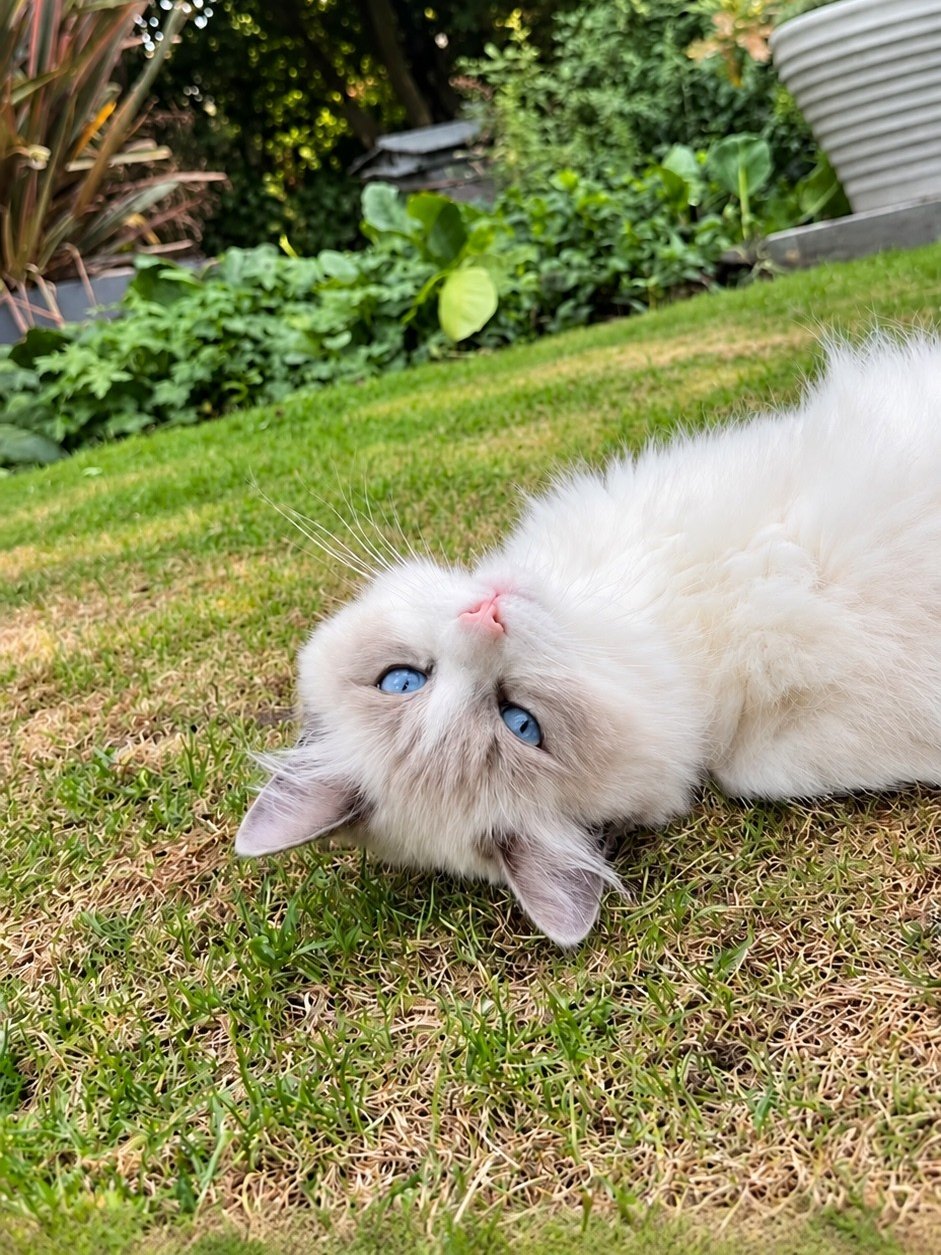
Grass is safe. A good deal of what grows next to it is not.
Lilies: the plant that must not come into the house
True lilies and day lilies, including Easter lilies, tiger lilies and stargazers, are the most dangerous plants a cat can meet.
- Every part is toxic: petals, leaves, stems and pollen, and even the water in the vase.
- A tiny amount is enough. A cat does not have to eat the plant. Pollen that brushes on to the coat is swallowed when the cat washes.
- The damage is to the kidneys, and it can be done within days.
- Any contact is an emergency. Early treatment protects the kidneys. Late treatment often cannot.
The only safe rule is that lilies do not come into a home with a cat. Tell family and friends who send flowers, and check every bouquet before it goes in water. Poisoning: the golden hours guide explains what a vet does and why speed matters.
House plants and cut flowers poisonous to cats
| Plant | Where you meet it | What to know |
|---|---|---|
| Lilies | Bouquets, pots | All parts toxic, pollen included. Linked to kidney failure. Always avoid |
| Cycads, such as the sago palm | Pots, indoors or out | Described by Cats Protection as lethal |
| Cheese plant (Monstera) | House plant | Listed as dangerous. Keep out of reach or choose another |
| Ficus, including rubber plants and weeping figs | House plant | Listed as dangerous |
| Aloe vera | Kitchen windowsill | Listed as dangerous |
| Poinsettia | Christmas | Listed as dangerous |
| Mistletoe | Christmas | Listed as dangerous |
| Daffodils | Cut flowers, pots, bulbs | Bulbs are extremely toxic. Flowers and leaves also cause illness |
| Tulips | Cut flowers, pots, bulbs | Harmful if eaten. Keep bulbs out of reach |
| Peonies | Cut flowers | Listed as dangerous |
| Chrysanthemums | Cut flowers, pots | Mildly toxic. Ask your vet if eaten |
| Foxgloves | Cut flowers | Highly toxic, in a vase as in the garden |
Flower food in vase water is not very toxic, but it can upset a stomach, so keep vases where a cat cannot drink from them. Christmas hazards covers the seasonal plants, and kitten proofing the rest of the house.
Garden plants poisonous to cats
| Plant | What to know |
|---|---|
| Lilies and day lilies | As above. Do not plant them where a cat goes |
| Rhododendrons and azaleas | All parts poisonous. A small amount causes illness, and it can be fatal if untreated |
| Foxgloves | Highly toxic to cats and to people. A small amount can cause serious harm or death |
| Yew | Extremely toxic and can be fatal. Still toxic when cut, so keep it out of wreaths and indoor greenery |
| Oleander | All parts toxic. Cuttings are a risk, and so is smoke from burning them |
| Autumn crocus | Can cause severe vomiting, internal bleeding, liver and kidney damage and breathing failure |
| Nicotiana (flowering tobacco) | All parts toxic. Signs usually appear one to two hours after eating |
| Delphiniums (larkspur) | A large amount is needed to cause serious problems. More toxic when the plant is young |
| Periwinkle (Vinca) | Causes vomiting and diarrhoea, depending on the amount eaten |
| Daffodil and tulip bulbs | Store and plant them where a cat cannot dig |
| Ragwort | Can cause liver damage if eaten in quantity |
| Cycads | Lethal, in pots or in the ground |
Clear up prunings and fallen berries straight away. Grass itself is safe, unless it has been treated with weedkiller or pesticide, and not every weed is.
How cats are poisoned by plants
- Chewing. Kittens chew everything, and a bored indoor cat will chew leaves for something to do.
- Grooming. Pollen or sap on the coat or paws is swallowed at the next wash. This is the commonest route, and the reason a cat that never eats plants is still at risk from lilies.
- Digging. Bulbs in pots and borders, or left out waiting to be planted.
- Drinking. Water from a vase or a plant saucer.
Give a cat something it is allowed to chew. A pot of cat grass indoors, or cat grass and catnip in the garden, takes a lot of interest away from everything else. Play and enrichment has more ways to keep an indoor cat busy.
Signs of plant poisoning in cats
- Dribbling
- Vomiting or diarrhoea
- Twitching or fits
- Difficulty breathing
- Shock, collapse or coma
With lilies a cat may show very little at first, which is why the rule is to ring on suspicion, not on symptoms.
What to do if your cat eats a poisonous plant
- Take the cat away from the plant, and the plant out of the room.
- Ring your vet at once. Do not wait for signs to develop.
- Do not make the cat sick. It may do more harm than good. Leave that decision to the vet.
- Take the evidence. A piece of the plant, the label, or a photo. A sample of vomit helps if it contains plant matter or is an odd colour.
- Say when it happened and how much you think was eaten.
- If pollen is on the coat, stop the cat washing on the way: wrap it in a towel in the carrier and tell the vet.
When to call the vet explains how out of hours care works, and it is worth saving the numbers before you need them.
When each plant turns up
- Spring. Daffodils and tulips in pots, vases and borders, and lilies in Mother's Day and Easter bouquets.
- Summer. Lilies in flower, foxgloves and delphiniums in the borders, oleander in patio pots, and prunings left on the lawn.
- Autumn. Autumn crocus in flower, and bags of spring bulbs waiting to be planted.
- Winter. Poinsettia, mistletoe, yew in wreaths and table decorations, and lilies again in Christmas bouquets.
For an indoor Ragdoll the risk is almost all bouquets and pot plants, and out of reach is not a plan. Petals and pollen fall, cats climb, and a vase gets knocked over. If a plant is on the danger lists, the safe place for it is another house.
Cat safe plants and flowers
These are on Cats Protection's safe list.
- House plants: spider plant, parlour palm, prayer plants (Calathea and Maranta), orchids, maidenhair fern, sword fern, peperomia, string of hearts, Christmas cactus.
- Cut flowers: roses, freesias, snapdragons.
- Garden plants: roses, sunflowers, buddleia, hollyhocks, nasturtiums, petunias, gerberas, nemesia, zinnias.
- Herbs: basil, coriander, thyme, valerian.
- For the cat: cat grass and catnip.
Safe means not poisonous. A cat that eats a whole spider plant may still be sick on the carpet. When you buy a plant or are given flowers, look up the name before it comes indoors, and if a florist cannot tell you what is in a bouquet, treat it as unsafe.
Planning a catio or a secure garden? How to cat proof a garden covers the structure, and this list covers what to plant inside it.
Quick questions, answered
What plants are most poisonous to cats?
Lilies are the most dangerous, because every part is toxic, including the pollen, and they damage the kidneys. Cycads, yew, foxgloves, oleander, rhododendrons and azaleas, autumn crocus and daffodil bulbs are also serious.
Are lilies really that dangerous to cats?
Yes. A cat can be poisoned by pollen brushed on to its coat and swallowed while washing. Any contact is an emergency. Do not keep lilies in a home with a cat.
Is a cheese plant (Monstera) poisonous to cats?
Cats Protection lists cheese plants among the house plants that are dangerous to cats. Keep one out of reach, or choose a safe plant such as a spider plant or a parlour palm.
Which house plants are safe for cats?
Spider plants, parlour palms, prayer plants, orchids, maidenhair and sword ferns, peperomia, string of hearts and Christmas cactus are all on Cats Protection's safe list.
Are roses safe for cats?
Yes. Roses are on the safe list for both cut flowers and garden plants, along with freesias and snapdragons. Check the rest of the bouquet, because mixed bunches often contain lilies.
What should I do if my cat eats a poisonous plant?
Take the cat away from the plant and ring your vet at once, without waiting for signs. Do not make the cat sick. Take a piece of the plant or its label with you.
Are tulips and daffodils poisonous to cats?
Yes. Daffodil bulbs are extremely toxic and the flowers and leaves also cause illness. Tulips are harmful if eaten. Keep bulbs, pots and cut flowers out of reach.
Sources and further reading
- Cats Protection: Dangerous plants for cats: The charity's lists of dangerous and safe house plants, cut flowers, garden plants and herbs, the signs of poisoning and what to do.
- Countryfile: 11 poisonous plants to cats, from Cats Protection: Eleven garden and house plants with what each does, as set out by Cats Protection.
Thinking about a Ragdoll kitten?
Our Ragdoll kittens grow up in our home in Ryde, Isle of Wight, with health tested parents and our support for life. See who is available now, or join the waiting list for the next litter.