
From our colony to your sofa
Ragdoll Myths, Debunked by the People Who Live With Fifteen
The flop and pain myth, allergy hopes and imposters, sorted properly.
Last reviewed
The flop and pain myth, allergy hopes and imposters, sorted properly.
Last reviewed
Famous breeds collect folklore, and the Ragdoll has collected more than most, some of it charming, some of it genuinely harmful. Time to sort the truth from the tales, with a house full of evidence asleep on our sofas.
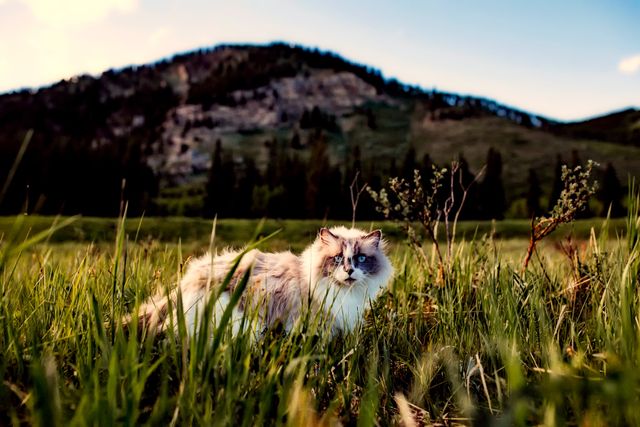
The strangest claim that attached itself to this breed early on was that Ragdolls feel less pain than other cats, an idea with no basis whatsoever and a genuinely harmful edge: a stoic, relaxed cat whose owner believes it cannot suffer is a cat whose problems get found late.
Ragdolls feel everything any cat feels; they simply complain beautifully little, which raises rather than lowers the owner’s duty of observation. The floppy tolerance that made the breed famous is trust and temperament, never anaesthesia, and the pain recognition guide in this library exists precisely because gentle cats hide things well.
No cat breed is truly hypoallergenic, Ragdolls included: the main allergen is a protein from skin and saliva, spread by grooming, and every cat produces it. Individual cats vary, and some allergic people report coping better with some individuals, but that is a lottery, not a breed feature.
The honest advice for allergic households is contact before commitment: spend real time with the specific cat, ideally more than once, and talk to a doctor about management. A breeder promising an allergy proof kitten is selling something biology does not stock.
The breed’s signature relaxation is real and really bred for, but it is a spectrum, not a switch: some Ragdolls melt over a shoulder like warm dough, others are merely very easygoing cats who would rather sit beside you than be carried at all. Both are correct Ragdolls.
The guarantee worth having is not the flop but the temperament underneath it, gentle, social and people oriented, which the breed delivers with remarkable consistency. Meet kittens as individuals, choose the character that fits your home, and let the carrying style be whatever that cat decides it is.
The reputation paints Ragdolls as animate cushions, and owners know better: these cats play fetch, patrol windowsills, escort humans between rooms and invent evening zoomies like any cat. Docile describes their conflict style and handling tolerance, not their battery capacity.
The myth matters because it mis-sells the breed to people wanting a stuffed toy and under-serves the cats, whose play needs are real. A Ragdoll without daily hunting games does not become calmer; it becomes bored, heavier and occasionally creative about upholstery.
A softer temperament breeds a careless assumption: that Ragdolls will tolerate anything, from toddler tail pulls to costume photography, without deploying equipment. They are patient, some heroically so, but patience is a budget, and every cat’s budget has a floor.
The household rules stay standard: children taught handling, warning signs respected, escape routes always open, claws trimmed but never assumed absent. The gentlest breed on earth is still a cat, and treating the gentleness as consent is how gentle cats get labelled unpredictable.
A persistent criticism holds that keeping Ragdolls indoors is unkind, and the breed itself argues back: bred for human company, trusting to a fault with strangers and traffic alike, they are precisely the cats the outdoors treats worst. Roads, thieves and dogs do not grade on temperament.
Enriched indoor life, window posts, climbing furniture, daily hunts, a catio where possible, delivers the stimulation without the casualty statistics. The deprivation myth confuses territory size with quality of life; cats measure the second, and it is entirely providable indoors.
Ragdolls get marketed as the beginner’s pedigree cat, and the truth needs its footnotes: yes to forgiving temperaments and trainable natures, but the package includes grooming a semi long coat, funding a large cat’s appetite and vet care, and honouring a breed level need for company.
The best starter cat is the one whose needs the starter will actually meet. For present, engaged households the Ragdoll genuinely is a wonderful first cat; for the barely home, no breed’s marketing fixes the mismatch.
Ragdoll folklore needs regular pruning: they feel pain exactly like every cat, they are not hypoallergenic, not all of them flop, and they are not too docile to play, climb or defend an opinion. What the reputation gets right is the temperament’s direction, people oriented, gentle, adaptable, delivered by responsible breeding and socialising rather than by magic.
Many relax noticeably; plenty stay composed but upright; a few would simply rather not be carried, thank you. The flop is a common party trick, not a breed contract.
In trainability, greeting habits and following their people, the comparison earns its keep. They remain entirely cats about litter trays, independence of schedule and the dignity of ignoring a command they understood perfectly.
They are less vertical than oriental breeds and often prefer lower stations, but healthy Ragdolls jump perfectly well when motivated. Furniture planning should assume access, not immunity.
A semi long coat sheds, seasonally and enthusiastically: the myth confuses low matting with low shedding. The comb and the lint roller both stay employed.
Quieter than average as breeds go, with soft voices used sparingly, but individuals chat, trill and demand breakfast with feeling. Silence is a tendency, not a setting.
With enrichment, a companion cat or midday human contact, many manage a working household well. Left long hours alone with nothing, this breed wilts faster than most; the sociability is not a myth.
Some enjoy dabbling and tap watching, many do not, and none of it is breed defining. The water obsessed reputation belongs more to the Maine Coon and Turkish Van.
The most dangerous myth of the lot. The famous flop is relaxation and trust, nothing more; Ragdolls feel pain exactly as every cat does, and hide it exactly as expertly, which is why our recognising pain guide applies to them in full. Treat the floppiness as the compliment it is, never as permission for rough handling, and teach children the same.
Neither, we are afraid. Cat allergies react mostly to proteins in saliva and skin, which every cat produces, Ragdolls included, so allergic households should spend proper time around the breed before committing. And while the single layer style coat mats less and sheds less dramatically than some longhairs, shed it certainly does, seasonally and enthusiastically, which is what the comb and our grooming guide are for.
Calm is not comatose. Ragdolls play like kittens for years, adore a wand session, and learn names, routines, fetch and the sound of the fridge with ease, as our temperament guide and play guide attest. The docile reputation really describes their softness with people, not an absence of engine. Under floof, there is a proper cat in there.
The internet is full of blue eyed fluff sold under the famous name, and the folklore that a big price guarantees a healthy pedigree cuts both ways. What actually defines the real thing is lineage, health tested parents and raising, which is precisely the checklist in our choosing a breeder guide. Use it ruthlessly, on us included. The breed’s reputation was built by careful breeding, and it is protected the same way, one well chosen kitten at a time.
For evidence based cat facts to test any claim against, International Cat Care is the gold standard owner resource.