
From our colony to your sofa
The Ragdoll Story: A Short History
From Josephine of Riverside to the world’s favourite lap cat.
Last reviewed
From Josephine of Riverside to the world’s favourite lap cat.
Last reviewed
Every Ragdoll flopping across a British sofa tonight descends from one white cat in 1960s California, and the story of how she became a worldwide breed involves a car accident, a trademark, some genuinely wild claims and a handful of quietly sensible people.
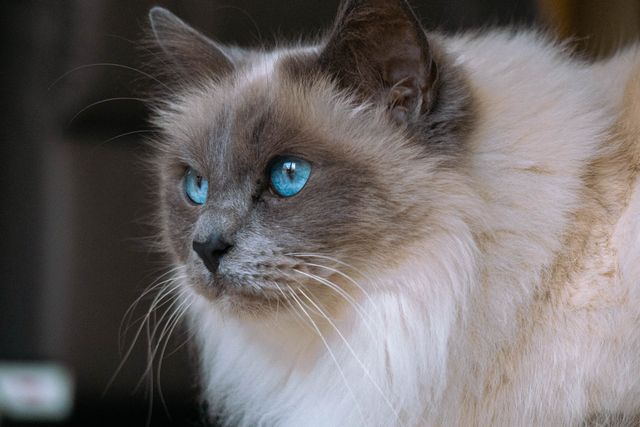
The founding legend says it all began with Josephine, a white longhaired cat in 1960s Riverside, California, whose kittens after a road accident were unusually relaxed, and from whose lines Ann Baker built the breed. The accident detail makes a marvellous story and impossible biology: injuries do not rewrite the genes a cat passes on.
What actually happened is more interesting than the myth: Baker noticed genuinely exceptional temperaments in particular kittens and selected for them ruthlessly, generation after generation. The famous floppiness is not an inheritance from a crash; it is the product of one of the most single minded temperament breeding programmes in cat history.
Ann Baker did something no breed founder had tried: she trademarked the Ragdoll name and ran the breed as a franchise, with contracts, royalties and her own registry rather than the established cat fancy. It kept her in control and kept the breed out of the mainstream.
The stalemate broke when early breeders stepped away from the franchise model and worked the Ragdoll into the major registries on the standard path, writing breed standards and building the gene pool methodically. The breed the world fell in love with reached it through that patient second wave, while the founding story kept its splendidly eccentric first chapter.
Recognition arrived registry by registry through the later twentieth century, and then the modern era did the rest: a big, beautiful, famously gentle cat photographed like a dream turned out to be precisely what the internet age wanted, and the Ragdoll climbed the popularity tables in country after country until it sat at or near the top.
Popularity carries obligations, which is where the modern story lands responsibility with breeders: health testing regimes, careful lines and honest rearing are how a fashionable breed stays a healthy one. The history is colourful; the future is paperwork, and that is a good trade.
Every Ragdoll traces to a handful of named 1960s cats: Josephine, the white longhaired queen at the centre of the story, and her descendants Daddy Warbucks, Fugianna and Buckwheat, from whom the founding lines descend. For a worldwide breed, the family tree’s trunk is remarkably narrow.
That narrow trunk explains the breed’s later priorities: careful outcross decisions in some registries, close attention to genetic diversity, and the health screening culture modern breeders inherit. Knowing the trunk also makes pedigrees legible; the same ancestral names echo at the back of them all.
Ragdolls arrived in Britain in the early 1980s, when a small number of imported cats founded the UK population and enthusiasts began the long administrative climb through the cat fancy: provisional recognition, championship status, and the slow building of a British breeding community.
Today the breed ranks among Britain’s most popular pedigree cats, a rise built litter by litter from those first imports. Isle of Wight Ragdolls, ours included, are twigs on that specific branch, and the paperwork behind a well bred kitten still traces the whole journey.
The breed’s name records its party trick: founding cats that went loose as a child’s ragdoll when picked up, a trait Ann Baker leaned into hard as the breed’s brand. As names go it was marketing genius, memorable, descriptive and slightly magical.
The name also seeded the breed’s most persistent myths, floppiness guaranteed in every cat, pain immunity, unlimited tolerance, which our myths guide retires properly. The lesson of the name is that good branding outlives its fine print by decades.
Breed history earns its place in a buying decision at three practical points: pedigrees whose lines are documented back toward the foundation, registries whose recognition means standards and oversight, and breeders who know their cats’ ancestry because they chose it deliberately.
Ask any seller where their lines come from and watch what happens: enthusiasm and specifics from people doing it properly, vagueness from people who bought two cats and a website. Sixty years of history is either present in the paperwork or absent from the operation.
Every Ragdoll descends from Josephine, one white cat in 1960s California, and the story runs through legend, trademark battles and careful breeding to the registries’ shelves today. The floppy relaxation that named the breed is temperament, not the injury folklore the legend claims. Foundation cats built the lines, the breed crossed the Atlantic in the early 1980s, and the history matters to buyers for one practical reason: it explains why lineage, records and honest breeding practice are the breed’s backbone.
That is the legend, an accident after which her kittens were supposedly placid and floppy, and genetics says inheritance does not work that way. The story is origin myth; the cats descended from her are simply well bred reality.
The breed’s founder: visionary enough to see and fix a temperament, eccentric enough to trademark the breed name and run her own registry, and controversial enough that mainstream Ragdoll breeding organised itself around her rather than under her.
Ann Baker’s own registry, the International Ragdoll Cat Association, through which she licensed breeders under franchise like terms. The breeders who left it founded the mainstream registered breed most Ragdolls belong to today.
Genuinely young: founded in the 1960s, against centuries claimed by breeds like the Persian. Youth means the founding story is documented, photographed and argued about by people who were there.
Selective breeding has consolidated size and coat, and the modern show standard describes a large, imposing cat. Photographs of foundation cats show the family resemblance clearly, a size or so smaller.
Indirectly and importantly: a narrow foundation made genetic management matter, which is why screening culture runs deep in responsible lines. History is the reason the health testing question is always worth asking.
Registries inherited different slices of the trademark era and made different rules on colours, patterns and outcrosses. The cats overlap almost entirely; the paperwork dialects differ.
In Riverside, California in the early 1960s, a breeder named Ann Baker began working with Josephine, a white semi longhaired cat belonging to her neighbours. After Josephine recovered from being hit by a car, her later litters seemed remarkably relaxed and people loving, and the legend grew that the accident itself had transformed her kittens. Genetics does not work that way, as our myths guide enjoys explaining: the temperament was in the cats, and Ann Baker’s real contribution was noticing it and breeding for it, litter after litter.
Ann Baker was a singular character. She trademarked the Ragdoll name, ran her own registry, franchised breeding rights like a restaurant chain, and told ever taller tales about the cats’ origins, government laboratories and alien involvement included. Meanwhile the foundation cats she bred from Josephine’s line, names like Daddy Warbucks, Fugianna and Buckwheat that sit at the back of virtually every Ragdoll pedigree on earth, were quietly acquired by other breeders, most famously Denny and Laura Dayton, who worked the breed towards mainstream registries and put the folklore politely to one side.
The first Ragdolls reached Britain in 1981, and British breeders spent the following two decades building the lines and winning recognition until the breed stood fully established here. The rise since has been remarkable: from one Californian back garden to one of the most popular pedigree cats in the world, prized for exactly the quality Josephine’s kittens showed first, a temperament so trusting that going limp in loving arms named the entire breed.
Two lessons hide in the story. First, temperament is the point of this breed: sixty years of choosing the gentlest cat in the room built the character our temperament guide describes, and it deserves protecting with the same care today. Second, a breed built from a small founding family carries its inheritance close, which is why the health testing explained in our Ragdoll health guide matters so much, and why our choosing a breeder guide teaches you to ask about it without blushing.
For breed histories and profiles beyond ours, International Cat Care keeps measured breed information, and Cats Protection covers choosing pedigree cats sensibly.