
From our colony to your sofa
Choosing a Breeder: The Questions and the Red Flags
The questions good breeders welcome, and the red flags that mean run.
Last reviewed
The questions good breeders welcome, and the red flags that mean run.
Last reviewed
The difference between a great kitten experience and heartbreak is usually decided before you ever meet a kitten, in how you choose where it comes from. We are breeders telling you how to interrogate breeders, ourselves included, because the good ones want to be asked.
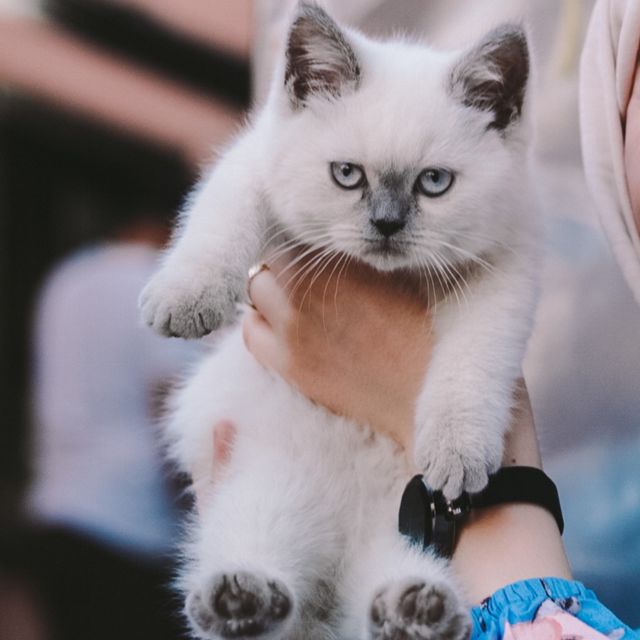
What good breeding looks like: kittens raised underfoot, easy with hands and household noise.
A visit answers questions no listing can: you should meet the mother with her kittens and see her relaxed in her own home, watch kittens who approach with curiosity rather than flatten in corners, and find an environment that matches the photographs you were shown, lived in, clean enough, and clearly the kittens’ actual world rather than a staging area.
Confidence is the tell that cannot be faked on short notice: kittens raised underfoot with handling, visitors and household noise carry themselves differently by eight weeks than kittens raised in a shed, and ten minutes on the floor with a litter tells you which rearing you are looking at.
The document set around a well bred kitten has a shape: health records with the vet’s practice details on them, parents’ health testing shown rather than described, registration paperwork consistent with what was advertised, and a written agreement covering both sides, what the breeder promises and what they ask of you.
Read the agreement before the kitten is on your lap, because nobody negotiates well while being purred at. Fair contracts survive being read slowly; the other kind depend on you not doing so.
Ask one question and listen carefully: what happens if, at any point in this cat’s life, I cannot keep it? Ethical breeders answer instantly, because taking their cats back, at any age, for any reason, is part of the identity; hesitation or a shrug tells you the relationship ends at the doorstep.
The same ethos shows in smaller ways: how questions are answered before any money moves, whether previous buyers can be spoken to, and whether the breeder interviews you as carefully as you interview them. Being vetted is a green flag; the people who care where their kittens go keep caring afterwards.
Arrive with questions and listen to the shape of the answers. Ask how the kittens are raised and the good answer is a tour, not a speech. Ask about health testing and the good answer names conditions and shows paperwork. Ask what happens if your circumstances ever change and the good answer is bring the cat back to us, at any age, always.
Ask about the hard things too, losses, past problems, what they would do differently, because the honest breeder has stories and the evasive one has brochures. You are not buying a product from a shop; you are choosing the people whose judgement built your cat’s first weeks.
Trust the visit over the website. Warning signs cluster: a strong smell that hygiene would have prevented, kittens available immediately and always, many breeds under one roof, mum unavailable to meet for reasons that keep changing, handovers offered in car parks, and pressure to decide today because someone else is coming at four.
None of these alone convicts anyone, and all of them together describe a business model rather than a breeding programme. The walk away test is simple: if anything on the visit made you uneasy enough to invent excuses for it, the unease is the finding.
Paperwork is where claims become checkable. Registration documents prove the pedigree is real; health test results prove the parents were screened rather than merely praised; veterinary records prove the kitten has seen a professional; a written contract proves the breeder expects to be held to their promises; and a care pack proves someone thought about your first week, not just their last one.
Read the contract before the collection day rather than at it, and expect it to bind both sides: their health guarantees and lifelong return promise, your commitments on care and neutering. A breeder who documents well almost invariably breeds well, because both habits come from the same character.
A fair deposit protects both sides: it takes the kitten off the market for you and filters the merely curious for the breeder. Ethical practice looks like a modest fixed sum, a written receipt naming the kitten, clarity on exactly what happens if either side withdraws, and the balance due at collection, never months in advance.
Be wary of deposits demanded before you have visited or video called, deposits that mysteriously become non refundable in every scenario including the breeder’s own failure to supply, and any arrangement conducted entirely through payment apps with no paper trail. How money is handled before the sale predicts how promises are handled after it.
A great kitten experience is decided before you ever meet a kitten, in how you choose the breeder. Insist on visiting where the kittens actually live, meet mum, and read the paperwork: health testing certificates, vet records and a written sales agreement. Good breeders welcome questions and ask you plenty back; red flags include no visits, cash only urgency, excuses about mum and kittens always available now. Deposits should be paperwork backed, never pressure, and aftercare promises should be specific.
Almost certainly: proper health testing, quality food, veterinary care and registration cost real money, and a price far below the going rate has removed some of them. The cheap kitten frequently becomes the expensive cat.
Entirely normal: many breeders use stud cats owned elsewhere, so dad may live in another county. Mum with her litter is the non negotiable meeting; for dad, expect photographs, pedigree details and health results rather than a handshake.
Generally a caution: quality breeding runs in planned litters with waiting lists and quiet months. Permanent availability across multiple breeds suggests volume production, and volume is where welfare corners get cut.
Yes, because a contract is not suspicion, it is clarity: what is promised about health, what happens if problems emerge, and the lifelong safety net if your life changes. Nice people write things down; it is how they stay nice under pressure.
Without registration there is no verifiable pedigree, so you are relying entirely on the seller’s word about ancestry and the health testing behind it. It may be a lovely cat; it is not a documented one, and the price should say so.
Are the parents health tested, and for what, by name? For Ragdolls that means the DNA conditions in our health guide. Can I visit and meet mum with her kittens where they live? How are the kittens raised and socialised day to day? What comes with the kitten, and what happens if my circumstances ever change? What are kittens treated for before homing, and when are they ready to leave? Watch how the answers feel: specific and unhurried is the texture of honesty.
No visits allowed, or meetings only in car parks and doorways. Mum unavailable or clearly unrelated to the kittens. Multiple litters always available, of many breeds, ready immediately. Pressure to pay a deposit before you have asked your questions. Prices wildly below the going rate, which is how sick kittens are moved fast. Couriers offered before you have ever met the kitten. A claim that their lines have no health issues at all, which as our health guide explains is the biggest tell of the lot. Any one of these is a walk away; two is a run.
Kittens underfoot in a lived in home, confident with strangers because strangers are normal. A mum who is relaxed, in good condition, and plainly the mum. A breeder who asks you as many questions as you ask them, because the good ones are vetting you right back. Paperwork offered without prompting, and a waiting list rather than a warehouse, since well raised litters are planned and few.
Every question above has an answer on this site, from health to policies to our lifetime return promise, and the rest we will answer in person with kittens climbing your shoes. A buyer who chooses carefully is exactly the home we breed for, so bring the checklist. We like the people who use it.
For guidance on finding an ethical breeder, International Cat Care publishes buyer advice, and Cats Protection covers the questions worth asking before any deposit.