
How Much Does a Ragdoll Kitten Cost in the UK?
The typical UK range, what a fair price includes, why prices vary, and what a cheap kitten really costs.
Last reviewed
Ragdoll kitten prices in the UK run from a few hundred pounds to well over a thousand, and the number on its own tells you very little. What matters is what sits behind it: the testing on the parents, the weeks of care, what the kitten leaves with, and what the breeder still owes you once the kitten is on your sofa. We are breeders, so we have written our own prices into this guide and explained them, rather than pretending to be neutral.
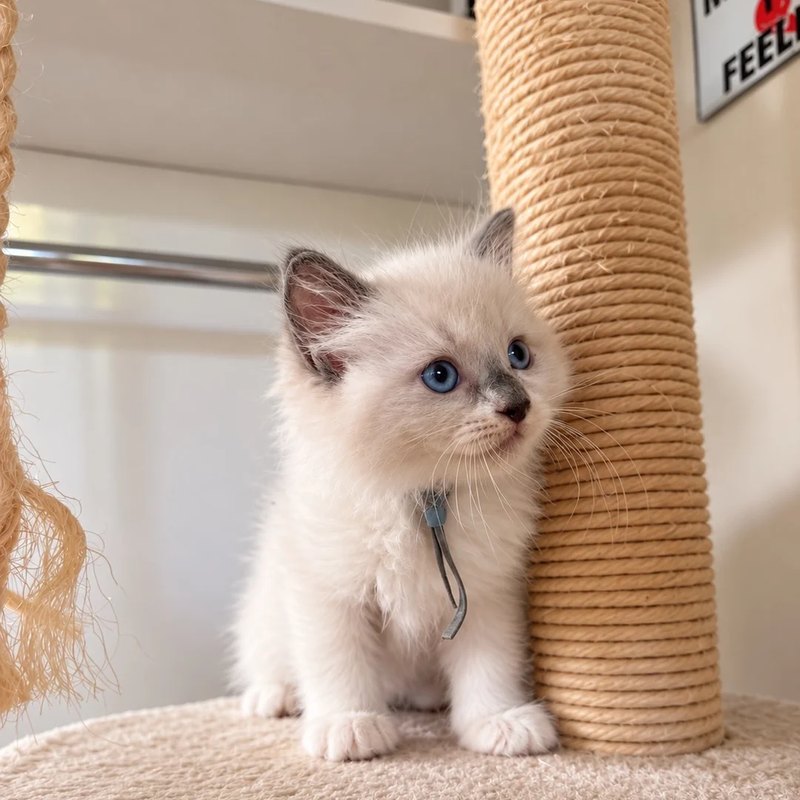
Pinocchio from our Fairytale Litter: every Ragdoll kitten here is the same price, whatever its colour.
What Ragdoll kittens cost in 2026
Recent UK price guides put a well bred Ragdoll kitten between about £800 and £1,500, with registered show lines at the top of that range, pet kittens from around £500 at the bottom, and crossbreds lower still. Prices on the classified sites move around a great deal within that band, and the cheapest adverts are usually the ones to read most carefully.
Our own prices are published, fixed and the same for every kitten in a litter: £850 for a Ragdoll, reserved with a £200 deposit, and £600 for a Ragcoon (Ragdoll × Maine Coon), reserved with a £150 deposit. The balance is due on collection day, by bank transfer, card or cash, and Klarna is available at our checkout if you would rather spread it. There are no premiums for colour, pattern or sex, and no surprises later.
Ragdoll
£850, £200 deposit. Five generations of Ragdoll bred to Ragdoll, recorded in house.
Ragcoon
£600, £150 deposit. A deliberate Ragdoll and Maine Coon cross, raised to the same standard.
Two kittens together
20% off both, because littermates settle faster. Returning families get 20% off their next kitten.
Current availability and the full payment options are on our reserve and pay page.
What a fair price should include
Before comparing two prices, make sure they are buying the same thing. A kitten that leaves at nine to ten weeks, fully weaned, litter trained and socialised, has had weeks of round the clock care behind it, and a breeder who has done that work has costs to cover. Ask every breeder, ourselves included, exactly what is in the price. Ours includes:
- Health tested parents: every breeding cat here is tested for HCM and PKD, tested for FeLV and FIV, blood typed and DNA screened for over 50 inherited conditions, with the certificates shown at your visit.
- A vet health check before the kitten leaves, and a microchip registered to you, as the law in England requires.
- The full kitten pack: microchip registration documents, birth certificate and family tree, health and worming records, a scented blanket, toys, treats and food samples.
- Our 14 day health guarantee, which asks you to have your own vet check the kitten within 48 hours of collection.
- Welfare follow ups and support for the life of your cat, and the promise that if you can ever no longer keep them, they come back to us first.
Vaccinations are the one item we leave to your own vet, on purpose: our kittens leave at nine to ten weeks, and a first injection given on the Island would be restarted by most mainland vets a fortnight later, which means three jabs instead of two. The kitten pack sets out exactly what has been done and what comes next, and our FAQ explains the reasoning. If a price looks low, it is worth asking which of the items above are missing, because each one is a real cost that somebody has to pay eventually.
Why prices vary so much
Registration and show lines
Kittens registered with the GCCF or TICA, from show winning lines, carry the highest prices because registration papers exist mainly to enable breeding and showing. We sell family pets on a neutering agreement, so we do not register, and our price reflects that. Why we do not register is in our FAQ.
Health testing
DNA panels, heart and kidney screening, blood typing and virus tests cost real money per cat, and a breeder who skips them can undercut one who does not. Ask to see the certificates rather than the claim. Our guide to what health testing actually means explains each test.
Colour, pattern and sex
Some breeders add a premium for the rarer colours, for bicolours, or for girls. We do not, because colour is not temperament and the kitten in front of you tells you far more than the name of its coat. Our colours guide explains how each one develops.
How the kitten was raised
A kitten raised underfoot in a home, handled daily and used to visitors, hoovers and other animals, is a different cat from one raised in a pen, and the time that takes is part of the price. Ours grow up inside a colony of sixteen Ragdolls; our choosing a breeder guide tells you what to look for on a visit.
Deposits, balances and what is normal
Almost every reputable breeder takes a deposit once you have been approved and chosen a kitten, and it is normal for that deposit to be non refundable if you change your mind: the breeder has turned other families away for you. What should always be true is that the deposit comes off the price, that it is refunded in full if the kitten becomes unavailable, and that the terms are written down before you pay. Ours are on the reserve page and in our terms.
Be cautious of anyone asking for money before you have met the kitten, or who offers to courier a kitten to you sight unseen. We never courier or post kittens; every family collects in person, and most of ours come across from Hampshire and Sussex, one ferry crossing away.
What a cheap kitten really costs
A very cheap kitten is often the most expensive one in the end. Corners cut on food, health care, hygiene or socialisation in the first weeks tend to surface later as vet bills, behaviour problems, or heartbreak. Three questions sort most adverts quickly: can you meet the mother with her kittens in the home they were raised in, can you see the parents’ health test certificates, and is there a written agreement that says what happens if something goes wrong? If the answer to any of them is no, the saving is not a saving.
Budget for life after the purchase too: insurance from day one, good food, litter, neutering by six months and routine vet care. Our guides to cat insurance, feeding and neutering cover each of those in plain English.
Ragdoll price questions, answered
Is £850 a fair price for a Ragdoll kitten in the UK?
It sits inside the range most UK sources quote for a well bred Ragdoll, and below many registered show lines. The price includes weeks of round the clock care, health tested parents, microchipping registered to you, a vet health check, the full kitten pack, a 14 day health guarantee and support for the life of your cat.
Why is a Ragcoon cheaper than a Ragdoll?
A Ragcoon is a Ragdoll crossed with a Maine Coon, and crosses are simply priced differently in the UK market, so ours are £600 rather than £850. The upbringing, the health testing of the parents, the kitten pack and the lifetime support are exactly the same.
Do some colours or patterns cost more?
Some breeders charge a premium for lilac, chocolate or bicolour kittens, or for girls. We do not: every Ragdoll kitten here is the same price whatever its colour, pattern or sex, because colour is not temperament and the kitten in front of you matters more than the name of its coat.
Is the deposit refundable?
Our deposit (£200 on a Ragdoll, £150 on a Ragcoon) holds your chosen kitten until collection and comes off the price. If you change your mind it is not refundable, because we will have turned other families away for your kitten. If your kitten ever becomes unavailable for any reason, it is refunded in full.
Why are Ragdoll cats so expensive?
Because a well raised litter costs a great deal before anyone pays for a kitten. The parents are DNA tested for HCM and PKD, tested for FeLV and FIV, blood typed and screened for inherited conditions. Litters are small, a queen rests between them, and each kitten gets nine or ten weeks of food, litter, handling, vet checks and a microchip. Add a popular breed with more buyers than good kittens and the price follows. A cheap Ragdoll usually leaves out the testing, the vet work or the weeks.
Can you get a Ragdoll kitten for under £500 in the UK?
Occasionally. A pet breeder with untested parents, an adult being rehomed, or a Ragdoll cross can all come in under £500 from an honest seller. Most kitten adverts at that price are not that: they are scams asking for a deposit on a kitten that does not exist, imported kittens with fake paperwork, or farmed litters from a shed. Insist on visiting, seeing the mother with the kittens and reading the health test certificates, and never pay a deposit to someone you have not met.
Where the UK figures come from
- The Scotsman, Kitten prices 2026 (August 2026): expect to pay £800 to £1,500 for a Ragdoll.
- Catster, Ragdoll kittens for sale in the UK: around £500 for a pet kitten, £850 to £1,450 for show quality, with crossbreeds lower.
- Pets4Homes Ragdoll listings: live adverts across the UK, where the spread of asking prices is visible on any given day.
Our own prices are set out on our reserve page, and the kittens currently available are on the kittens page.
Thinking about a Ragdoll kitten?
Our Ragdoll and Ragcoon kittens grow up in our home in Ryde, Isle of Wight, with health tested parents and our support for life. See who is available now, or join the waiting list for the next litter.