
Can You Adopt a Ragdoll Cat in the UK? Rescue and Rehoming
A breeder's guide to Ragdoll cats for adoption: where to look, what to expect and the red flags.
Last reviewed
Yes, you can adopt a Ragdoll cat in the UK, and done properly it is a fine way to bring one home. We breed Ragdolls and still think so. The catch is that pedigree cats reach rescue rarely, adults far more often than kittens, and the gap gets filled by adverts for cheap Ragdoll kittens for adoption that are mostly scams or farmed kittens. This guide covers where real Ragdoll rescue in the UK happens, what a legitimate adoption looks like, what to ask when rehoming a Ragdoll adult, and why our own kittens should never need rescuing at all.
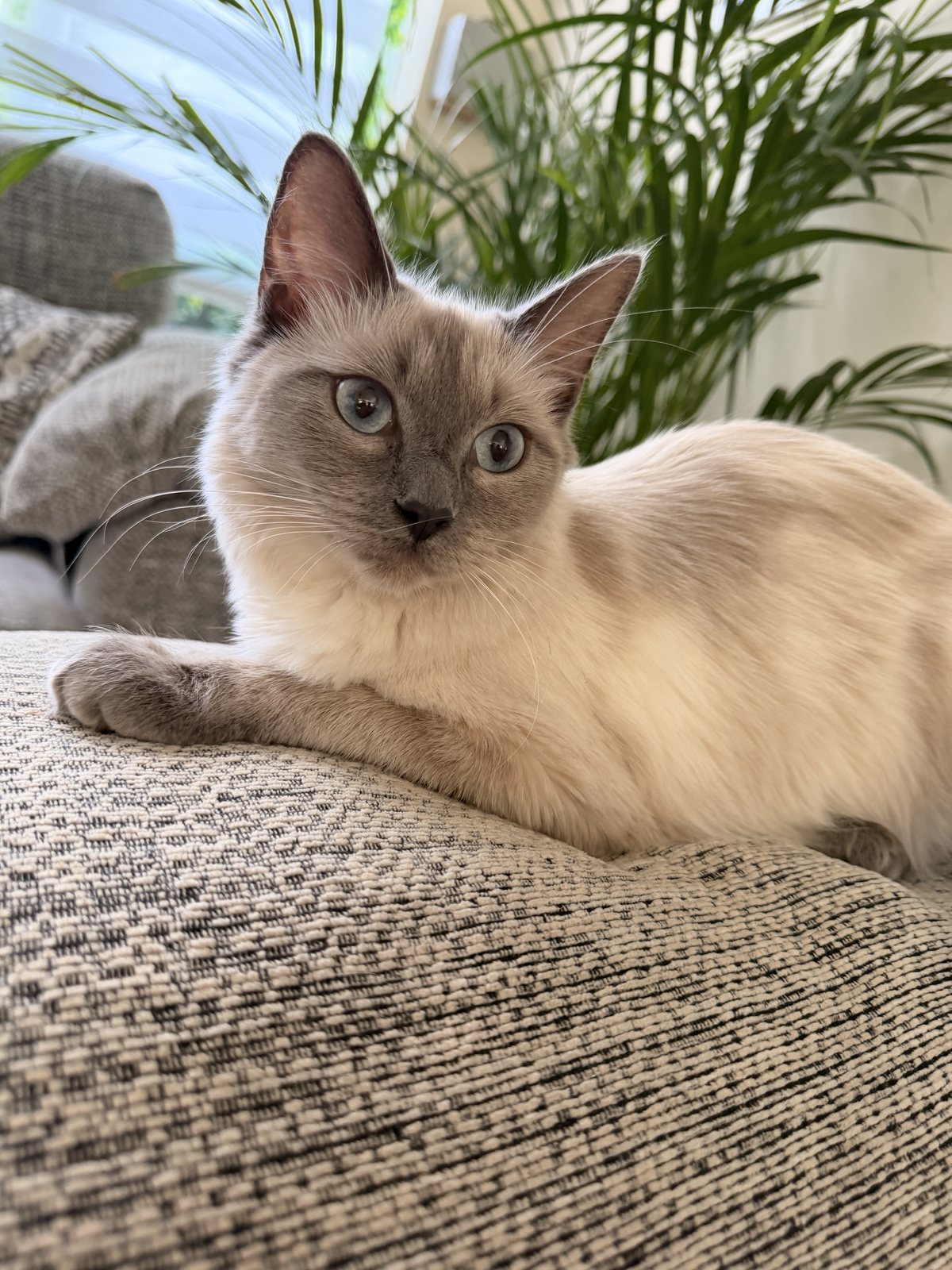
An adult Ragdoll at ease: adults are what rescue mostly offers, and they settle well given time.
Where Ragdoll cats come up for adoption
Three routes exist, and they differ a great deal in safety.
The national charities. Cats Protection, the RSPCA, Blue Cross and Battersea all rehome cats through searchable websites and local branches. Pedigrees do appear, usually when an owner has died, moved into care or hit hard times, but they are rare and go within days. Register your interest with your nearest branch and check the listings often.
Breed rescue groups. Ragdoll enthusiasts run small rehoming networks, often through breed clubs and private social media groups, that take in Ragdolls specifically and match them to checked homes. They know the breed, the cat's history and its quirks. Finding them takes a little asking around, and a reputable breeder or breed club will usually point you to one.
Private rehoming. Pets4Homes, Preloved and social media carry adverts from owners who can no longer keep a cat. Some are real and heartfelt. This is also where nearly every scam lives, so treat the red flags section below as required reading before you message anyone.
Ragdoll kittens for adoption: what is real and what is not
Adult Ragdolls are what rescue mostly offers. A cat of three, five or eight whose owner's circumstances changed is a common story and a lovely cat to take on, with its character already known. Kittens are a different matter. A well bred Ragdoll kitten from a health tested breeder costs several hundred pounds, ours are £850, and nobody gives those away. An advert offering pedigree kittens free or for a token sum is almost always one of three things: a scam that takes a deposit and vanishes, a kitten imported illegally and sold far too young, or a kitten from a farm where the mother is bred every heat. See what a Ragdoll kitten really costs and how to choose a breeder for the other side.
A legitimate rescue, by contrast, charges an adoption fee, typically under a few hundred pounds, which goes towards neutering, microchipping and vaccination, and it carries out a home check before the cat leaves. That fee and that visit are the signs of a serious organisation, not obstacles. If nobody wants to see your home and nobody wants paperwork signed, you are not dealing with a rescue.
How to spot a Ragdoll adoption scam
The scams follow a pattern, and once you know it they are easy to spot.
- A deposit before you have seen the cat. No real rescue or honest owner asks for money before you have met the cat in person. Video calls can be faked with someone else's cat.
- Courier delivery. A genuine rehome wants to meet you. An offer to ship the cat to you, often for an extra fee that keeps growing, is the classic sign.
- An urgent story about moving abroad. Emigrating next week, a relative in hospital overseas, a job starting on Monday. Urgency is there to stop you thinking.
- Stock photos. Run the pictures through a reverse image search. If the same kitten is for sale in three counties, it is nobody's kitten.
- A price far below the going rate. A pedigree kitten for £100 does not exist. A pedigree kitten for nothing exists even less.
- No questions for you. Rescues and good breeders interview you. A seller who asks nothing about your home, your work or your other pets is selling something, not rehoming a cat.
Never pay by bank transfer to someone you have not met, and if you have been caught, report it to Action Fraud and to the platform the advert was on. Our choosing a breeder guide lists the same warning signs from the buying side.
What to check before rehoming an adult Ragdoll
An adult rehome from a charity or a private owner is a different conversation from buying a kitten. Ask these before you agree, and expect clear answers.
- Why is the cat being rehomed? Bereavement, a house move, a new baby or allergies are ordinary reasons. Vague answers or a mention of problems with other cats deserve a follow up question.
- What is the health history? Ask for the vet's name and any records. See health basics for what matters most.
- Vaccination and microchip records. Both should exist. The microchip must be transferred into your name, which you do through the chip database, and our guide to microchipping and the law explains why that matters.
- Neutered or not? Most adults will be. If not, book it, and read neutering and spaying first.
- How is the cat with children and other pets? A Ragdoll that has lived with a dog or a toddler is a known quantity. One that has not may need a slower introduction.
- Has it lived indoors? A cat used to roaming will need patience to settle as an indoor cat, and one used to indoor life should stay that way.
Book a vet check within the first week whatever you are told. Most surprises are small, and the rest are better found early.
Settling an adult rescue Ragdoll
An adult rescue takes longer to settle than a kitten, and the gap is weeks rather than days. A kitten has no past to compare you with. An adult has lost a home, possibly a person, and has spent time in a pen or a stranger's spare room before reaching yours. Expect hiding, a cat that eats only when you leave the room, and a first fortnight in which you wonder whether it likes you. It will.
The method is the one in our settling in guide, slowed down. One quiet room with food, water, litter and a hiding place. Sit in it and read. Let the cat come to you, and let it decide when to explore the rest of the house. If you already have a cat, the scent swapping and gradual introductions in second cat and multi cat harmony matter more than ever, because the newcomer has no confidence to spare.
The reward is a cat whose character you knew on paper and now meet in full. Adult Ragdolls attach deeply, and a rescue that decides you are its person tends to mean it.
Why our kittens should never need a rescue
Every kitten of ours leaves on a promise: if a family can ever no longer keep it, whatever the age and whatever the reason, it comes back to us. Not to a charity, not to a stranger on the internet, to the house where it was born, with the cats it grew up among. We would rather have a nine year old Ragdoll back on the sofa than learn it went through a rescue pen because somebody was embarrassed to ask.
That is what responsible breeding looks like, and it is a question worth putting to any breeder before you hand over a deposit: what happens if, in five years, we cannot keep this cat? The right answer is short. Our kittens leave at nine to ten weeks, microchipped, vet checked and with a 14 day health guarantee, on a neutering agreement that keeps them out of the breeding market as well. The rest of what we ask of ourselves is in choosing a breeder.
So if rescue is your route, go for it with your eyes open. And if you buy a kitten instead, buy from someone who would take it back.
Quick questions, answered
Are there Ragdoll cats for adoption near me?
Sometimes, and not for long. Search the Cats Protection, RSPCA, Blue Cross and Battersea websites, register your interest with your nearest branch, and ask local breeders and breed clubs whether a Ragdoll rescue group operates in your area. Expect a wait of months rather than weeks, and expect an adult rather than a kitten.
How much does it cost to adopt a Ragdoll from a rescue?
A legitimate rescue charges an adoption fee, typically under a few hundred pounds, which helps cover neutering, microchipping, vaccination and the care the cat received while waiting. The exact figure varies by charity. A pedigree kitten offered free or for a token sum is a warning sign, not a bargain.
Is a rescue Ragdoll a good first cat?
Often, yes. An adult's character is already known, the rescue will match you to a cat that suits your home, and you skip the chaos of kittenhood. The trade is patience: an adult takes weeks to settle rather than days, and it may need a quiet house and a slow introduction to any other pets.
Why do Ragdolls end up in rescue?
Almost always because of people, not cats. Bereavement, a house move, a new baby, allergies, a relationship ending or money running out account for most pedigree rehomes. Behaviour problems are rare in the breed. Ask anyway, listen to the answer, and treat a clear story as a good sign.
Can I adopt a retired breeding queen or stud?
Sometimes, and it can be a lovely way to get an adult Ragdoll. Some breeders retire queens and studs at around four to six years old, neuter them and look for calm homes, often for a modest fee that covers the neutering. These cats are settled adults who have lived among other cats, so they need patient introductions and a quiet first fortnight, and they repay it with a grown up temperament and no kitten chaos. Ask breeders directly rather than waiting for an advert, be open about your home, and expect the same questions a kitten buyer would get. If you are interested in one of ours, just ask and we will tell you our plans for each cat.
Sources and further reading
- Cats Protection: National rehoming listings, adoption process and fees
- RSPCA: Find a pet, rehoming process and buying a kitten safely
- Blue Cross: Rehoming centres and advice on settling a rescue cat
Thinking about a Ragdoll kitten?
Our Ragdoll and Ragcoon kittens grow up in our home in Ryde, Isle of Wight, with health tested parents and our support for life. See who is available now, or join the waiting list for the next litter.