
When to Call the Vet: Emergency, Same Day or Wait?
Most worries fit one of three lists. When they do not, ring and ask.
Last reviewed
When should you call the vet about your cat? Sooner than you think, and never be embarrassed to. Cats hide illness by instinct, so by the time something is obvious it has usually been going on for a while. This page sorts the common worries into three lists: ring now, whatever the hour; ring today; and book an appointment. It also explains how out of hours care works in the UK, what it is likely to involve and what to have ready. If you are reading this with a cat that is struggling to breathe, has collapsed or cannot pass urine, stop reading and ring your vet.
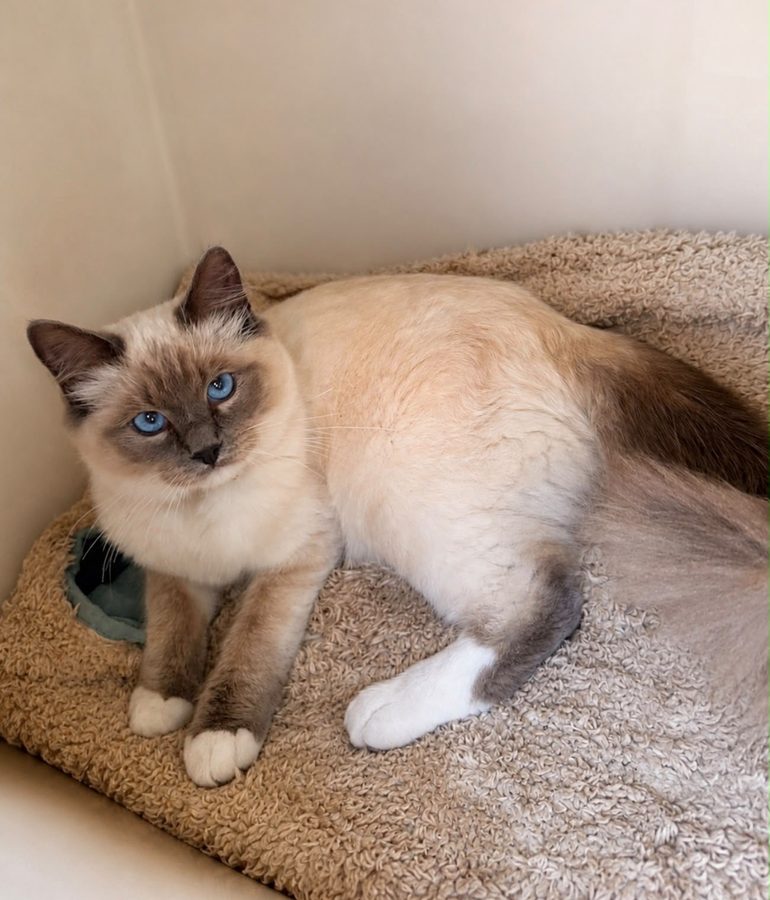
Clover, one of our rising girls. Nobody knows what is normal for a cat better than the person who lives with it.
Ring now, day or night
These need a vet immediately. Phone first, so that the practice is ready for you.
- Difficulty breathing, or breathing with the mouth open. See breathing fast or heavily.
- Collapse, or a cat that cannot get up.
- Straining to pass urine and producing little or nothing, especially a male. A blocked bladder can kill within a day or two. See urinary problems and the blocked cat.
- Suspected poisoning: lilies, antifreeze, human painkillers, dog flea treatment. Keep the packaging. See poisoning.
- A road accident or a fall from height, even if the cat looks unhurt. Internal injuries do not show.
- Heavy bleeding, or a large or deep wound.
- A fit lasting more than five minutes, or several within a day. See seizures and balance.
- Sudden loss of use of one or more legs, above all the back legs.
- Repeated vomiting, particularly in a kitten or an old cat.
- Gums that are white, grey, blue or yellow.
- A suddenly swollen belly.
- A painful, closed or injured eye. See eye injury.
- Burns or scalds.
- Heatstroke.
- Severe pain: crying out, hiding, growling when touched.
- A queen struggling to give birth.
Ring today
Not a siren, and not something to leave until next week. Phone when the practice opens and ask to be seen that day.
- Not eating for 24 hours, or a kitten that has missed more than a meal or two. See cat not eating.
- Vomiting or diarrhoea that continues past a day, has blood in it, or comes with a quiet, miserable cat. Any kitten with either. See the poorly tummy.
- Blood in the urine, frequent trips to the tray, or crying in it.
- Hiding, unusually quiet or sleeping far more than normal. See unexplained lethargy.
- A sudden limp, or not putting weight on a leg.
- A squinting, weeping or cloudy eye.
- A bite wound, a hot swelling or an abscess. See abscesses and bite wounds.
- Drinking or passing urine far more than usual.
- Straining in the tray with little result, or no stool for more than a couple of days. See constipation.
- A head tilt, wobbliness or walking in circles.
- Anything at all in a kitten under six months that is off its food or quiet. Small bodies have no reserves.
Book an appointment
Worth a vet's eye within days, at a normal appointment.
- A lump that is new, growing or changing. See lumps and bumps.
- Scratching, scabs, bald patches or dandruff.
- Bad breath, red gums, dribbling or chewing on one side. See dental care.
- Weight creeping up or down over weeks.
- A cough or sneeze in a cat that is otherwise bright and eating.
- Head shaking or dark wax in the ears.
- Stiffness, jumping less or a scruffier coat in an older cat.
- A change in behaviour that lasts: spraying, night calling, clinginess or grumpiness.
If something on this list gets worse, or is joined by something from the lists above, it moves up.
How emergency vet care works in the UK
The Royal College of Veterinary Surgeons, which regulates vets, requires every UK practice to make sure its patients have access to emergency first aid and pain relief 24 hours a day. How they do it varies:
- Some practices cover their own nights and weekends.
- Many use a dedicated emergency clinic or share cover with other local practices, so you may be sent to a different building, sometimes a drive away.
- Your practice's phone line or answer message tells you who to ring when it is closed.
What that means for you:
- You will usually have to travel. Home visits for cats are rare, so know how you would get there at night.
- It costs more. Out of hours care is usually dearer than a daytime visit. The practice may talk about costs and ask for payment at the time, but that conversation must not delay first aid or pain relief.
- You do not have to be registered to get emergency first aid and pain relief, though registered clients may be seen first.
- Triage is by urgency. A cat that cannot breathe goes ahead of one with a cut paw.
On an island or in the countryside the emergency clinic can be some distance away, so find out tonight where yours is and how long the drive takes.
What to say when you ring
- Who you are and who the cat is: name, age, breed, sex, and whether neutered.
- What has happened, in one sentence, and when it started.
- What you can see now: breathing, gum colour, whether the cat is alert, any bleeding.
- What the cat may have got at: a plant, a medicine, a chemical. Read out the packaging.
- Any illness the cat already has and any medicine it takes.
- How long it will take you to get there.
Then do what they tell you. Vets and nurses triage by phone every day, and a five minute call often settles whether it is a dash, a same day appointment or something to watch.
Getting there
- Put the cat in its carrier. Take the lid off and lower the cat in if it is hurt.
- Lift an injured cat with one hand under the chest and one under the hindquarters, or in a thick towel. A cat in pain may bite.
- Keep it warm, quiet and still.
- Bring any packaging, plant or vomit that might explain it, and a film on your phone if there is one.
What not to do
- Never give human medicines. Paracetamol and ibuprofen are highly toxic to cats.
- Never make a cat sick unless a vet tells you to.
- Do not wait until morning for anything on the first list.
- Do not rely on a search engine or a forum to decide. Ring.
- Do not bandage, splint or apply creams without advice.
- Do not restrain a cat during a fit or put anything in its mouth.
Five things to do this week
- Save three numbers in your phone: your practice, its out of hours provider and the nearest emergency clinic. Poisoning explains the Animal PoisonLine as a fourth.
- Keep the carrier where you can reach it, not in the loft.
- Know your cat's normal: weight, appetite, tray habits, resting breathing rate. Health basics shows the weekly check.
- Keep the insurance and microchip details together, on paper and on your phone. Ragdoll insurance explains what emergency cover to look for.
- Put a small kit together. The cat first aid kit lists what goes in it.
The owners who do best in an emergency are not the ones who know the most. They are the ones who rang early.
Quick questions, answered
How do I know if my cat needs an emergency vet?
Ring at once for difficulty breathing, collapse, straining to pass urine, suspected poisoning, a road accident or fall, heavy bleeding, a long fit, sudden loss of use of the legs or repeated vomiting. If you are unsure, ring and ask.
Can I call the vet just for advice?
Yes. Practices triage by phone every day and would much rather hear from you early. A short call often settles whether your cat needs to be seen now, today or not at all.
Do all vets have to provide emergency care?
Every UK practice must make sure emergency first aid and pain relief are available 24 hours a day, either itself or through another provider such as an emergency clinic. Its answer message tells you who to ring.
Is an out of hours vet more expensive?
Usually, yes. The practice can discuss costs and ask for payment at the time, but that must not delay first aid or pain relief. Insurance taken out early is what makes these decisions easier.
How long can I wait if my cat is not eating?
An adult cat that has eaten nothing for 24 hours needs a call to the vet that day. A kitten under six months needs one the same day it stops.
What should I do if my cat is ill at night?
Ring your own practice's number. The message will give the out of hours provider. Describe what you see, follow their advice and be ready to travel.
Sources and further reading
- Blue Cross: Emergencies in cats: The charity's list of signs that need a vet immediately, with first aid and handling advice.
- Royal College of Veterinary Surgeons: Emergency and out of hours care: What every UK vet practice must provide round the clock, and what owners should arrange in advance.
Thinking about a Ragdoll kitten?
Our Ragdoll kittens grow up in our home in Ryde, Isle of Wight, with health tested parents and our support for life. See who is available now, or join the waiting list for the next litter.