
Ragdoll vs Siamese: Which Cat Is Right for You?
The same blue eyes and pointed coat, then two very different cats underneath.
Last reviewed
Is a Ragdoll cat a Siamese? No, but they are family. Both breeds are colourpointed with blue eyes because both carry the same pointed gene, and Siamese cats were among the breeds in the Ragdoll's 1960s background, so the resemblance is inherited rather than coincidental. From there, Ragdoll vs Siamese is a contrast in almost everything: a Siamese is a slender, short coated, loud and athletic cat of 2.5 to 5.5 kg, a Ragdoll a large, heavy boned, semi longhaired and quiet one of 3.5 to 9 kg. This guide sets out the Ragdoll Siamese difference in build, voice, energy, grooming, health and the home each suits.
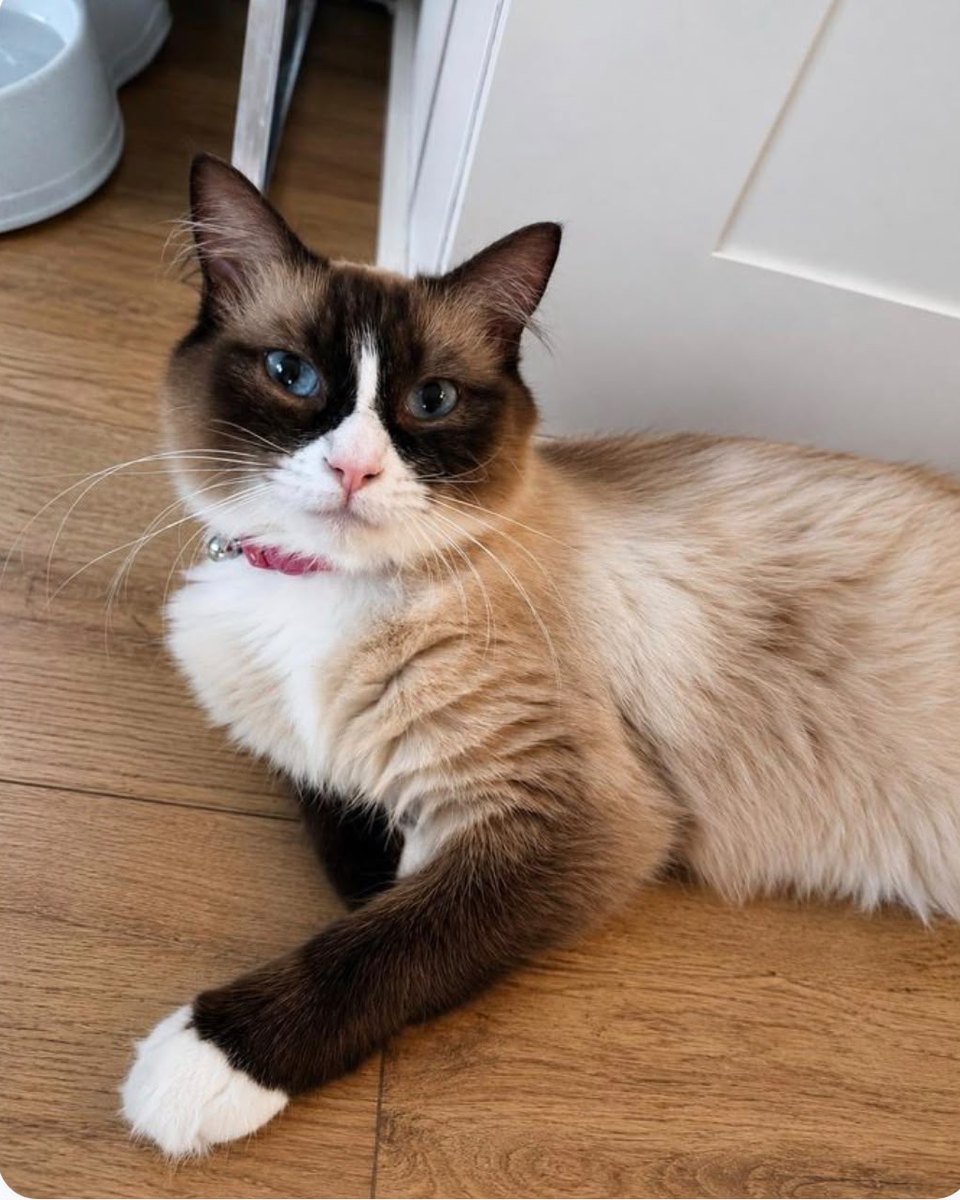
Pulaski, our seal bicolour queen. The mask and blue eyes are Siamese heritage; the size and the quiet are not.
Is a Ragdoll cat a Siamese?
No. They are separate breeds with separate standards, and nobody who has lifted both would confuse them. What they share is the pointed gene, a version of the gene that makes pigment which only works properly in the cooler parts of the body. It gives both breeds a pale body, dark ears, mask, legs and tail, and blue eyes, because the same gene limits pigment in the iris. Ragdoll colours and patterns explains how it works.
The gene reached the Ragdoll through its founding cats in 1960s California, whose background included Siamese type cats among others, so the resemblance is a family one. Everything else was selected in a different direction. The Siamese was refined towards elegance: long, fine, short coated and vocal. The Ragdoll was bred for bulk and calm: big, heavy, semi longhaired and quiet. Put a seal point of each breed side by side and the shared colour is the only thing that lines up.
The rest of this guide takes the differences one at a time, then asks which of the two belongs in your house.
Size, shape and coat
A Siamese is a fine boned, tubular cat, long in the leg and body, with a wedge shaped head, large ears and a whippy tail. Adults weigh roughly 2.5 to 5.5 kg, with males at the top of the range. The coat is short, fine and single layered, lying close to the body.
A Ragdoll is one of the largest domestic breeds: heavy boned, broad chested, with a modified wedge head, medium ears and a plumed tail. Adults weigh roughly 3.5 to 9 kg, with males commonly 6 to 9 kg, and they take three to four years to finish growing. The coat is semi long, silky and plush, with a ruff and britches.
Two notes on the Siamese. The modern show Siamese has a very long, narrow head and an extremely slim body; the old style cat, often called the Thai or Applehead, is rounder and sturdier and is recognised as a separate breed by some registries. If you like the Siamese temperament but not the extreme look, the old style is worth seeking out. And the breed once carried a tendency to crossed eyes and a kinked tail; both have largely been bred out, though you still see the occasional squint.
Siamese vs Ragdoll personality
This is where the two breeds differ most, and the difference comes down to volume and energy.
Voice. The Siamese is the most talkative breed there is: a loud, low, insistent voice used constantly, to greet you, question you and complain about the food bowl. Owners either love it or find it exhausting. Ragdolls are quiet. They chirp, they trill, some are almost silent, and a Ragdoll that shouts is usually telling you something is wrong. Purrs and meows covers what the noises mean.
Energy. A Siamese is busy: athletic, a climber, a cat that lives on top of the wardrobe and needs a great deal of interaction and play to stay out of mischief. A Ragdoll is calmer and more floor and lap based. It plays, and needs to, but in shorter bursts, and it would rather be where you are than on top of the bookcase.
What they share is the need for company. Both are people cats that dislike being left alone for long days, and both do better with a feline companion if the house is empty for hours. Ragdoll temperament has the full picture for our side.
Grooming and shedding
Here the Siamese wins outright. A short single coat needs almost nothing: a stroke with a rubber grooming glove once a week to lift dead hair, and that is the routine. Shedding is light to moderate, similar to or less than a Ragdoll's, and there is no undercoat to mat.
A Ragdoll needs a weekly comb through, more in the spring and autumn moults, with attention to the armpits, the britches and behind the ears, where knots start. It is not a demanding coat for a longhaired breed, because the undercoat is thin and the texture is silky, but it is a commitment for the life of the cat, and a Ragdoll that is never combed does mat. Ragdoll grooming sets out the routine and the tools.
Both breeds share the usual list: claws trimmed, teeth brushed if the cat allows it, ears checked. The real grooming difference is time, a few minutes a week for a Siamese against ten to fifteen for a Ragdoll, plus more hair on the sofa in moulting season.
Health, lifespan and what to ask a breeder
Both are long lived breeds in good hands. Siamese are often cited at 15 to 20 years and Ragdolls at 12 to 17, though sources vary and an indoor, lean, insured cat of either breed beats the averages.
The Siamese has the longer list of reported breed associated conditions. Amyloidosis, a protein deposit disease that affects the liver, is reported at higher rates in the breed, as are certain cancers, dental disease, respiratory problems and, historically, crossed eyes, which has largely been bred out. Ask a Siamese breeder about the health history of the line and what has been tested.
The Ragdoll's list is shorter but better known: hypertrophic cardiomyopathy, a thickening of the heart muscle, and polycystic kidney disease, both of which have DNA tests. A responsible breeder tests every breeding cat clear for both before mating. Every breeding cat in our colony is DNA tested clear for HCM and PKD, tested negative for FeLV and FIV, blood typed and screened for more than 50 inherited conditions. Ragdoll health and health testing explain what the tests mean and what to ask for.
Neither breed is a bad bet. The difference is that the Ragdoll's main risks can be screened before the kitten is born; the Siamese's mostly cannot.
Ragdoll vs Siamese: which should you choose?
Choose a Siamese if you want a cat that talks back. A Siamese suits a busy, active household that is home a good deal, enjoys a demanding and conversational animal, wants a cat that climbs, fetches and follows, and does not mind being told off at volume. It is the choice for people who want a dog like relationship in a small, low maintenance coat.
Choose a Ragdoll if you want a calm companion that wants to be where you are. A Ragdoll suits a quieter home, families with children who want a tolerant, floor level cat, people who want a lap cat that will not spend the evening on top of the kitchen cupboards, and anyone who finds a Siamese's running commentary too much. The price is a weekly comb and a cat that weighs as much as a small dog on your knee.
Both want company, both want an indoor life with a safe outdoor space, and both will be yours for fifteen years or more. In our house the quiet one won, sixteen times over, and the loudest noise most days is the peacock. If you are still weighing up large, calm, pointed cats, Ragdoll vs Birman is the other comparison worth reading.
Quick questions, answered
Is a Ragdoll cat a Siamese?
No. They are separate breeds, but both carry the pointed gene that gives a pale body, dark points and blue eyes, and Siamese type cats were among the Ragdoll's founding stock in 1960s California. The shared colouring is a family resemblance. In size, coat, voice and energy they are about as different as two pointed cats can be.
Are Ragdolls as vocal as Siamese?
Not remotely. The Siamese is the most talkative breed there is, with a loud, low voice used all day. Ragdolls are quiet cats that chirp and trill, and some barely speak at all. If you want running commentary, choose the Siamese; if you want a cat you will hear only when it has something to say, the Ragdoll.
Which is bigger, a Ragdoll or a Siamese?
The Ragdoll, by a long way. A Siamese is slender and fine boned at roughly 2.5 to 5.5 kg. A Ragdoll is heavy boned and broad at roughly 3.5 to 9 kg, with males often 6 to 9 kg, and it keeps growing until three or four years old. Add the semi long coat and the Ragdoll looks bigger still.
Which is easier to look after, a Ragdoll or a Siamese?
On grooming, the Siamese: a short coat needs almost nothing, while a Ragdoll needs a weekly comb. On attention, the Ragdoll: a Siamese needs a great deal of interaction and play and is loud when it does not get it. Both dislike being left alone for long days, and both do well with a second cat.
Is a Snowshoe the same as a Ragdoll?
No. The Snowshoe is a separate breed developed in America from the Siamese and the American Shorthair: a smaller, short coated, pointed cat with blue eyes, white feet and a white inverted V across the muzzle. At a glance it looks like a short haired mitted Ragdoll, but the resemblance stops at the markings. In temperament it takes after the Siamese, lively, talkative and busy, where the Ragdoll is quiet and placid. Snowshoes are rare in the UK, so ask the usual questions about parents and papers.
Thinking about a Ragdoll kitten?
Our Ragdoll and Ragcoon kittens grow up in our home in Ryde, Isle of Wight, with health tested parents and our support for life. See who is available now, or join the waiting list for the next litter.