
From our colony to your sofa
Ragdoll Health, In Depth
HCM, PKD, urinary care and weight, and what testing prevents.
Last reviewed
HCM, PKD, urinary care and weight, and what testing prevents.
Last reviewed
Every breed has its list, and pretending otherwise is how bad breeding hides. Ragdolls are a robust, long lived breed overall, commonly reaching their mid teens, but there are conditions every owner and every buyer should know by name. Here they are, plainly, along with what responsible breeding and good ownership each do about them.
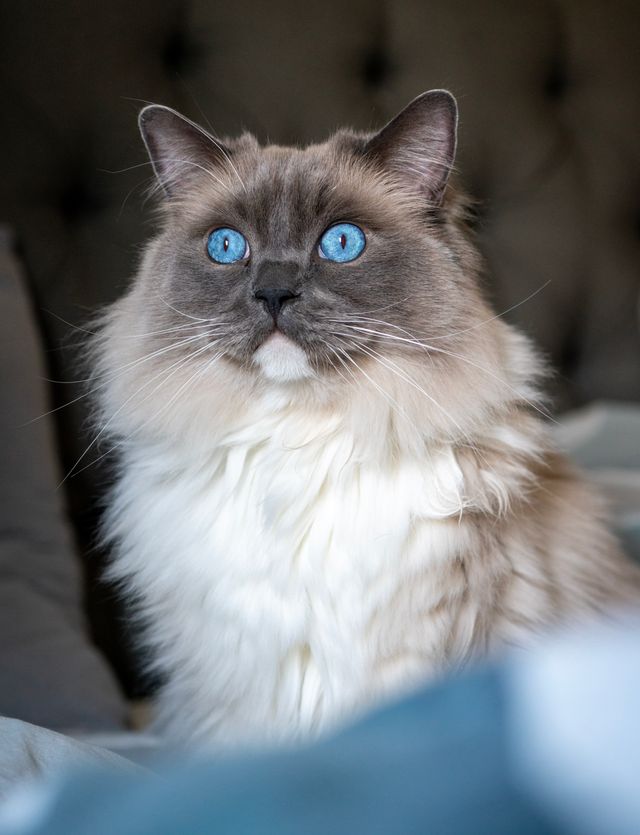
Ragdoll HCM screening comes in two instruments that answer different questions. The DNA test reads a specific known mutation, invaluable for breeding decisions, but a clear result rules out only that mutation, not the disease, because hearts can fail by roads the test does not watch. The heart scan, an echocardiogram by a cardiologist, looks at the actual muscle on the actual day.
That is why serious breeders use both, and repeat the scans across a breeding cat’s career rather than framing one certificate. As an owner reading paperwork, the question that matters is not tested once but tested how, and when, and what happens on an unexpected result.
Urinary trouble in cats runs from grumbling cystitis to one true emergency: the blocked male. A male cat straining in the tray and producing nothing, crying, licking beneath, or visiting the tray again and again with empty results is not constipated until proven otherwise; he may be blocked, and a blocked bladder kills within a day or two. That picture is an immediately, tonight, phone in the hand situation.
Prevention is mostly plumbing management: water made attractive with fountains and wide bowls, wet food doing the hydration heavy lifting, trays generous and spotless, and stress, the great bladder irritant, kept low. Ragdolls are not uniquely cursed here, but big laid back boys are exactly the patients who hide the early acts.
A breed this size grows for years, not months, with growth plates closing late, and the kindest gift to those joints is patience: lean body condition through the gangly phases, food measured rather than free poured, and vertical territory arranged so favourite perches are reachable by steps rather than heroic leaps onto hard floors.
The target throughout life is the athletic version of big: ribs findable under a gentle press, a visible waist from above, weight rising with frame rather than ahead of it. A lean Ragdoll is a bigger cat for longer, because the joints and heart both keep the accounts.
A breed that routinely lives twelve to sixteen years, with plenty going beyond, rewards insurance chosen for the long game: lifetime policies that renew conditions year after year, rather than yearly policies that exclude anything once claimed. The cheap policy’s true price appears in year eight.
Insure early, before anything is a pre existing condition, read the dental and chronic illness lines specifically, and size excesses realistically against your savings. Insurance is not for the routine costs; it is for the one big diagnosis, and it must still be standing when that arrives.
Across the breed’s watchlist, one home managed variable moves every needle: body weight. Extra kilos load joints this large breed already asks a lot of, strain hearts, tilt diabetes risk, and hide in a semi long coat well enough that hands, not eyes, must do the checking.
The monthly weigh and the rib check are the whole discipline: ribs findable under a light layer, a waist visible from above, weight drift caught at two hundred grams instead of two kilos. No supplement sold anywhere returns as much health per pound as this habit.
Ragdolls are placid, and placidity complicates medicine: a breed that rarely complains reports illness late, as quietness that reads as calm, sleep that reads as serenity, and appetite drift that a busy week misses. The breed’s famous chill is a curtain, and disease knows it.
The counter is baselines: know your cat’s normal appetite, thirst, tray output, weight and activity precisely enough that small drifts register. In this breed, the earliest symptom of most things is subtle wrongness, and owners who track baselines catch it first.
Ragdolls are a robust, long lived breed, and pretending any breed has no list is how bad breeding hides. The list here is short: HCM heads it, which is why DNA screening of parents matters and why our breeding cats are tested; urinary health deserves a watchful eye; and the breed’s slow growth confuses owners into overfeeding. Weight is the master variable in almost every risk, insurance earns its keep, and the stoic temperament means changes are reported late, so monthly hands on checks matter.
Health tested lines shorten the odds but cancel nothing: accidents, dental disease and age happen to every cat. Lifetime cover bought young is the version that pays; the alternative is a savings account you never raid.
There is no single number for a breed this variable: boys commonly run heavier than girls, and frames differ. Your vet sets your cat’s target; your job is holding it within a couple of hundred grams.
Flat fingers stroking firmly along the chest wall: ribs should be findable under a light cushion, like the back of your hand. If you must press to find them, the cushion has become upholstery.
No more than cats generally, which is to say enough to matter: the monthly lip lift and the vet’s dental verdicts belong in the routine. Our dental care guide covers the full drill.
Hypertrophic cardiomyopathy is a thickening of the heart muscle and the most significant inherited condition in the breed. A specific genetic mutation linked to HCM in Ragdolls can be tested for with a simple DNA test, which is why the question to ask any Ragdoll breeder is whether the parents are tested. Testing does not abolish all heart disease, because HCM can have other causes, but breeding only from clear cats removes the known inherited route, and that is exactly why we test. Signs owners watch for are laboured breathing, lethargy and sudden hind leg weakness, all of which are same day vet visits.
Polycystic kidney disease causes fluid filled cysts in the kidneys and is another condition with a DNA test. It entered some Ragdoll lines through historic outcrossing, and again, tested parents are the protection. Between HCM and PKD you have the two headline genetic questions for the breed, and any breeder worth your deposit will answer both without flinching.
Beyond genetics, Ragdolls share the general feline risks with a few breed flavoured notes. Urinary and bladder trouble appears in the breed often enough that water intake matters: wet food in the diet and appealing water stations are quiet protection, and the emergency rule from our health basics guide applies doubly, because a straining male cat is never a wait and see. Their easy going nature makes weight gain the most common health issue we actually see, managed by measured meals and the hands on rib check from our feeding guide. And that gorgeous coat produces hairballs in shedding season, which regular combing mostly prevents.
Health in pedigree cats is built before a kitten is ever born: DNA tested parents, unrelated pairings, mothers in good condition, and kittens raised to robust weights before homing. It also means honesty, which is why this page exists. We would rather you read the breed’s real list here than discover a breeder who claims their line has no list at all, because that claim is the biggest red flag in cat buying.
Register with a vet in week one, insure while premiums are young and kind, keep vaccinations and parasite cover on schedule, feed measured meals with wet food included, and give your cat the weekly grooming fuss that doubles as a health check. Then mostly, enjoy your cat, because the average Pretty Ragdoll’s health story is long, uneventful and full of naps. If anything ever worries you, our door and our WhatsApp stay open for your kitten’s whole life.
General knowledge from experienced breeders, not veterinary advice. Your vet always has the final word on your own cat.
For the clinical detail behind this guide, Cornell Feline Health Center covers feline heart and urinary disease in depth, and International Cat Care translates the science into owner language.