
Ragdoll Cross Cats: What to Expect from a Ragdoll Mix
Eyes, coat, size and temperament in a Ragdoll mix kitten, plus the questions to ask before you buy one.
Last reviewed
A Ragdoll cross is a kitten with one Ragdoll parent and one parent of another breed or none, and what it inherits is a lottery: a first cross can land anywhere between its parents, and littermates often differ. Many are lovely cats. Fewer than the adverts suggest look like Ragdolls, because the blue eyes and pointed coat that define the breed are recessive and need both parents to carry them. This guide covers what a Ragdoll mix kitten with a tabby, British Shorthair, Siamese, Persian or Maine Coon tends to look like, how a half Ragdoll behaves, and what to check before you pay.
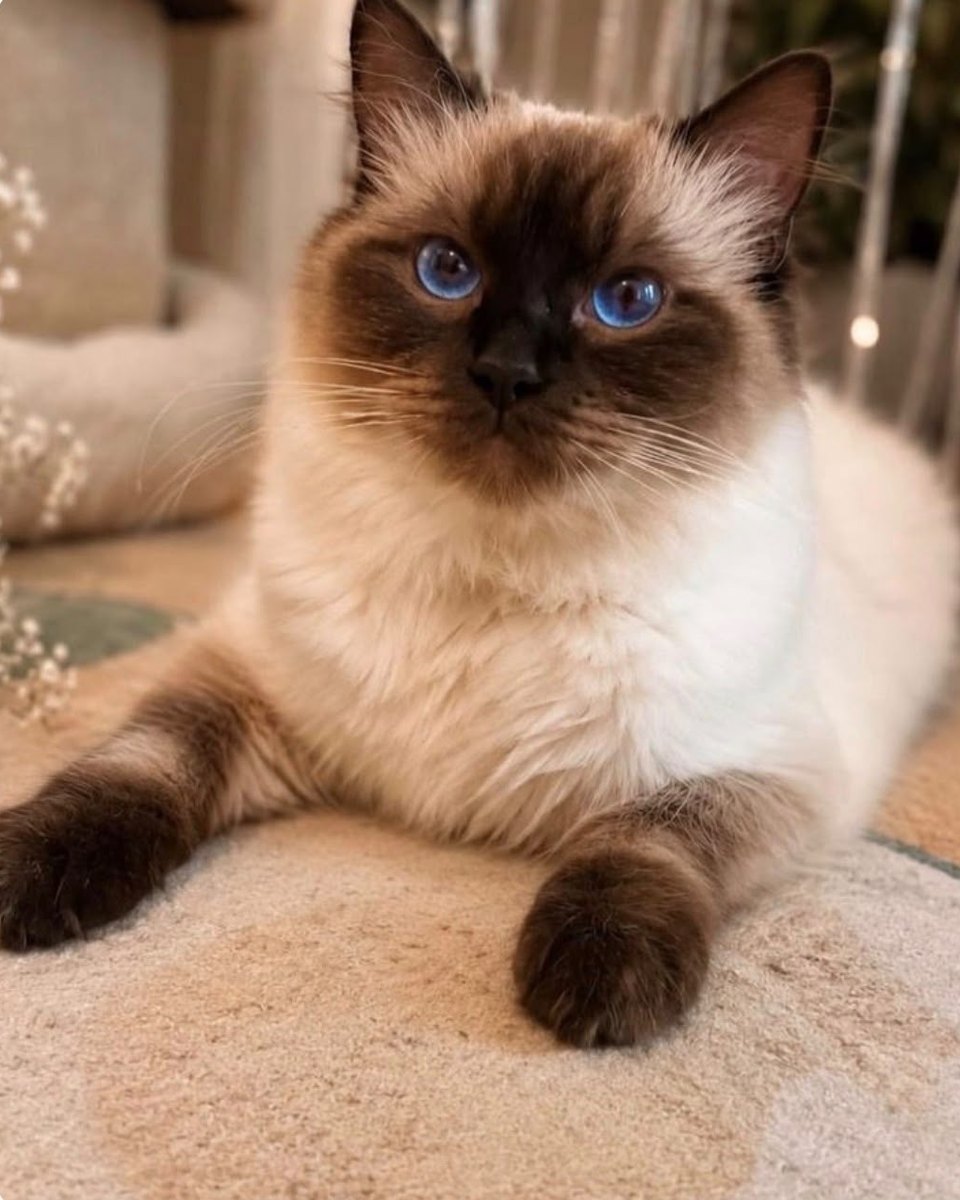
Dorothy, our seal point queen and the mother of our Ragcoon litters, the one cross we make on purpose.
What is a Ragdoll cross, and what will it inherit?
Ragdoll cross, Ragdoll mix and half Ragdoll all mean the same thing: one parent is a Ragdoll, the other is not. Genetics do not average the parents; they shuffle them. Each kitten draws half its genes from each side at random, so a first cross litter can hold a kitten that looks nearly all Ragdoll next to a sibling that looks nearly all tabby, with most somewhere in between. That first generation is what breeders call an F1, and its variability is the point.
A few traits are predictable because of how they are inherited. Blue eyes and the pointed coat are recessive, which rules them out of most crosses with a non pointed cat. The semi long coat is largely recessive too, so a shorthaired parent usually wins on coat length in the first generation. Size and temperament are governed by many genes and by upbringing, so they tend to land between the parents.
Second generation crosses, bred from two Ragdoll crosses, are less predictable still, as hidden recessives from both sides can reappear. The kitten in front of you, not the label on the advert, is what you are buying.
Will a half Ragdoll have blue eyes?
Usually not. A Ragdoll's blue eyes and dark points come from the pointed gene, which is recessive: a cat needs two copies, one from each parent, to show it. Every Ragdoll carries two. A tabby, a British Shorthair, a Persian from a non pointed line or an ordinary moggy usually carries none, so each kitten gets one pointed copy from the Ragdoll and one working colour gene from the other side, and the working gene wins. The result is a solid, tabby or tortie kitten with green, gold or hazel eyes. Why Ragdolls have blue eyes explains the mechanism.
The exceptions are the other pointed breeds. Cross a Ragdoll with a Siamese, a Birman, a Balinese or a colourpoint Persian and both parents carry the gene, so every kitten is pointed with blue eyes. A moggy carrying a hidden copy, not rare given how much Siamese blood is in the general population, throws roughly half pointed kittens.
So an advert for a half Ragdoll with blue eyes deserves a second look. Either the other parent was pointed too, which the seller should be able to tell you, or the kitten is too young for its eyes to have changed, or the description is wrong.
Ragdoll cross tabby, British Shorthair, Siamese and Persian
Ragdoll cross tabby or moggy. Most first crosses are short or plush coated, because the shorthair gene is dominant over the Ragdoll's semi long one, and wear the tabby or solid colour of the other side with green or gold eyes. Size sits between the parents. Many are easygoing, people centred cats, which is why they get sold as Ragdoll types.
Ragdoll cross British Shorthair. Expect a stocky, plush coated cat, often blue or blue and white, with the Shorthair's round face softened a little; both breeds are calm, so the cross tends to be a quiet, steady companion. A longhaired kitten appears only if the Shorthair parent carries the longhair gene.
Ragdoll cross Siamese. Pointed and blue eyed every time, usually with a shorter coat, a slimmer frame and a good deal more to say. Ragdoll vs Siamese compares the parents.
Ragdoll cross Persian. Both parents are longhaired, so the kittens are too, but with the Persian's denser undercoat and the grooming that goes with it. Points and blue eyes appear only if the Persian side is colourpoint bred.
In every case the famous flop and the people centred nature are partly inherited and partly raised: a cross that grows up underfoot in a busy house, handled daily, can be very Ragdoll like, and one raised in a shed will not be.
Ragdoll cross Maine Coon: the Ragcoon
One cross we make on purpose. The Ragcoon pairs a Ragdoll with a Maine Coon, two large, gentle, slow maturing breeds, and the result is a big semi longhaired cat with the Ragdoll's softness and a dash of the Maine Coon's busy curiosity. Because the Maine Coon is not a pointed breed, Ragcoon kittens vary in coat and colour from litter to litter. The Ragcoon covers looks, temperament and raising one, Ragdoll vs Maine Coon compares the two parents, and our Ragcoon kittens page has the practical side.
The point for anyone reading about crosses is the standard behind the kitten. Our Ragcoons come from the same health tested parents as our Ragdoll litters: every breeding cat is DNA tested clear for HCM and PKD, tested negative for FeLV and FIV, blood typed and screened for more than 50 inherited conditions. They are born in the house, handled daily and leave at nine to ten weeks, microchipped and vet checked, with a kitten pack and a 14 day health guarantee. Our Ragcoons are £600, with a £150 deposit, against £850 for a Ragdoll. The difference reflects the absence of a pedigree, not how the kittens are raised.
Buying a Ragdoll mix kitten: what to check
- The price. A cross should cost well below a Ragdoll. UK guides put a well bred Ragdoll kitten at £800 to £1,500, as Ragdoll kitten prices explains, so a half Ragdoll at the top of that range is paying for a word.
- Health testing still matters. HCM and PKD are inherited, and one Ragdoll parent is enough to pass them on. Ask for the Ragdoll parent's DNA results and, ideally, testing on the other side too. Health testing explains what the paperwork should say.
- See both parents. A seller who cannot show you the Ragdoll parent, or cannot say what the other parent was, cannot tell you what the kitten is either. Temperament is half upbringing, so see where the kittens live.
- No pedigree. A cross cannot be registered as a Ragdoll with the GCCF or TICA, and should not be sold as one.
- The usual checks. Age at leaving, vaccinations, microchip, a clean home and a seller who asks you questions back. Choosing a breeder applies to crosses as much as to pedigrees.
None of this is a reason not to buy a cross. It is a reason to buy one from someone who is honest about what it is.
Is a Ragdoll cross tabby the same as a lynx point?
No, and the confusion sells a lot of kittens. A lynx point Ragdoll is a Ragdoll whose points carry tabby markings: striped legs, a ringed tail, an M on the forehead and pale rims to the ears, laid over the usual pointed pattern with the usual blue eyes. The tabby gene is dominant and has been in the breed from the start, so a lynx point is as much a Ragdoll as a seal point. Ragdoll colours and patterns shows the range.
A Ragdoll cross tabby is the opposite case: tabby all over, green or gold eyed, with no pointed pattern unless the tabby parent happened to carry the gene. If you want the stripes with the blue eyes, you want a lynx point from a breeder, not a cross. If you want a friendly tabby with a bit of Ragdoll softness and no interest in showing, a cross may be exactly right. Just make sure the advert and the price describe the same cat.
Quick questions, answered
Do Ragdoll cross kittens have blue eyes?
Usually not. Blue eyes and the pointed coat are recessive, so a kitten needs the gene from both parents. A Ragdoll crossed with a tabby, British Shorthair or ordinary moggy normally produces solid or tabby kittens with green or gold eyes. Only a cross with another pointed breed, such as a Siamese or Birman, gives blue eyed kittens every time.
How much should a Ragdoll cross cost?
Well below a Ragdoll. UK price guides put a well bred Ragdoll kitten at £800 to £1,500, and a cross has no pedigree, so it should sit under the bottom of that range. Our own Ragcoons, a Ragdoll cross Maine Coon from health tested parents, are £600 against £850 for a Ragdoll.
Are Ragdoll mixes floppy and affectionate like Ragdolls?
Some are, some are not, and a litter can hold both. Temperament and the famous flop are partly inherited and partly learned, so a cross raised in a busy home and handled daily is far more likely to be Ragdoll like than one raised with little contact. Meet the kitten and its mother, and judge the cat in front of you.
What is a Ragcoon?
A Ragcoon is a Ragdoll crossed with a Maine Coon: a large, semi longhaired, gentle cat with the Ragdoll's softness and some of the Maine Coon's curiosity. We breed them on purpose from the same health tested parents as our Ragdolls. Coat and colour vary kitten to kitten because the Maine Coon side is not a pointed breed.
What about Ragdoll crosses with a Bengal, Burmese or Norwegian Forest Cat?
Same rules as any cross: the pointed coat and blue eyes appear only if both parents carry the pointed gene, so most of these kittens will not look like Ragdolls. A Bengal cross is likely to be spotted or marbled, athletic and vocal. A Burmese cross will be short coated, with a sepia pointed or solid look. A Norwegian Forest Cat cross will be big and heavy coated, much like a Ragcoon. Temperament and coat are unpredictable in a first cross, and the price should reflect that.
Sources and further reading
- GCCF: The UK registry; a cross cannot be registered as a Ragdoll.
- Wikipedia: Ragdoll: History and description of the breed, including its pointed pattern and blue eyes.
Thinking about a Ragdoll kitten?
Our Ragdoll and Ragcoon kittens grow up in our home in Ryde, Isle of Wight, with health tested parents and our support for life. See who is available now, or join the waiting list for the next litter.