
From our colony to your sofa
The Ragcoon: Ragdoll Cross Maine Coon, Explained
Ragdoll cross Maine Coon: looks, silver reveals, and honest pricing.
Last reviewed
Ragdoll cross Maine Coon: looks, silver reveals, and honest pricing.
Last reviewed
Cross a Ragdoll with a Maine Coon and you get the cat the internet keeps asking us about: the Ragcoon. We breed them alongside our pure Ragdolls, so this is the honest owner’s guide, written from the sofa they currently occupy.
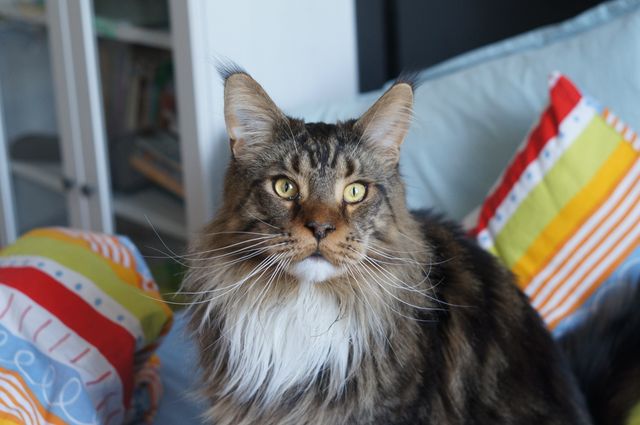
Crossing two breeds widens the genetic deck, which can bring the robustness breeders call hybrid vigour, and it shuffles traits rather than guaranteeing them: a Ragcoon may lean Ragdoll in temperament and Maine Coon in build, the reverse, or a genuinely even blend, with variation between littermates part of the honest picture.
What a responsible cross does promise is the floor under the variation: health tested parents from both sides, so whichever mix of traits a kitten draws, it draws them from screened stock. The shuffle is nature’s; the quality of the deck is the breeder’s.
Both parent breeds are large, so Ragcoons trend substantial, often with the Maine Coon’s longer lines under the Ragdoll’s softness, and like both parents they mature slowly over years rather than months. Individual adults land across a range, which is exactly what mixing two big breeds predicts.
Coats blend the silky Ragdoll jacket with the Maine Coon’s shaggier, weatherproof texture, and the practical outcome is a grooming need in the moderate band: the regular sessions this library’s grooming guide describes, with the seasonal moults taken seriously. The ear tufts, when the Coon side donates them, are free.
The Ragcoon’s natural home is a household that loves the Ragdoll’s people centred softness but fancies a dash more of the Maine Coon’s adventurous, busy intelligence: a big, gentle, interactive cat with a bit of expedition in it. Families, multi pet homes and people who actually play with their cats fit the profile well.
Approach choosing one exactly as you would any kitten: meet the litter, watch the individual characters, ask the health testing questions of both parent lines, and pick the personality that fits your life. The label describes the recipe; the kitten in front of you is the dish.
Living with a Ragcoon is living with a negotiation between two famous temperaments: Ragdoll devotion, the following, the lap ambitions, the visitor greeting, threaded with Maine Coon projects, investigated taps, supervised drawers, a running commentary of chirps.
Individuals sit at different points on that line, some more shadow, some more scientist, and the blend can shift with age as kitten curiosity mellows into adult softness. What both parent breeds guarantee is the direction: people centred, gentle and engaged, delivered in a slightly different accent per kitten.
Ragcoon kittens run the standard large breed manual with the dials nudged: more vertical ambition than a typical Ragdoll kitten, so climbing furniture arrives earlier; energy that wants two or three genuine hunts daily; and a slow maturation inherited from both sides, with full size landing over three to four years.
Feeding follows the frame, measured against body condition rather than the packet average, and training lands easily, both parent breeds are biddable, so harness work, recall games and carrier love are all realistic projects for a household that enjoys them.
A first generation cross draws from two breeds’ gene pools, which reshuffles risks rather than abolishing them: the sensible buyer’s questions are the same as ever, what screening stands behind both parents, and what the lines’ histories look like. Our Ragcoons come from the same health tested foundation as our Ragdolls.
Day to day the care manual is shared with both parent breeds: weight watched monthly on a big slow maturing frame, the annual vet rhythm, dental and grooming routines, and the same twelve to sixteen year horizon, with plenty going beyond, that good care buys large gentle cats.
Households choose between our doors on style: the Ragdoll is the purer dose of softness, quieter, lower altitude, the classic blue eyed pointed look; the Ragcoon adds playful engineering, more climb, more chat, more project energy, in a coat and colour range that varies kitten to kitten.
Price separates them too, £850 for Ragdolls against £600 for Ragcoons, reflecting pedigree registration rather than quality of raising, which is identical here. Tell us your household and we will tell you which current kittens, behind whichever door, actually fit it.
Cross a Ragdoll with a Maine Coon and you get the Ragcoon: a large, semi longhaired companion blending the Ragdoll flop with Maine Coon adventure. Expect size at the generous end, a coat that varies kitten to kitten, and hidden silver that can shimmer through as the adult coat arrives. The cross suits families wanting a touch more spark than a classic Ragdoll, health draws from two robust breeds with the same testing behind our litters, and raising one runs on the same manual, played slightly livelier.
No: it is a deliberate cross, not a registry breed, and honest sellers say so plainly. You are buying our known parents, our raising and our paperwork, not a pedigree certificate.
Expect a large cat: both parent breeds are heavyweights, and males especially can be genuinely imposing by full maturity at three to four years. Buy the adult sized carrier at the start.
Some inherit the pointed coat and blue eyes, others carry the Coon side’s colours with gold or green eyes; litters vary, which is part of the appeal. Photographs of current kittens show exactly what is on offer.
Slightly, in the enjoyable directions: a bit more play demand, a bit more vertical territory, the same weekly grooming. Nothing about the cross needs an expert household, just an engaged one.
The £600 against £850 difference reflects registration status, not care: both are raised identically, health backed and homed with the same kitten pack and support. Crosses simply do not carry pedigree papers.
Very happily as a rule: compatible sizes and temperaments with complementary energy. Run the staged introduction our second cat guide describes and the pairing is one of our favourites to see.
Shedding is comparable to both parents: seasonal, manageable with the weekly comb turning daily in moults. Coat texture varies by kitten, silkier or shaggier, but the workload stays modest.
A first generation cross between two of the largest, gentlest breeds in the cat world. It is not a pedigree breed with a registry standard, and any seller pretending otherwise is selling you a story. What it is instead is hybrid variety: each litter blends two gene pools, so kittens vary more than pedigree litters do, and that variety is half the charm.
Both parent breeds are big and slow maturing, so Ragcoons grow into substantial cats over three to four years. Coats are semi longhaired with the Maine Coon side often adding tufted ears, a fuller ruff and a magnificent tail. Colours range far wider than pure Ragdolls: our silver Maine Coon stud throws kittens whose dark baby coats hide silver that shimmers through from around ten to twelve weeks and keeps developing for months, which is why we tell families not to judge a Ragcoon kitten’s final look by its first photos. Eyes can be gold, green or blue, where a pure Ragdoll’s are always blue.
Ragdoll softness meets Maine Coon playfulness. Ours are affectionate, people orientated cats with a touch more bounce and curiosity than their pure Ragdoll housemates, brilliant with children, and quick to learn games. Like both parent breeds they are trusting souls who belong indoors with safe outside access at most, and everything in our temperament guide applies with an extra scoop of mischief.
Care is identical to a Ragdoll’s: the grooming rhythm, complete food, indoor life. On health, crosses draw from two gene pools, and we breed from health tested lines on the Ragdoll side and a carefully chosen stud on the Maine Coon side; the sensible ownership rules in our health guide apply to any large breed cat. On price, our Ragcoon kittens are £600 against £850 for pure Ragdolls, reflecting pedigree status rather than any difference in the love, raising or lifetime support behind them, exactly as explained on our reserve page.
For balanced reading on crossbreeding and choosing kittens, International Cat Care and Cats Protection both publish sensible buyer guidance.