
Do Ragdolls Shed? How Much, When and What Helps
Every Ragdoll sheds. The question worth asking is how much, when, and what you can do about it.
Last reviewed
Do Ragdolls shed? Yes. Every cat with fur sheds, and a Ragdoll has a great deal of fur. The good news is in the kind of coat: a Ragdoll carries far less of the woolly undercoat that makes a Persian or a Siberian shed in drifts, so the coat mats less and drops less than its length suggests. The catch is that every hair is long, pale and easy to see on a dark jumper. Expect a little all year, two heavier moults in spring and autumn, and a comb that earns its keep. Here is what to expect in a home like ours, with sixteen of them.
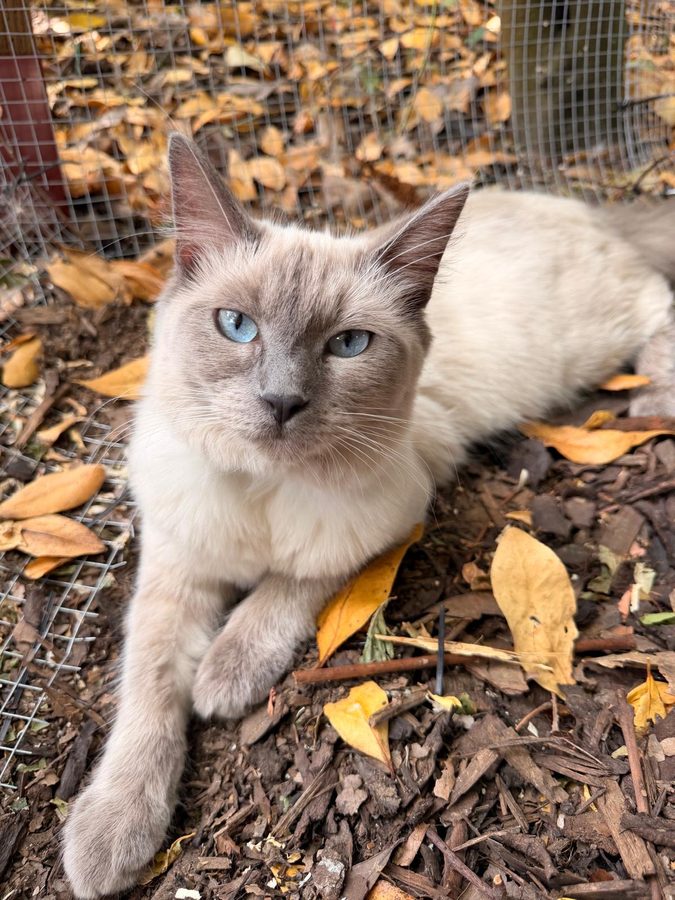
Fifi, one of our queens. A coat like this is kept by a comb, not by luck.
Do Ragdolls shed a lot?
A moderate amount, and it shows. The registries describe the coat the same way: semi long and silky, with plenty of the long outer hairs and very little woolly undercoat. The Cat Fanciers' Association's breed profile says plainly that Ragdolls shed like every other breed, usually as the seasons change, and that the light undercoat means less shedding and less matting than you would expect from a cat this fluffy. The International Cat Association calls the shedding light and mostly a spring and autumn event.
You will also find Ragdolls on lists of heavy shedders, and both views are fair. Hair for hair, a Ragdoll drops less than the dense coated longhairs. But each hair is several centimetres long and usually cream or white, so a small amount looks like a lot. One stroke with a dark sleeve tells you which season it is.
What a Ragdoll is not is a cat that does not shed, and it is not hypoallergenic. The allergy comes from a protein in saliva and skin, not from the hair itself, so a lighter shed does not make a safer cat for someone allergic. Ragdoll myths deals with that one properly.
When do Ragdolls shed?
There are two moults a year in a cat that lives by the daylight.
- Spring. The heavy one. The thicker winter coat comes out over a few weeks as the days lengthen.
- Autumn. The lighter one. The summer coat goes and the winter coat grows in behind it, which is also when a Ragdoll starts to look its fluffiest.
Indoor cats blur that pattern. PDSA vets point out that how a cat moults depends largely on the daylight it gets, and that indoor cats often shed all year round. Lamps in the evening and central heating in winter tell the coat that the season never quite changes. So an indoor Ragdoll, which is most Ragdolls in the UK, tends to give you a steady light shed all year with two swells rather than two sharp moults.
When do Ragdoll kittens start shedding?
Kittens shed very little. The first real moult comes during the first year, as the soft kitten coat gives way to adult coat. From then on the pattern is set. There is no age at which a Ragdoll stops shedding: an older cat usually sheds a little more, not less, and grooms itself less thoroughly, so the comb matters more as the years go by.
How much hair is normal?
Normal, in a house with a Ragdoll, looks like this:
- A comb that fills after a few strokes during a moult, and takes far less the rest of the year.
- Soft tufts gathering in corners and under furniture between vacuuming days.
- Pale hairs on dark clothes, the sofa and anything the cat sleeps on.
- The odd hairball in the moulting weeks, because what the comb does not catch the tongue does. Hairballs explained covers what is normal there.
It helps to know your own cat's ordinary. Notice how much the comb collects in a quiet month, and you will spot a change in either direction. The coat should stay full and even through a moult. Hair comes out; gaps do not appear.
How to manage Ragdoll shedding
You cannot stop a healthy cat shedding. You can decide where the hair ends up.
Comb, and comb more in a moult
Twice a week is the baseline for a semi long coat, with a steel comb that reaches down to the skin rather than skating over the top. In the spring and autumn moults make it daily for a few minutes. Every tuft in the comb is one that is not on the carpet or in the cat's stomach. How to groom a Ragdoll has the tools and the order to use them in.
Feed the coat
Skin and coat are built from what the cat eats, and a poor diet shows in a dry, dull coat that sheds more. A complete, good quality food is enough for a healthy cat. Ask the vet at the yearly check before adding oils or supplements. Feeding a Ragdoll covers the choices.
Keep fleas out of it
A scratching cat pulls out coat. Regular flea treatment, even for an indoor cat, removes one of the commonest reasons for extra hair on the floor. See fleas.
Make the house easy
Washable throws on the favourite sleeping spots, a lint roller by the front door and a vacuum that copes with long hair do more for your sanity than any product sold to reduce shedding. A damp rubber glove lifts hair from fabric better than most gadgets.
What not to do
Do not shave a Ragdoll to deal with shedding. The hair still falls, only shorter, and the coat is there to insulate against heat as well as cold. Frequent baths do not help either and dry the skin. Harsh deshedding blades made for dense double coats can cut the silky top coat. Can you shave a Ragdoll? explains when clipping is justified.
A routine for the spring and autumn moult
The heavy weeks are easier with a plan. This is the one we would give a new owner.
- Every day, five minutes. Comb through the body, then check the places mats start: behind the ears, the armpits, the trousers and the belly. Stop while the cat is still happy.
- Twice a week. Go over the coat with a slicker brush or a grooming mitt to lift what the comb loosened.
- Once a week. Wash the throws and bedding the cat sleeps on, and vacuum under the furniture where the tufts collect.
- All through. Keep an eye on the litter tray and on appetite. More swallowed hair means more hairballs, and a cat that is retching without result, off its food or straining in the tray needs the vet, not another combing.
- Fresh water, always. A well hydrated cat passes swallowed hair more easily. A fountain tempts some cats to drink more.
A moult run like this passes in a few weeks as a season. Left alone, it turns into mats, and mats are a much bigger job than a daily comb. If the coat has got away from you, do not reach for scissors: skin lifts into a mat and is very easy to cut. A groomer or the vet can clip it out safely.
When shedding is not normal
A moult thins the coat evenly and the new coat follows. See the vet if you notice any of these instead:
- Bald or thin patches, or hair that is not growing back.
- Red, sore or scabby skin under the coat.
- Scratching, chewing or pulling at the fur, or a lot of head shaking.
- Licking one area bare, often the belly or the inside of the legs, which can be stress or pain as much as skin.
- A sudden heavy shed with other changes: weight loss, a greasy or scurfy coat, drinking more, or a cat that has stopped grooming.
The usual causes are ones a vet can treat: parasites, allergies, ringworm and other skin infections, and stress. Some medicines list hair loss as a side effect. Our guides to itchy skin and allergies, ringworm and stress in cats go into each. One harmless oddity is worth knowing: a frightened cat can drop a surprising amount of coat in minutes, which is why the vet's table is always covered in fur. That stops when the fright does.
Quick questions, answered
Do Ragdolls shed a lot?
A moderate amount. They have little woolly undercoat, so they shed and mat less than most long coated breeds, but the hairs are long and pale and show on everything. Expect a light shed all year indoors and two heavier moults.
When do Ragdolls shed the most?
In spring, when the winter coat comes out, with a second, lighter moult in autumn. Indoor cats often shed steadily all year because artificial light and heating blur the seasons.
Do Ragdoll kittens shed?
Hardly at all. The first real moult comes during the first year, as the kitten coat gives way to adult coat.
Does brushing reduce shedding?
It does not reduce how much hair the cat loses, but it decides where the hair goes. Combing twice a week, and daily during a moult, takes out loose coat before it reaches the floor or the cat's stomach.
Does less undercoat make a Ragdoll hypoallergenic?
No. Cat allergy is caused by a protein in saliva and skin, not by the hair. Ragdolls are not hypoallergenic, however lightly they shed.
Should I shave my Ragdoll to stop the shedding?
No. A shaved cat still sheds, the coat protects against heat as well as cold, and it can take months to grow back. Clipping is for a vet or groomer to do when a coat is badly matted.
Sources and further reading
- Cat Fanciers' Association: Ragdoll breed profile and standard: The coat description, the seasonal shed and the slow road to full coat, colour and size.
- The International Cat Association: Ragdoll: Registry profile: a semi long, silky coat, light seasonal shedding and up to four years to mature.
- PDSA: Why and when pets moult: PDSA vets on the seasons, daylight, indoor cats and when hair loss is not a moult.
- Petplan: How much hair should my cat be shedding?: Causes of excessive shedding and how often different coats need grooming.
Thinking about a Ragdoll kitten?
Our Ragdoll kittens grow up in our home in Ryde, Isle of Wight, with health tested parents and our support for life. See who is available now, or join the waiting list for the next litter.