
Cat Dementia: Signs, Night Howling and How to Help
An old cat calling in the night is asking for something. The first job is to find out what.
Last reviewed
Can cats get dementia? Yes. Vets call it cognitive dysfunction syndrome, and it is far more common than most owners realise: in one study more than a quarter of cats aged 11 to 14 showed at least one sign, and more than half of those aged 15 and over. The signs are confusion, crying at night, forgetting the litter tray and a changed pattern of sleep and affection. There is no cure, but there is a good deal you can do, and the first step is always a vet check, because several treatable illnesses of old age look exactly the same.
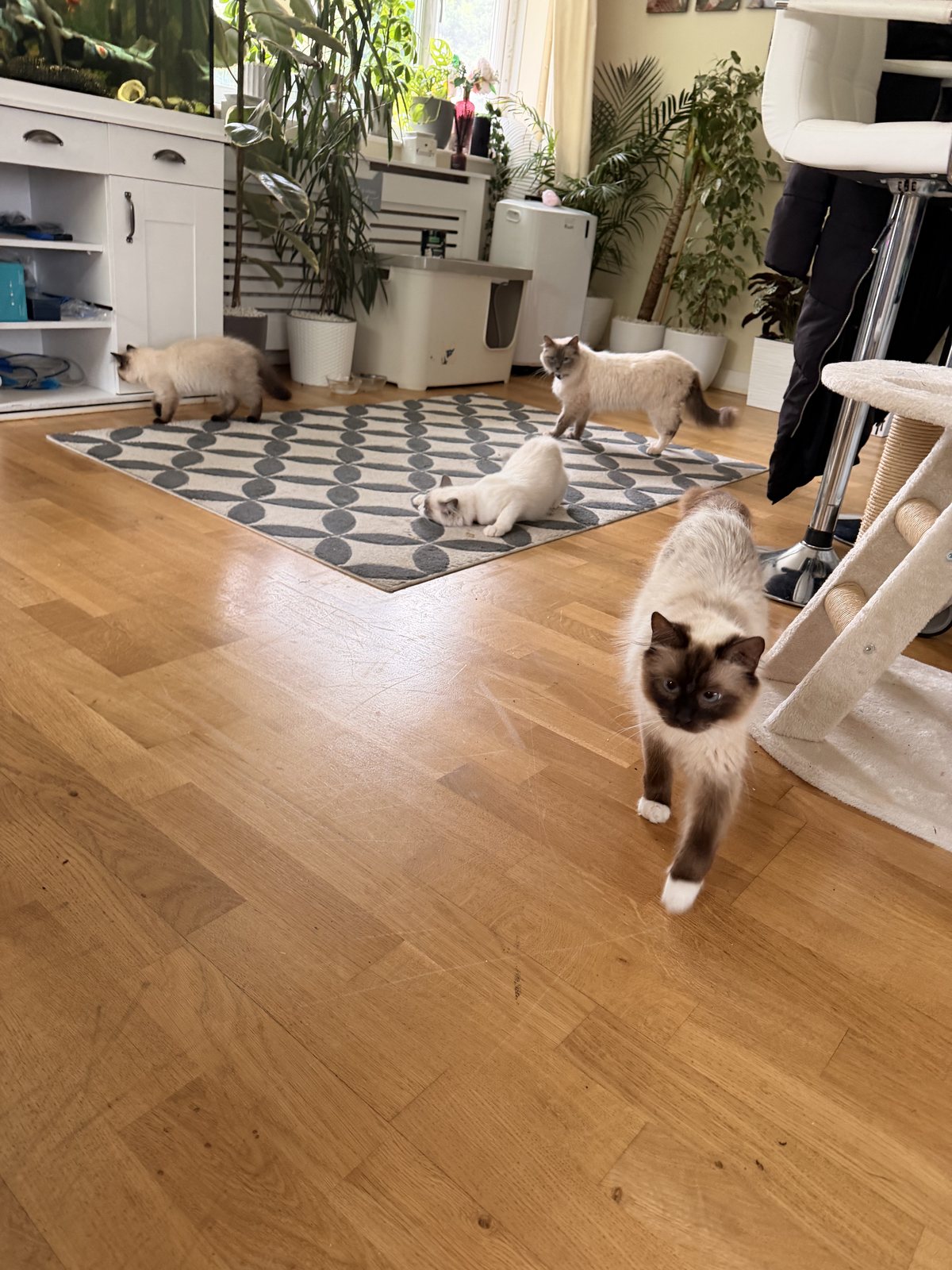
A familiar room, kept the same, is one of the kindest things you can give an old cat.
What is cat dementia?
Cognitive dysfunction syndrome, often shortened to CDS, is a decline in memory, awareness and learning caused by changes in the ageing brain. It is the nearest thing cats have to dementia in people.
- It is not normal ageing. An old cat that sleeps more and plays less is simply old. A cat that gets lost in its own kitchen is not.
- It comes on slowly, over months, and gets worse with time.
- It is a diagnosis of exclusion. There is no single test. A vet reaches it by ruling out everything else that could explain the signs.
- It is common. The figures above come from a published study of older cats: 28 percent of those aged 11 to 14 had at least one sign, and over 50 percent of those aged 15 or more.
It is a condition of age, not of breed, and Ragdolls regularly live long enough to meet it.
The signs of dementia in cats
Vets group the signs under five headings.
- Disorientation. Getting lost in familiar rooms, staring at walls or into space, trouble finding a way round furniture it has known for years, getting stuck in corners.
- Changed relationships. Less interest in people or other pets, or the opposite: suddenly clingy and anxious when alone. Some cats seem not to recognise family.
- Sleep. Sleeping more in the day and awake, restless and noisy at night.
- House soiling. Forgetting where the litter tray is, or what it is for.
- Activity. Aimless wandering or pacing, less grooming, less interest in play or food, or asking for food again straight after a meal.
One sign on one day means little. A pattern that builds over weeks is what to report. Keeping a short diary, with dates, helps the vet a great deal.
Dementia, or just getting old?
Every old cat slows down. The difference is between doing less and getting lost.
Ordinary old age
- Sleeping more, and more deeply.
- Jumping less and choosing lower beds.
- Playing in shorter bursts.
- Being fussier about food, noise and visitors.
- Hearing and seeing a little less.
Worth a vet's opinion
- Awake, restless and calling at night.
- Standing lost in a familiar room.
- Soiling away from a clean, easy to reach tray.
- Forgetting it has just eaten, or forgetting to eat.
- Not seeming to know people it has lived with for years.
- Any change that arrives suddenly. Dementia creeps. Illness, pain and strokes do not.
Why does my old cat howl at night?
Night crying is the sign that brings most owners to this subject, and dementia is only one of the causes. An old cat calling in the dark may be:
- Confused: awake in a dark, quiet house and unsure where it is or where you are.
- In pain. Arthritic joints are at their stiffest after lying still. See arthritis in cats.
- Hungry or thirsty. An overactive thyroid drives appetite and restlessness, and kidney disease and diabetes drive thirst.
- Affected by high blood pressure, which is common in older cats and can cause sudden blindness.
- Losing its sight or hearing. A deaf cat cannot hear how loud it is. See living with a blind or deaf cat.
- Anxious, and calling for company.
Several of these are treatable, and some are urgent. That is why a cat that starts howling at night needs a vet, not earplugs.
The illnesses to rule out
Before anyone says dementia, a vet will want to exclude the conditions of old age that cause the same behaviour:
- An overactive thyroid
- Chronic kidney disease
- Diabetes
- High blood pressure and heart disease
- Arthritis and other sources of pain
- Dental disease. See dental care
- Loss of sight or hearing
- Liver disease, and growths, including in the brain
- Urinary problems, where the sign is soiling. See urinary problems
Expect a full examination, blood and urine tests and a blood pressure reading. Take your diary and, if you can, a short film of the behaviour. Many old cats have more than one thing going on, and treating the thyroid or the joints often improves the nights even when some confusion remains.
Can cat dementia be treated?
It cannot be cured or reversed. It can often be eased, and its progress may be slowed.
- Medication. Vets can prescribe drugs that reduce some of the signs. PDSA's advice is that the earlier they are started, the better.
- Diet and supplements. Your vet may suggest a senior diet or a supplement designed to support the brain, usually built around antioxidants and omega 3 oils. Ask before buying one, because supplements vary and some interact with medicines.
- Treating everything else. Pain relief for arthritis, and treatment for thyroid, kidney or blood pressure problems, often make the biggest difference to how the cat feels.
- Keeping the brain busy. Gentle play, food puzzles and new smells and textures. Learning and exploring help to keep the mind working.
How to help a cat with dementia
Keep the world the same
- Leave the furniture, the bed, the bowls and the trays where they are.
- Keep to the same times for meals, play and bed.
- Use familiar sounds as landmarks: PDSA suggests a radio left on in a room the cat uses.
Make everything easy to find
- Put food, water, a bed and a tray close together on the floor the cat lives on, so that nothing depends on stairs or memory.
- Add extra trays, large and low sided.
- Leave a night light on in the hall or landing.
- Give a warm bed, low down, with a step up to any favourite chair.
Keep it safe
- A confused cat is not safe outdoors alone. A catio or a supervised garden is. See catios.
- Check that the microchip details are up to date.
- Block off places a cat could get stuck.
Be kind about mistakes
- Never tell a cat off for an accident or for crying. It does not know it has done anything.
- Show it the tray again after meals and naps, gently.
- Help with the coat. An old cat that has stopped grooming needs you to do it. See how to groom a Ragdoll.
Getting through the night
- A play session in the early evening, however gentle.
- A small meal last thing. A cat with a full stomach is more likely to sleep.
- A warm bed near you. Some confused cats settle better if they can sleep in the bedroom.
- A night light and a tray close by.
- If the cat calls, go to it quietly, speak softly, and settle it back in its bed. Do not shout, and do not start a game or a feast that teaches it to call again.
- Tell the vet if nights are getting worse. There may be something else to treat.
The senior years covers the rest of an old cat's care. When the bad days begin to outnumber the good, saying goodbye may help with the hardest decision.
If you are here because someone in your family is living with dementia and you are wondering about a cat as company, that is a different guide: cats and dementia.
Quick questions, answered
Can cats get dementia?
Yes. It is called cognitive dysfunction syndrome. In one study 28 percent of cats aged 11 to 14 and more than half of cats aged 15 and over showed at least one sign.
What are the first signs of dementia in a cat?
Confusion in familiar places, crying at night, changed sleep, forgetting the litter tray, staring into space, and becoming either withdrawn or unusually clingy.
Why does my old cat yowl at night?
It may be confusion, pain, hunger or thirst from thyroid or kidney disease, high blood pressure, failing sight or hearing, or anxiety. Several of these are treatable, so a vet check comes first.
At what age do cats get dementia?
It is a condition of older cats. In the study quoted above, signs were recorded in cats from eleven upwards and were most common in those of fifteen and over. Young cats are very unlikely to be affected.
Is there a cure for cat dementia?
No. Medication, diet, supplements, treating other illnesses and adapting the home can ease the signs and may slow the decline. Starting early helps.
Is a cat with dementia suffering?
Not necessarily. Many confused cats are content when their routine is steady and their needs are easy to reach. Distress, pain, not eating and constant anxiety are the things to discuss with your vet.
Sources and further reading
- PDSA: Dementia in pets: The signs, what vets can offer and how to help at home.
- Ohio State University Indoor Pet Initiative: Cognitive dysfunction syndrome: The vet school's summary: how common it is by age, the signs, and the illnesses to rule out first.
Thinking about a Ragdoll kitten?
Our Ragdoll kittens grow up in our home in Ryde, Isle of Wight, with health tested parents and our support for life. See who is available now, or join the waiting list for the next litter.