
From our colony to your sofa
Catios & Safe Garden Time
Window boxes to walk in runs: safe outdoors, harnesses and gardens.
Last reviewed
Window boxes to walk in runs: safe outdoors, harnesses and gardens.
Last reviewed
The happiest compromise in cat keeping: all the sunshine, breezes and bird television of outdoors, none of the roads. Our colony has a catio and considers it the best room in the house, so this guide comes with the smugness of lived experience.
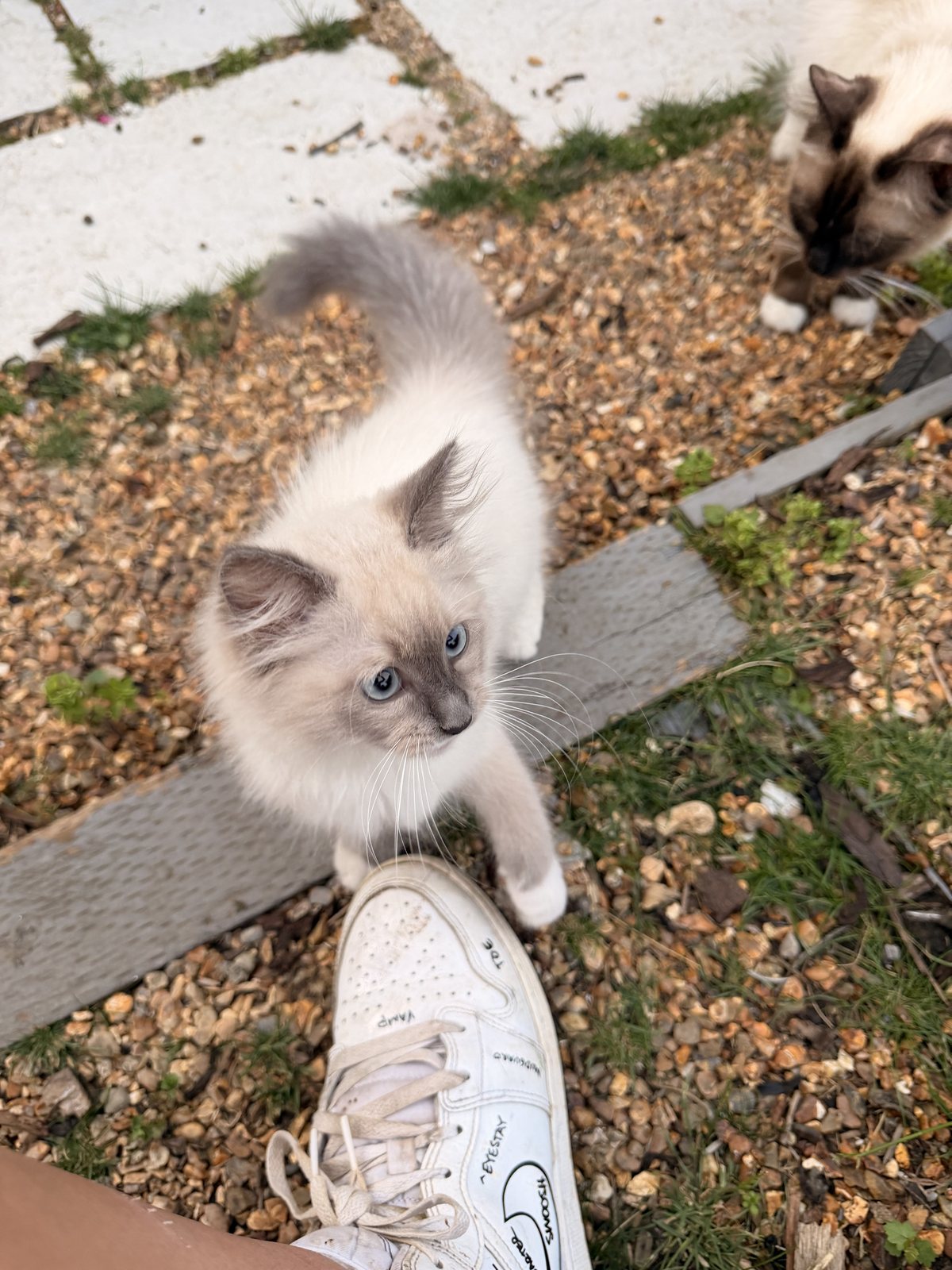
Shelf circuits, sisal and safe air: outdoor life with the risks fenced out.
A catio lives outdoors all year, so design starts with the compass and the forecast: morning sun for the lounging shelves, guaranteed shade for high summer, and on an island where the weather arrives sideways, a solid roofed corner that stays dry in horizontal rain. Watch where the wind funnels between buildings before fixing anything permanent.
The luxury spec is a floor level draught screen for winter and a sheltered heated pad zone for the dedicated all season lounger. Cats will use a catio in almost any weather if one corner of it always offers comfort; they abandon the ones that only work in June.
A catio’s real capacity is its climbing circuit: staggered shelves that let cats travel the walls without touching ground, a high patrol platform with the long view, sisal wrapped posts as official scratching infrastructure, and routes wide enough that two cats can pass without a diplomatic incident. Dead ends cause ambush politics; loops keep the peace.
Furnish the floor lightly, a pot of cat grass, a log for claws, a tunnel for drama, and leave running room. The measure of success is simple to watch: a well designed catio is used at every level, all day, by choice.
A catio is a structure, and structures get inspections: mesh walked and pressed for gaps or corrosion each spring and autumn, fixings checked after storms, timber treated on schedule with animal safe products and the cats excluded until fully dry, and drainage cleared before winter so the floor never becomes a pond.
Add the plant audit to the rhythm, because seeds arrive by wind and bird, and the lily family in particular is so dangerous to cats that it earns a standing search warrant. Ten minutes a season keeps the safest space on the property exactly that.
Catio floors are a maintenance decision disguised as a design one. Pavers and decking rinse clean and drain fast, ideal under feeding spots and trays; real grass is loved and lovely and becomes mud by November; artificial turf splits the difference if it drains well and gets rinsed. Many of the best builds zone it: hard standing where mess happens, something soft where lounging does.
Whatever the surface, build the fall: a slight slope to a drainage edge so rain and rinse water leave instead of pooling. A catio that dries quickly after weather is a catio that stays fresh with five minutes of care.
The route between house and catio shapes how much the space gets used: a cat flap in a window or wall panel gives the cat sovereign access and delivers the heaviest daily use; a tunnel run can bridge a gap to a freestanding build; a door the humans operate makes catio time an event rather than a habit. All three work; they build different relationships.
Flap training is a fortnight of patience: propped fully open with treats through it, then half lowered, then the cat pushing for dinner, never forced. Once the physics are understood, the flap becomes the most used door in the house.
The most underrated catio feature is a chair. A space comfortable enough for you to drink a coffee in is a space where shared time happens daily, and shared time is half the point: the catio at its best is an outdoor room the whole household uses, not an enclosure the cat is posted to.
So spec the human corner with the same care as the shelves: seating out of the drip line, a surface for the mug, maybe the evening’s wand toy hanging on a hook. The cats will colonise your lap out there exactly as they do indoors, with better air.
A perfectly good catio can be built from framed mesh panels and honest joinery at a fraction of kit prices, and the savings belong in the decorative layer: shelves from offcuts, posts wrapped by hand, furniture from the house’s retired chairs.
The never cheap list is short and absolute: the mesh itself, welded and properly gauged rather than flimsy netting; every fixing and hinge, because gates sag and staples lift; and the roof, both for escape proofing and for the dry corner the whole design depends on. Save on the furniture, never on the cage.
Battersea walk through what makes an outdoor space feel safe to a cat and lets them behave naturally, principles that transfer straight into a catio layout. Watch it before you decide where the shelves go.
Watch on YouTube Battersea, The Battersea Way
A catio is the happiest compromise in cat keeping: sunshine, breezes and bird television with none of the roads. Plan aspect and weather first, build the vertical economy of shelves and perches rather than just floor space, choose flooring you can clean, and decide how the catio connects to the house. A maintenance calendar keeps mesh, latches and timber honest, weatherproof the human seating too, and remember that excellent budget builds exist: the cats grade on access, not architecture.
Most modest garden catios fall within permitted development, but rules vary with size, height, position and whether the property is listed or in a conservation area. A quick check with your local council before building is the boring step that prevents expensive arguments.
Smaller than most people fear: even a window box style enclosure gives fresh air and bird television, and a couple of square metres with full height shelving keeps a cat genuinely occupied. Vertical furnishing multiplies whatever footprint you have.
Enthusiastically, if one corner earns it: wind blocked, roofed dry, with an insulated or heated bed. Cats adore crisp air on their own terms, and the winter catio at breakfast time is often the most used shift of the whole year.
A little chattering at birds is normal enrichment; genuine sustained frustration shows as pacing and distress. Position feeders well away from the catio rather than beside it, give the frustrated hunter a daily wand session, and the balcony theatre stays entertainment rather than torment.
Walk the mesh and press it monthly, inspect fixings after any storm, and do the full seasonal audit twice a year, spring and autumn. Cats test structures continuously and quietly; the schedule keeps you one inspection ahead of the engineer.
Anything from a mesh window box a cat can sit in, through a lean to run off a door or window, up to a walk in garden room with shelves and sofas for humans. All share the same recipe: secure mesh on a solid frame, a roof, because cats climb, shade as well as sun, and comfortable places to perch and sprawl. Access via a cat flap into the house turns it from an outing into an extension of territory, which is exactly how a cat prefers it.
Levels are everything: shelves, ramps and platforms at heights, because a catio is enjoyed vertically. Add a scratching post that can live outdoors, a water station, cat safe planting such as cat grass and catmint in pots, and a sheltered snug for napping through drizzle, this being Britain. Skip anything from the toxic list in our kitten proofing guide, and check the space stays comfortable in high summer per our heat guide.
Harness and lead training genuinely works, especially started young: let the kitten wear the harness indoors in short happy sessions first, add the lead, then graduate to quiet garden potters, never tethering and never leaving a harnessed cat alone. Full garden containment systems, angled fence toppers and dedicated enclosures, exist for the committed. Supervised pottering with you on a calm day suits many homes as the simplest version of all.
Because it dissolves the last worry in the indoor question: our indoor cats guide makes the case that inside done well is a rich life, and a catio is the done well deluxe edition. Trusting breeds like ours get the outdoors that suits them, the neighbourhood birds get to remain theoretical, and everyone naps satisfied.
For outdoor safety thinking, International Cat Care covers enclosures and garden hazards, and Cats Protection publishes guidance on safe outdoor access.