
Ragdoll colours
Seal point Ragdolls
The original and darkest Ragdoll colour: seal brown on the ears, mask, legs and tail against a warm cream body.
The original and darkest Ragdoll colour: seal brown on the ears, mask, legs and tail against a warm cream body.
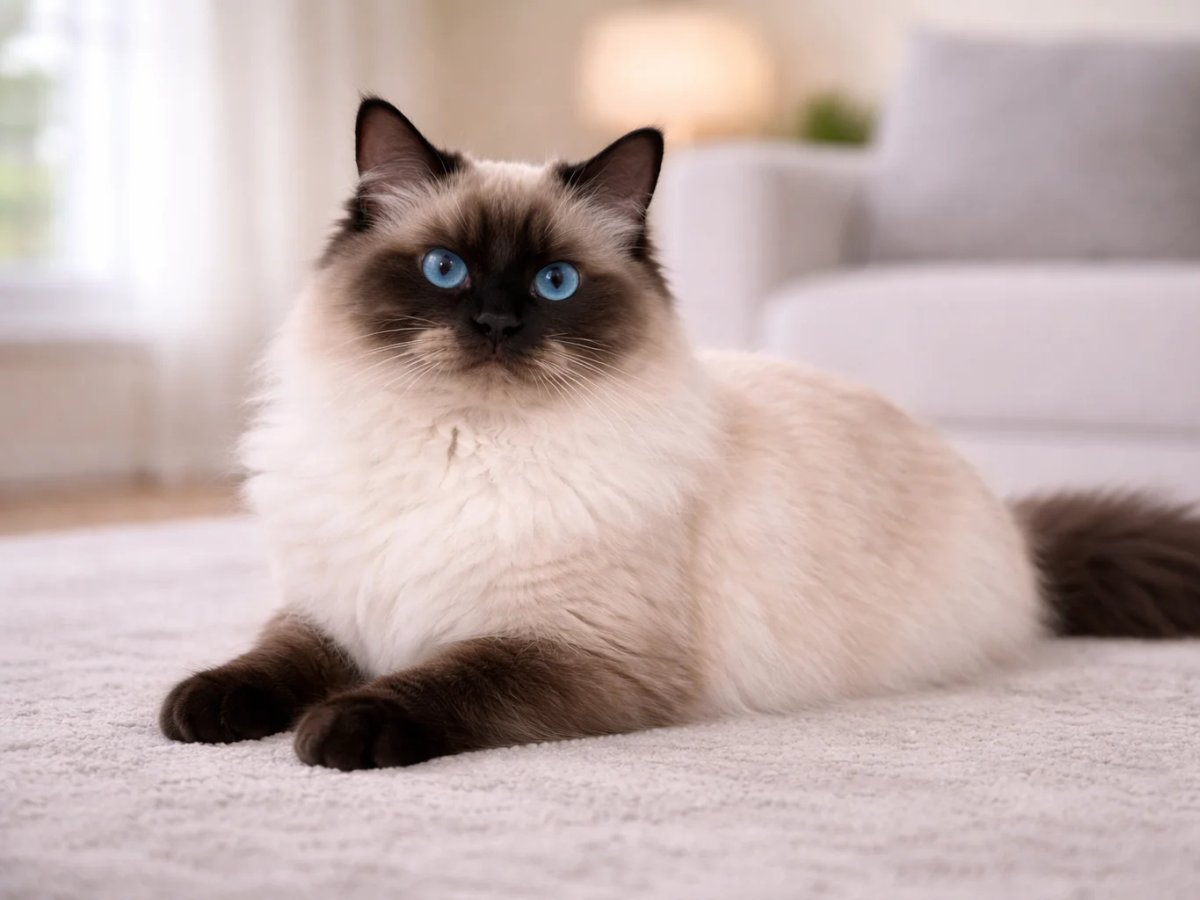
Seal is the Ragdoll version of black. Genetically the cat is a black cat (the dominant B form of the brown gene TYRP1, and the dense, non dilute form of MLPH), but the Ragdoll’s pointing gene restricts that black to the extremities, where it reads as a deep seal brown. The body is a warm cream to pale fawn, and the contrast between the two is the whole point of the colour.
It is the most common of the four solid colours because it needs no recessive pairs: a seal point can carry chocolate or dilute without showing either, which is why seal parents can produce blue, chocolate and lilac kittens.
The registries describe seal points as deep, dark brown on the ears, mask, legs, feet and tail, with a body a shade paler and shading allowed provided there is clear contrast; nose leather and paw pads match the points in a colourpoint, and go pink where white spotting removes the colour in mitted and bicolour cats. GCCF lists seal among the six solid point colours (seal, blue, chocolate, lilac, red and cream) and recognises seal in tortie, tabby (lynx) and tortie tabby variations too.
Every Ragdoll is born white. The breed is fixed for the Siamese form of the colour gene (TYR, the cs allele), which makes the pigment enzyme temperature sensitive: it works on the cooler parts of the body and switches off where the cat is warm, which is why colour sits on the ears, mask, legs, feet and tail and the body stays pale. The same gene is the reason every pointed Ragdoll has blue eyes.
The first colour shows on the ear tips and nose within the first week or two, the mask and tail follow, and by eight weeks the pattern is clear enough to describe a kitten honestly. The points go on deepening for two to three years, and older cats carry more colour on the body; both breed standards allow for undeveloped colour in kittens and darker bodies in older cats. Two everyday consequences: a shaved patch grows back darker, and a cat kept in a cold house will colour up more than the same cat in a warm one.
Colour is not temperament. The kitten in front of you tells you far more than the name of its colour, which is why we price every pure Ragdoll the same, whatever it turns out to be.
Seal kittens are usually the quickest to show their colour, because the pigment is the darkest: ear tips can be smudged by a week old.
We link to the registries’ own standards and to a university genetics laboratory rather than to other breeders, so you can check every claim above for yourself.
 Seal pointDark brown points on warm cream
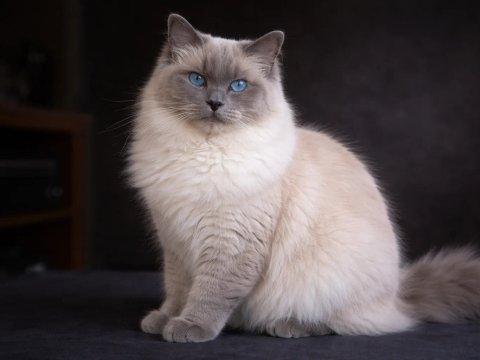 Blue pointSlate grey points on bluish white
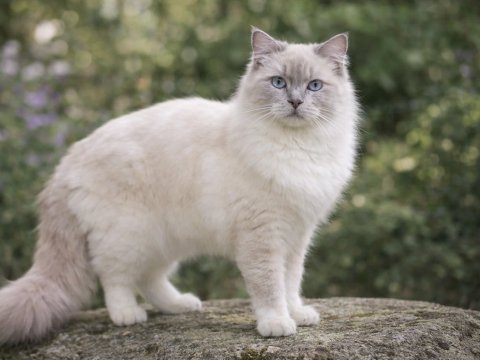 Lilac pointFrosty pinkish grey points on milk white
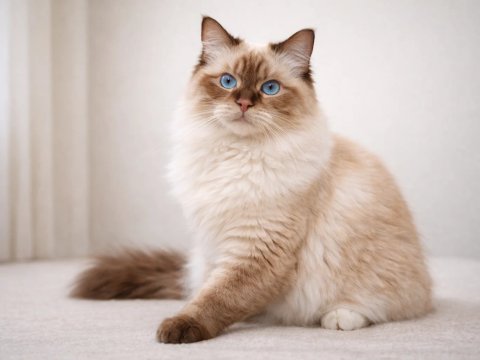 Chocolate pointMilk chocolate points on ivory
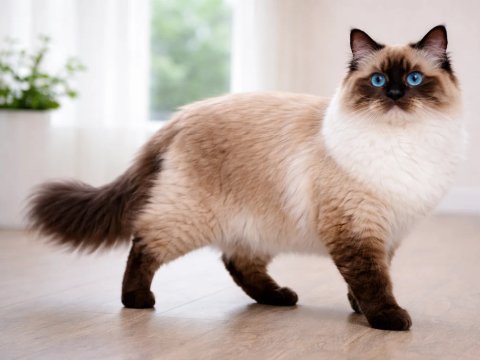 ColourpointFull mask and points, no white
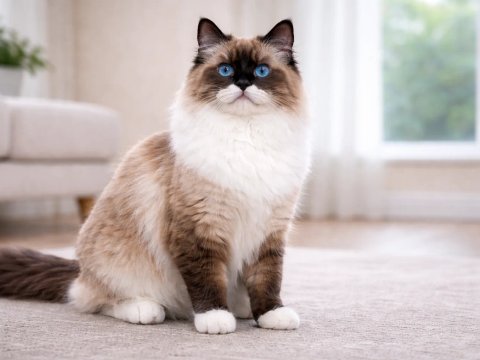 MittedWhite mittens, boots, chin and chest
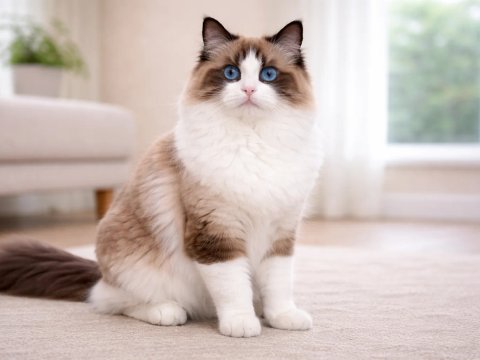 BicolourWhite V on the face, white legs and belly
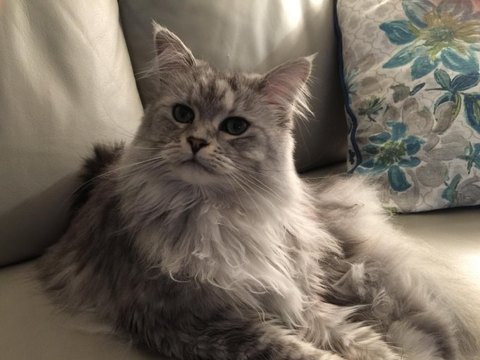 RagcoonRagdoll × Maine Coon, silvers and tabbies
No premiums for colour, pattern or sex: every pure Ragdoll kitten here is £850, and our Ragcoons (Ragdoll × Maine Coon) are £600. The waiting list is the way to ask for a colour.