
Ragdoll colours
Blue point Ragdolls
Seal, softened: slate grey points on a bluish white body, and the palest looking kittens of all.
Seal, softened: slate grey points on a bluish white body, and the palest looking kittens of all.
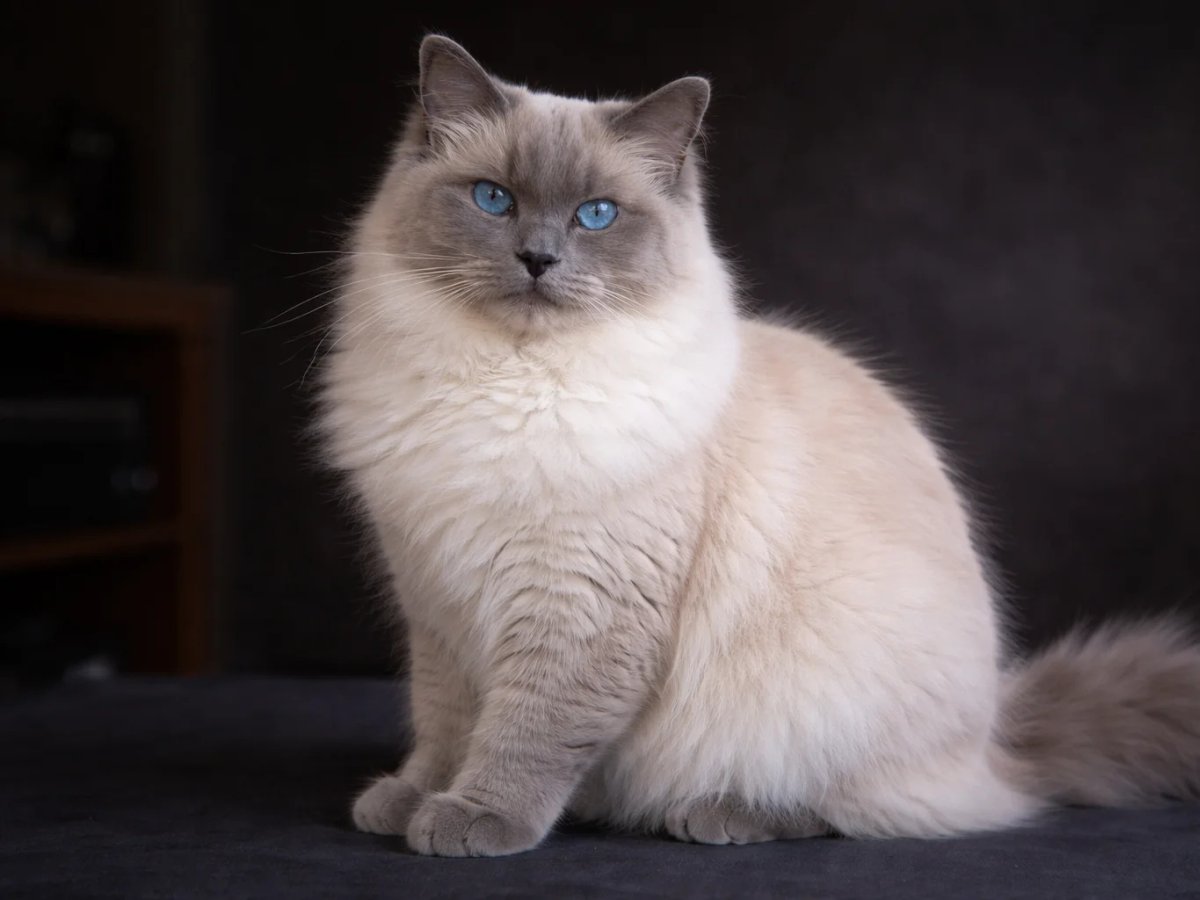
Blue is the dilute of seal. A single base deletion in the melanophilin gene (MLPH) makes pigment granules clump unevenly along the hair, and black pigment reads as a soft grey that cat breeders call blue. Dilute is recessive: a blue kitten has two copies, one from each parent, so both parents must carry it, even if both are seal themselves.
On a pointed cat that grey sits on the ears, mask, legs and tail against a body that stays a cool, bluish white, often with a faint greyish shading over the back in adults.
Blue points have slate blue grey points and a bluish white to platinum body; nose leather and paw pads are slate grey (pink where white markings take over in mitted and bicolour cats). Blue and seal are the two colours you will meet most often, and a blue point is sometimes mistaken for a lilac in the first weeks, before the points settle: a blue’s grey is cool and steely, a lilac’s has a pinkish, frosted cast.
Every Ragdoll is born white. The breed is fixed for the Siamese form of the colour gene (TYR, the cs allele), which makes the pigment enzyme temperature sensitive: it works on the cooler parts of the body and switches off where the cat is warm, which is why colour sits on the ears, mask, legs, feet and tail and the body stays pale. The same gene is the reason every pointed Ragdoll has blue eyes.
The first colour shows on the ear tips and nose within the first week or two, the mask and tail follow, and by eight weeks the pattern is clear enough to describe a kitten honestly. The points go on deepening for two to three years, and older cats carry more colour on the body; both breed standards allow for undeveloped colour in kittens and darker bodies in older cats. Two everyday consequences: a shaved patch grows back darker, and a cat kept in a cold house will colour up more than the same cat in a warm one.
Colour is not temperament. The kitten in front of you tells you far more than the name of its colour, which is why we price every pure Ragdoll the same, whatever it turns out to be.
Dilute colours develop more slowly and more subtly than seal. Blue kittens can look almost entirely white at three weeks, and the final depth of grey may not be there until the cat is two or three.
We link to the registries’ own standards and to a university genetics laboratory rather than to other breeders, so you can check every claim above for yourself.
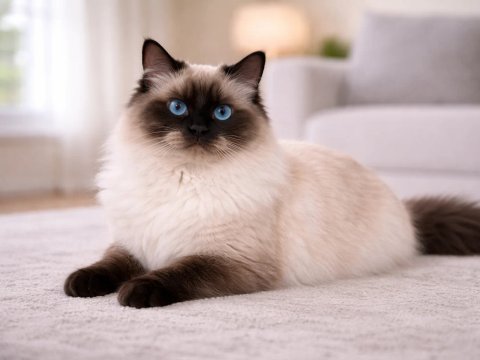 Seal pointDark brown points on warm cream
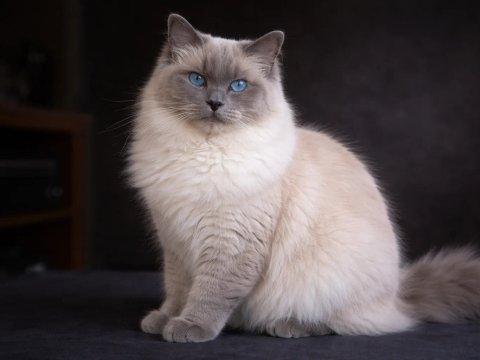 Blue pointSlate grey points on bluish white
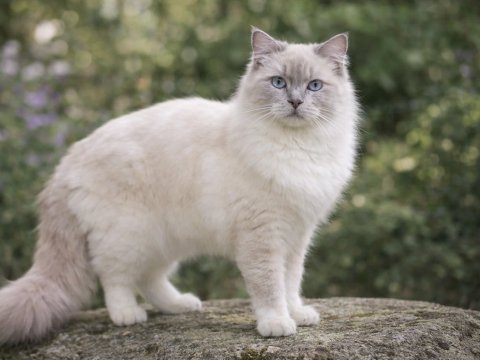 Lilac pointFrosty pinkish grey points on milk white
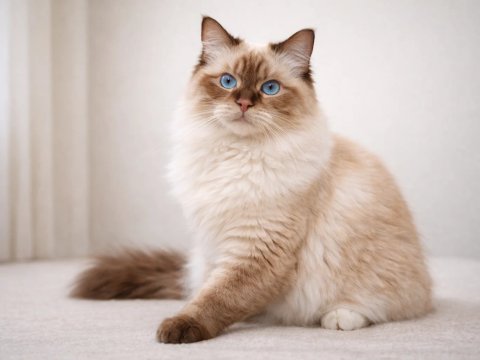 Chocolate pointMilk chocolate points on ivory
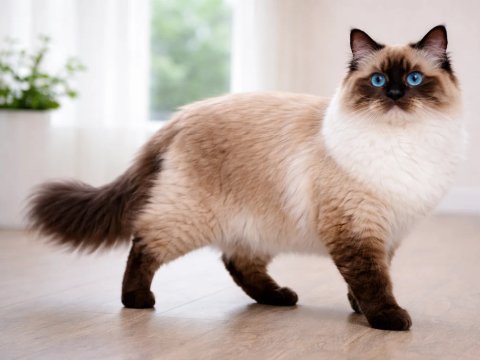 ColourpointFull mask and points, no white
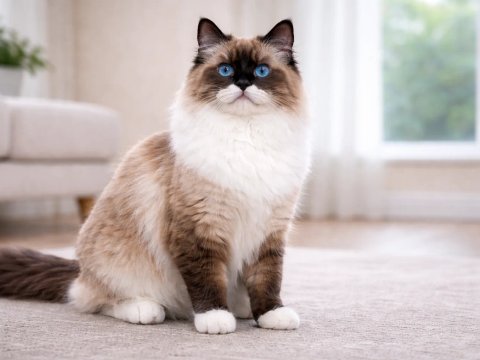 MittedWhite mittens, boots, chin and chest
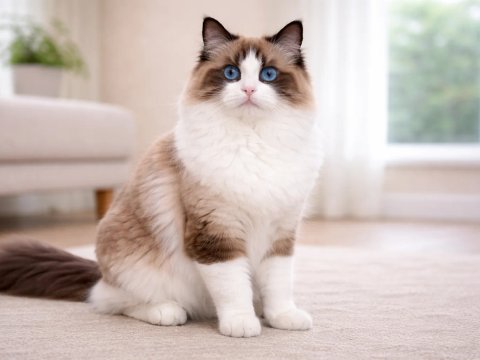 BicolourWhite V on the face, white legs and belly
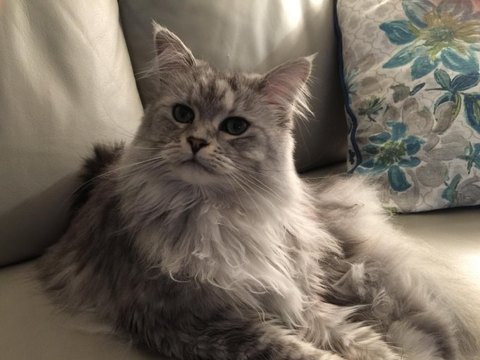 RagcoonRagdoll × Maine Coon, silvers and tabbies
No premiums for colour, pattern or sex: every pure Ragdoll kitten here is £850, and our Ragcoons (Ragdoll × Maine Coon) are £600. The waiting list is the way to ask for a colour.