
From our colony to your sofa
Ragdoll vs British Shorthair vs Persian
Three favourite breeds, three daily realities, compared side by side.
Last reviewed
Three favourite breeds, three daily realities, compared side by side.
Last reviewed
Three of Britain’s favourite pedigree cats, three completely different daily realities. Here is the honest comparison we give families who are still deciding, written from the Ragdoll corner but with respect across the ring.
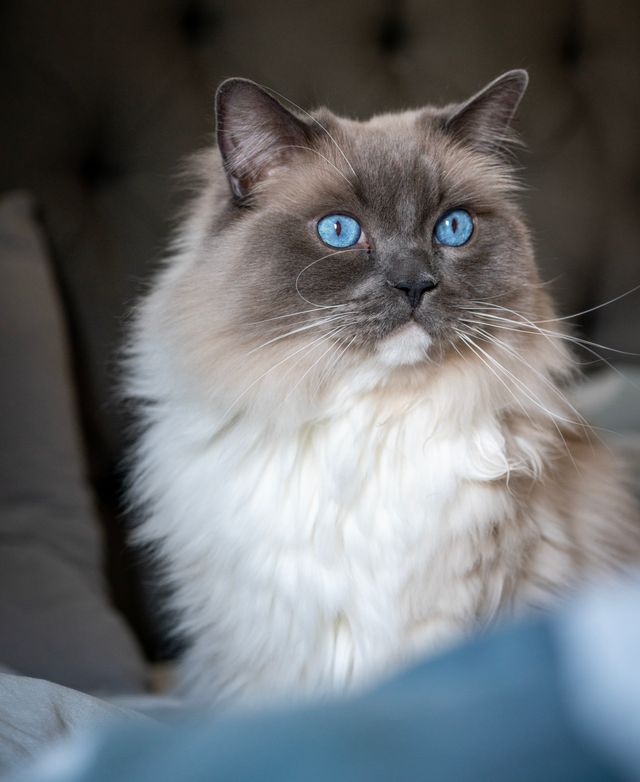
Ranked purely by brush hours, the podium is clear: the Persian’s immense, fine, tangle prone coat demands genuine daily grooming plus routine face care around those famous eyes, the Ragdoll sits in the comfortable middle with regular sessions and seasonal diligence, and the British Shorthair’s dense plush asks for little more than a weekly polish.
The ranking matters because coat care is a fifteen year subscription, not a launch feature. Choose the workload your real week can honour, and every one of these breeds will look the part; choose above it and the Persian in particular will show the arrears.
The British Shorthair is the dignified flatmate: fond, calm, near you rather than on you, and content with its own company through a working day. The Persian is the serene ornament in the best sense, gentle, quiet and happiest in a peaceful, predictable home. The Ragdoll is the engaged companion, following, greeting and joining in, with the most obvious appetite for interaction of the three.
None of the three is demanding by wider cat standards, and the fit question is direction: whether you want company that mostly parallels you, decorates the room, or participates. Households are rarely wrong about which of those they are; the trick is answering it straight.
Each breed hands its buyer a different set of questions. Persian lines carry the flat face conversation, breathing, tear ducts and eye care, plus a historic kidney condition that testing has beaten back, so ask about both. British Shorthair and Ragdoll buyers share the heart screening question as their headline, with the answer wanted in certificates, not reassurances.
The meta lesson is that no popular breed comes question free, and good breeders in all three expect the interrogation and answer it with paperwork. The health testing guide in this library translates the documents once they are in your hands.
Put the three breeds on a hypothetical sofa and the styles separate: the Ragdoll is on you or against you, following the warmth; the British Shorthair is near you, on its own cushion, radiating companionable independence and mild disapproval of being lifted; the Persian is wherever is most comfortable, accepting worship graciously.
None of these is the wrong answer; they are different contracts. Households wanting physical affection choose the Ragdoll’s clause; households wanting calm presence without velcro choose the British; households wanting serene decorative company choose the Persian’s.
For family bustle the Ragdoll generally ranks first: bred for handling tolerance and recovering quickly from surprises, it suits homes where doors slam and small people adore loudly. The British Shorthair manages well with children who respect its no carrying policy, meeting chaos with sturdy composure.
The Persian prefers its chaos curated: gentle households, older children, and dogs of a contemplative persuasion. All three need the universal rules, escape routes, handling taught, sleep respected, but the margin for family error runs widest with the Ragdoll.
Across a decade the ownership diverges predictably: the Ragdoll matures slowly into its long prime, coat and character both, with the breed’s known screening landscape behind it; the British Shorthair thickens with age and must be defended from its own appetite; the Persian’s face and coat ask for maintenance that increases as self grooming declines.
Senior care follows the same lines: joint friendly furniture for all three big framed breeds, weight discipline sharpest for the British, and eye and coat routines that intensify for the Persian. Choosing a breed is choosing its old age too.
All three breeds are popular enough to attract both excellent breeders and volume sellers, and the homework is identical: health tested parents, kittens raised underfoot, honest paperwork, and a breeder who interviews you back. The Persian adds a specific check, breathing and eye conformation bred to a moderate, healthy degree.
Waiting lists reward patience in all three, and the bargain kitten is the same false economy in each. Whichever breed wins your shortlist, the seller matters more than the breed brochure.
Three favourite breeds, three daily realities. The Persian demands daily grooming and carries the flat faced health landscape; the British Shorthair is the low maintenance independent professional; the Ragdoll sits between on grooming and top of the class on lap devotion and following you about. Energy, children and dog tolerance, health landscapes and the ten year view all differ more than the photographs suggest. Choose by the daily reality you actually want, and the buying realities close the comparison.
The British Shorthair tolerates solitude best by temperament; the Ragdoll needs company engineered, a companion cat or midday contact; the Persian sits between, given its grooming is never skipped. Presence budgets should drive this choice.
The British Shorthair’s dense short coat sheds plenty but manages easily; the Ragdoll sheds seasonally with low matting; the Persian sheds and mats both without daily work. None is a shed free option.
It is understated if anything: daily combing, face and eye care, and periodic professional attention are the honest baseline. The serenity is real and so is the housework.
Running costs track size and coat: the British usually edges cheapest, the Ragdoll costs a large cat’s food and insurance, the Persian adds grooming overheads. Over a lifetime the differences are real but rarely decisive.
All three are better indoor or catio cats: trusting temperaments, valuable to thieves, and in the Persian’s case a coat the outdoors ruins. Enriched indoor life is the modern default for each.
The Ragdoll for engaged households wanting interaction; the British for those wanting easier care self sufficiency. The Persian rewards experience or genuine commitment to the grooming contract.
Cross breed households work on the usual rules: matched energy, proper introductions, duplicated resources. A Ragdoll and a British is a common, comfortable pairing; the Persian asks housemates to respect its pace.
The British Shorthair wears a dense plush coat that mostly looks after itself with a weekly brush. The Persian wears the most glorious coat in the cat fancy and pays for it daily: proper grooming every day, plus routine face and eye care, is simply part of owning one. The Ragdoll sits squarely in the middle, a silky semi longhaired coat with a modest undercoat that stays beautiful on a few sessions a week with the right comb, as our grooming guide shows.
British Shorthairs are affectionate on their own terms, dignified, a little independent, happiest beside you rather than on you. Persians are serenity in cat form, calm, quiet and ornamental, well suited to peaceful households. Ragdolls are the shadow of the three: they follow, they flop, they greet at the door and they take family bustle as entertainment, the character our temperament guide describes at length. These are averages, and every individual gets a vote.
Every pedigree breed carries questions worth asking. British Shorthair lines can carry heart disease, so ask any breeder about cardiac screening. Persians carry the headline risk of PKD along with the honest costs of a flat face: watering eyes, crowded teeth and, in extreme types, noisy breathing, which is why moderate faces and health focused breeders matter. Ragdolls have a known HCM mutation with a simple DNA test, and PKD entered some lines through historic outcrossing, which is exactly why tested parents matter, as our Ragdoll health guide and health testing guide explain without flinching.
A busy family who wants a cat in the middle of everything is describing a Ragdoll. A calm home that wants a beautiful, peaceful companion and enjoys the daily grooming ritual is describing a Persian. Someone who wants an easy care, quietly loyal presence is describing a British Shorthair. Then meet cats rather than photographs, because the right individual outranks the right breed, and read our choosing a breeder guide for whichever breed wins your sofa. Still comparing? Our Maine Coon and Ragamuffin matchups are next door.
For breed health detail behind these comparisons, International Cat Care covers inherited conditions, and Cornell Feline Health Center adds the clinical view.