
From our colony to your sofa
Night Zoomies & the 4am Wake Up
Crepuscular wiring, the evening fix, and never rewarding the concert.
Last reviewed
Crepuscular wiring, the evening fix, and never rewarding the concert.
Last reviewed
The thundering gallop across your bed at silly o’clock has an evolutionary excuse: cats are crepuscular, wired to be liveliest at dawn and dusk. You cannot argue with millions of years of wiring, but you can absolutely reschedule it. Here is how.
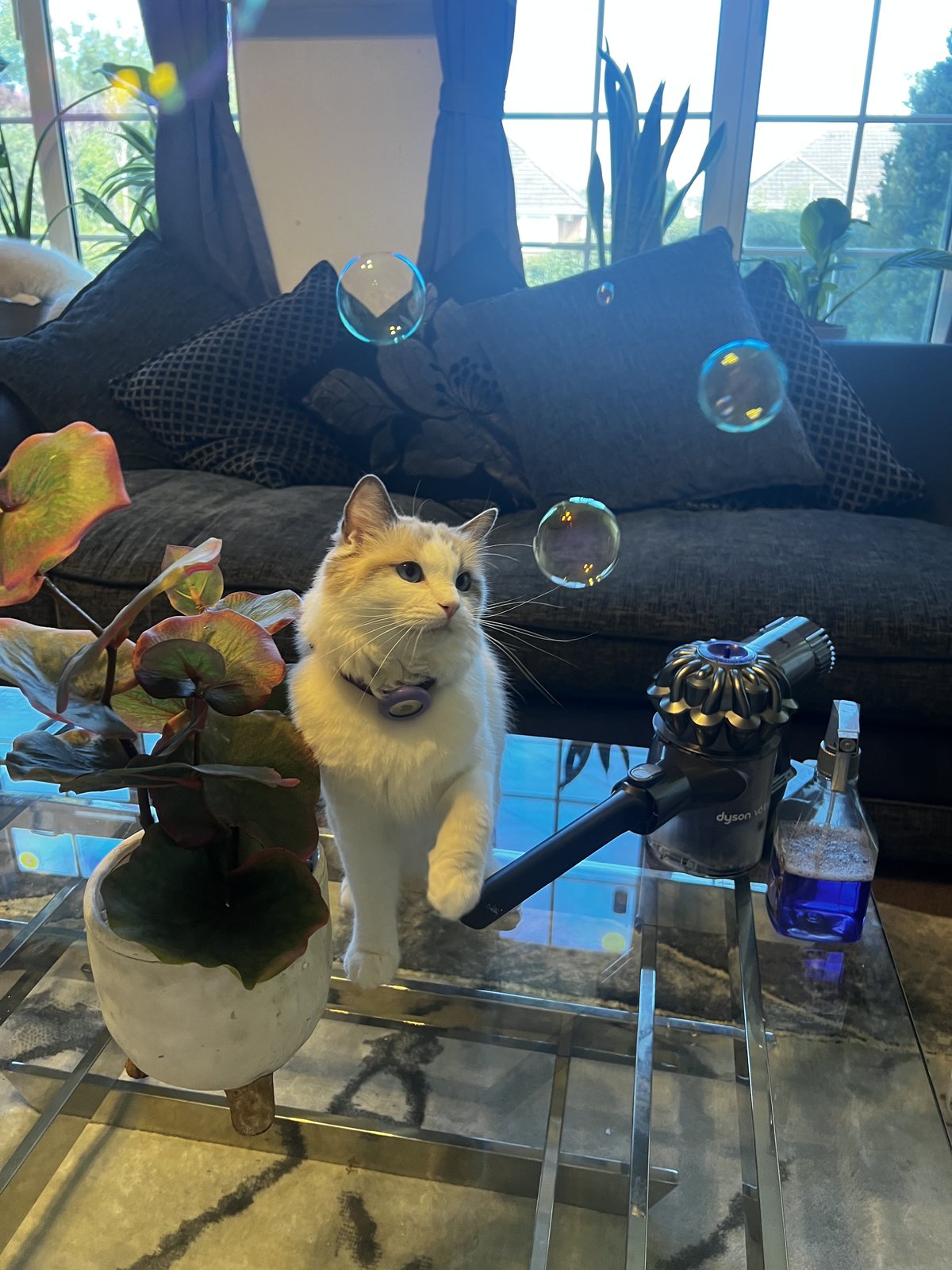
Cats are crepuscular, wired by evolution to hunt at dawn and dusk, and the evening zoomies are that programming firing on schedule in a home with no mice to receive it. The thunder of paws at ten pm is not misbehaviour or haunting; it is a predator’s shift starting with nowhere to clock in.
Young cats run the loudest shifts, and the energy is genuine and finite: properly spent, it converts into the deep sleep everyone in the house is hoping for. The management question is never how to switch it off, but where to aim it.
The sequence that ends a wild evening is the one nature wrote: a proper interactive hunt with a wand toy, fifteen minutes of stalking, chasing and genuine catches, always finishing with the prey caught rather than snatched away mid air, followed immediately by the evening meal. Hunt, catch, feast, then the wash and the long sleep follow like dominoes.
Run it at the same time nightly and the household’s wildest half hour becomes an appointment you schedule rather than suffer. It is the single most reliable trick in feline behaviour, and it costs a feather wand.
Two exceptions sit inside the comedy. The first is the bored athlete: zoomies plus daytime destruction plus ankle ambushes is an under stimulation pattern, answered by auditing the whole enrichment day rather than just the evening. The second is more important: night vocalising that is new in an older cat, yowling rather than thundering, has medical auditions, thyroid, blood pressure, hearing and cognitive change among them, and earns a vet visit rather than earplugs.
The distinction is usually easy: joyful chaos moves, worried noise stands still and calls. The first gets a feather wand; the second gets an appointment.
A cat’s night is funded by its day: a Ragdoll that dozed from breakfast to dinner carries a full battery into midnight, and the gallop across your bed is simply the invoice. Audit the waking hours squarely: how many minutes of genuine, heart rate raising activity did today contain?
Most three am households discover the answer is nearly none, and the fix writes itself: two or three real play sessions distributed through the day, puzzle feeders replacing the free bowl, and a window or catio adding passive stimulation. Spend the budget by daylight and the night grows quiet on schedule.
Night waking survives on payment: the sleepy human who feeds the yowler to buy silence has scheduled tomorrow’s performance, and even shouting or chasing counts as attention in the feline ledger. Cats repeat precisely what works, with heroic patience.
Breaking the loop is simple and hard: total, boring non response, every night, by every household member, while the daytime program makes the nights genuinely restful. Expect a worse week before the better ones, the famous extinction burst, and hold the line through it; consistency is the entire technique.
Households split on the bedroom question and both answers work if held consistently: cats welcome on the bed, with the understanding that dawn patrols come with the territory, or a comfortable cat zone elsewhere with the door closed and a white noise machine masking the protest phase.
What fails is oscillation, in on quiet nights, out after bad ones, which teaches only that persistence opens doors. Pick the policy your sleep genuinely needs, equip the alternative generously, and give the new regime a committed fortnight before judging it.
Kitten zoomies at night are development, not disorder: young cats carry absurd energy budgets and their crepuscular wiring runs hottest in the first year. Structured play, a bedtime meal and tolerance get households through a phase that genuinely mellows with maturity.
An adult who has slept soundly for years and newly starts night waking is a different document entirely, medical until proven behavioural, as our vet section explains. Age is the context that decides whether the three am gallop is a diary note or a phone call.
The first Simon’s Cat Logic episode puts the evening mad half hour to a Cats Protection behaviourist: what the burst of energy is about and how to help a cat let it out safely. A few minutes of animation and good sense.
Watch on YouTube Simon’s Cat with Cats Protection
We film the colony most days and put the clips out as Ragdoll Drama. Real cats, no script, no idea what they will do next.
The three am gallop is crepuscular wiring meeting an under spent energy budget: cats are built for dawn and dusk activity, and an evening of hunt style play, a bedtime meal and a boring, dark, unrewarding night teach the household schedule fast. Sudden new night restlessness in an older cat is different, a vet conversation about thyroid, blood pressure and pain.
Sometimes gloriously, sometimes you get a synchronised duo: companionship helps energetic youngsters most, and matching temperaments matters more than the theory. It is a household decision, not an insomnia cure.
Enormously, when hunger drives the timing: a feeder firing before the usual waking hour breaks the link between pestering you and breakfast appearing. You become irrelevant to the morning economy, which is the goal.
If sleep demands it, yes, without guilt, provided the rest of the home is enriched and the policy is total. Cats adapt to consistent rules quickly; it is the negotiable door that gets scratched at.
Yowling carries more medical weight, especially in seniors: hearing changes, blood pressure, thyroid and cognitive aging all speak at night. Persistent vocal nights earn a vet check before any behaviour plan.
With genuine daytime enrichment and perfect non response, most households report transformed nights inside two to four weeks. The relapse cause is almost always a single 3am capitulation, which resets the cat’s arithmetic.
A cat who has dozed through the day wakes at dusk with a full tank of hunting energy and nowhere to spend it, and dawn brings the same surge. Kittens add growing energy on top, which is why the first months are the rowdiest. None of it is naughtiness; it is a hunter on hunter’s hours, sharing a house with day shift humans.
Run the hunting sequence from our play guide late in the evening: a proper wand session that ends in a catch, followed immediately by the last meal of the day. Hunt, catch, eat, groom, sleep is the ancient order of a cat’s evening, and a cat who has done all five settles for the long haul. Make it the nightly ritual and the difference appears within a week.
The hard rule: do not reward the dawn performance. Feeding, playing or even scolding a 4am cat all count as success from the cat’s side of the ledger, and guarantee an encore. Be boring, utterly and consistently, and the show gets cancelled for lack of audience. If dawn hunger is the genuine driver, an automatic feeder set for early morning breaks the link between you and breakfast beautifully, because you cannot be woken to operate a machine that operates itself.
Energy spikes are normal; a real change is information. Night yowling that is new, an older cat suddenly restless at night, or frantic behaviour paired with other changes deserve a vet chat rather than earplugs. And a lone kitten with endless night energy is often a lonely kitten, which is one of the honest arguments in our one kitten or two guide.
For play and activity guidance that tames the evenings, International Cat Care covers feline exercise needs well.