
Going on Holiday: Cat Sitter or Cattery for a Ragdoll?
A bowl of biscuits and a weekend away is not a plan.
Last reviewed
What do you do with a Ragdoll when you go on holiday? Not leave it with a full bowl and a prayer. Cats Protection puts the limit for leaving an adult cat alone at about twelve hours, and only now and then. Beyond that somebody needs to come in, move in, or take the cat somewhere safe. There are three good options: a friend or neighbour who visits, a paid sitter, or a boarding cattery. Which is best depends on your cat more than on the price. Here is how to choose, what to check, what it costs and how to get ready, for a breed that minds being left more than most.
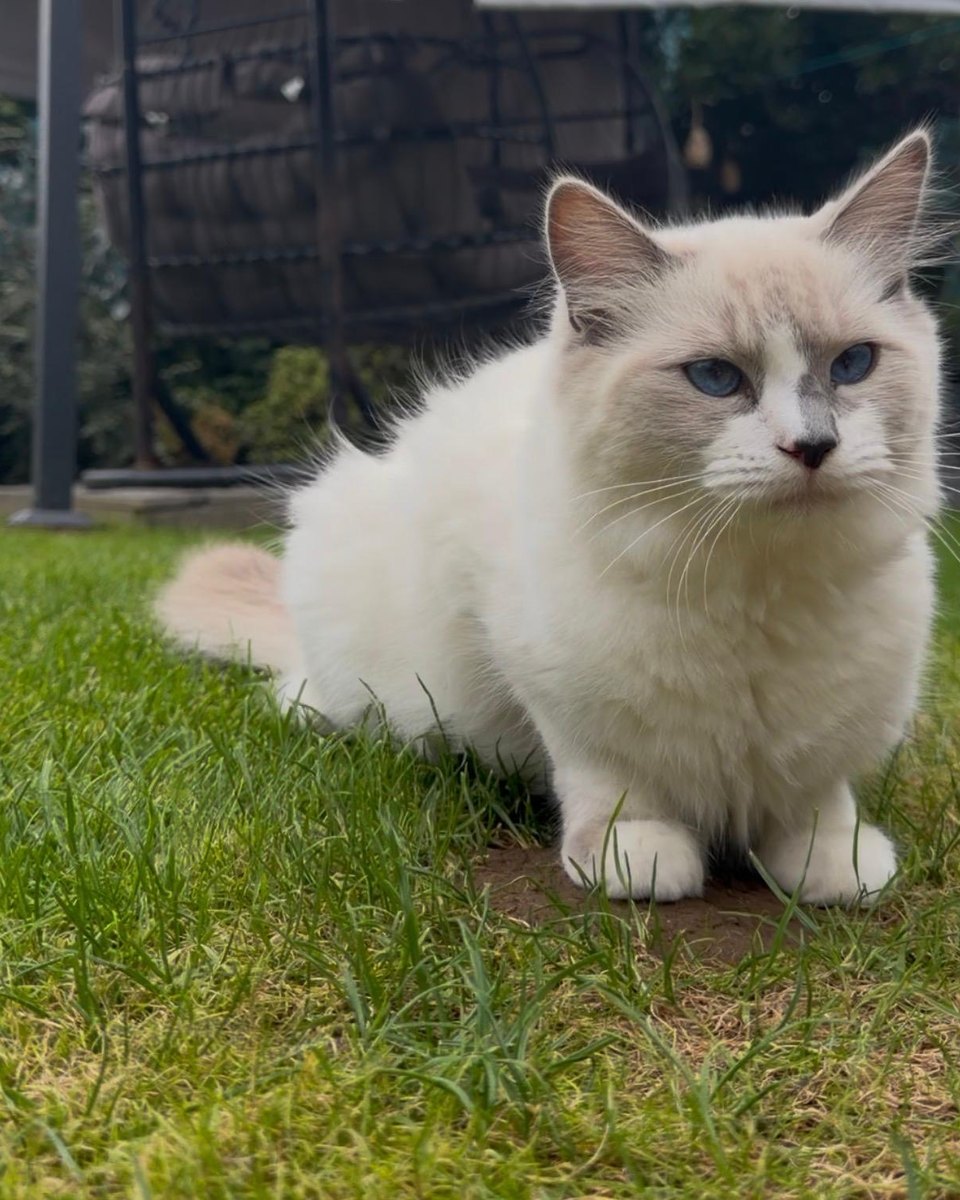
Boo, one of our rising girls. Most cats would choose their own home over anywhere else.
How long can a cat be left alone?
- An adult cat: around twelve hours at most, and only occasionally, says Cats Protection.
- A kitten: a few hours at a time. Kittens need small, frequent meals and watching.
- An elderly cat, or one on medication: more frequent checks.
- Overnight or a weekend: Battersea advises against leaving a cat alone, even with extra food or an automatic feeder.
Feeders jam, water bowls get knocked over, cats get shut in cupboards and illnesses start on a Friday night. A cat that cannot pass urine needs a vet within hours, not on Monday. Can Ragdolls be left alone? covers the ordinary working day.
A friend, relative or neighbour
Someone the cat knows, visiting twice a day to feed, refresh the water, clean the trays and spend some time.
- For: the cat stays in its own territory with its own smells and routine. It is usually free, or the price of a favour returned.
- Against: it depends on one person's reliability and health. Visits can turn into five minute dashes, and a people loving cat is still alone for most of the day.
- Works best for: short trips, confident cats, pairs of cats who have each other, and helpers who like cats enough to sit down for half an hour.
Some vet practices have nurses who will visit, which is worth asking about for an old cat or one that needs tablets at set times.
A professional cat sitter
Either a sitter who visits once or twice a day, or one who lives in your home while you are away.
- For: the cat stays at home, visits are the job and not a favour, and a live in sitter gives a Ragdoll the company it wants. The house is occupied too.
- Against: cost, and a stranger with your keys.
- What it costs: Cats Protection gives £150 to £300 for a week of pet sitting, or £15 to £20 a visit.
What to check
- Insurance, and references you can ring.
- That they will come and meet the cat first.
- How long each visit lasts and what it includes.
- What they would do if the cat seemed ill, and whether they can get it to your vet.
- Who covers if they are ill themselves.
- Whether they are comfortable combing a long coat and giving medicine, if yours needs either.
A boarding cattery
The cat goes to stay in its own pen at a boarding business.
- For: someone is on site and checking every day, the pen is secure, and there is no risk of a cat slipping out past a visitor.
- Against: a journey, a strange place, strange smells and other cats nearby. Older cats that rely on their routine can find it distressing.
What to check
Visit before you book. Battersea's advice is that a cattery unwilling to show you round is a warning in itself.
- The council licence. Boarding cats as a business needs a local authority licence in England. Ask to see it.
- Cats only is better than cats and dogs together.
- A pen for each cat or household, with an enclosed, insulated sleeping area, a run, a shelf to sit up on and somewhere to hide.
- Full height barriers between pens, so that cats cannot sneeze on each other.
- Heating in winter, shade and ventilation in summer.
- Clean, without a strong smell of urine or disinfectant.
- Proof of vaccination required. A good cattery insists on an up to date certificate from every cat.
- Questions about your cat: diet, habits, health, and whether it is long haired.
- The residents: alert, with clean trays and eaten food.
Take the cat's own bedding and food. Book early, because good catteries fill up quickly for summer and Christmas.
Which is best for a Ragdoll?
There is no single right answer, but the breed's nature points in a direction.
- Ragdolls want company. Two short visits a day keep a cat fed. They do not keep a Ragdoll happy for a fortnight. A live in sitter, or a visitor who stays an hour, suits them better.
- Two Ragdolls usually cope better than one, wherever they are.
- They are indoor cats. Tell every visitor, in writing, that the cat does not go out, and to mind the front door.
- The coat still needs a comb twice a week, and daily in a moult. Show the sitter how.
- A confident, sociable Ragdoll that travels well may be perfectly content in a good cattery.
- A nervous cat may find strangers letting themselves in more upsetting than a quiet pen, and an old cat is usually best left at home.
If you can, try the arrangement for one night before you rely on it for two weeks.
Getting ready to go
A month or more ahead
- Book the sitter or the cattery.
- Check that vaccinations are up to date. A cattery will want the certificate and will usually want the injections done some time before the stay, so ask when you book. See vaccinations explained.
- Arrange a meeting between the sitter and the cat.
The week before
- Buy in more food and litter than you think you need.
- Tell your vet the dates and the name of the person in charge, and that they have your permission to bring the cat in.
- Bring flea and worm treatment up to date.
- Check the microchip details and put the carrier where it can be found.
The sheet on the fridge
- Feeding: what, how much and when.
- The routine: where the cat sleeps, what it plays with, where it hides.
- Medicines, with times and how to give them.
- Your vet's number and the out of hours number.
- Insurance and microchip details.
- Your own number and a local contact with a spare key.
- What is normal for this cat, and what is not.
The house
- Windows shut or on restrictors, and anything a cat could chew or get tangled in put away.
- Wet food is put down fresh at each visit, not left out all day. Dry food is replaced at least every twelve hours.
- Extra water bowls, and one more litter tray than usual.
Kittens, and coming home
Do not plan a holiday for a kitten's first weeks. A kitten needs you there to settle, and it should not be left for more than a few hours at a time. A cattery will not take a kitten until its vaccination course is complete, and a sitter for a young kitten needs to be there for most of the day. Bringing a Ragdoll kitten home explains what those weeks involve.
When you get back, expect either a cat glued to your side or one that pretends not to know you for an evening. Both pass. Go straight back to the normal routine, and for a few days keep an eye on appetite, the litter tray and the coat. A cat home from boarding that starts sneezing or goes off its food should see the vet.
Taking the cat with you is occasionally the right answer for a long stay. Travelling with a cat covers that.
Quick questions, answered
How long can I leave my Ragdoll alone?
Around twelve hours at most for an adult, and only occasionally. For a night away or longer, arrange a visitor, a sitter or a cattery. Kittens should not be left for more than a few hours.
Is a cat sitter or a cattery better?
Most cats are happier at home, so a reliable sitter usually comes first, especially for old cats. A good cattery suits confident cats and gives daily supervision. For a Ragdoll, a live in sitter or long visits are ideal.
How much does a cat sitter cost in the UK?
Cats Protection gives £150 to £300 for a week of pet sitting, or £15 to £20 a visit. Prices vary by area and by whether the sitter visits or lives in.
Can I leave my cat alone for a weekend with an automatic feeder?
It is not advised. Feeders fail, water gets spilt and illness does not wait. Someone should check on the cat at least twice a day.
Do cats need vaccinations to go into a cattery?
Yes. Catteries ask for an up to date vaccination certificate, and the course or booster needs to be done well before the stay.
Who can give my cat its medication while I am away?
Ask your vet practice whether a nurse can visit, or choose a sitter or cattery that is used to giving medicines. Write the doses and times down and show them how before you go.
Sources and further reading
- Cats Protection: How long can you leave a cat alone?: The charity's limits for adult cats and kittens, and what to leave out.
- Battersea: What should I do with my cat when I go on holiday?: The options compared, with a checklist for choosing a cattery.
- Cats Protection: Cost of owning a cat: Typical UK prices, including pet sitting.
Thinking about a Ragdoll kitten?
Our Ragdoll kittens grow up in our home in Ryde, Isle of Wight, with health tested parents and our support for life. See who is available now, or join the waiting list for the next litter.