
From our colony to your sofa
Panleukopenia: The One Vaccines Exist For
Feline parvovirus, the old enemy that vaccination keeps at the gate.
Last reviewed
Feline parvovirus, the old enemy that vaccination keeps at the gate.
Last reviewed
Panleukopenia is feline parvovirus, and it is the reason core vaccination exists. It attacks rapidly dividing cells: the gut lining, the bone marrow, and in unborn kittens the developing brain. Before vaccines it emptied catteries; in unvaccinated kittens it still can.
The virus is fearsomely tough, surviving in the environment for a year or more and shrugging off ordinary cleaning, which is why it can reach even indoor cats on shoes and hands, and why cattery biosecurity is built around it.
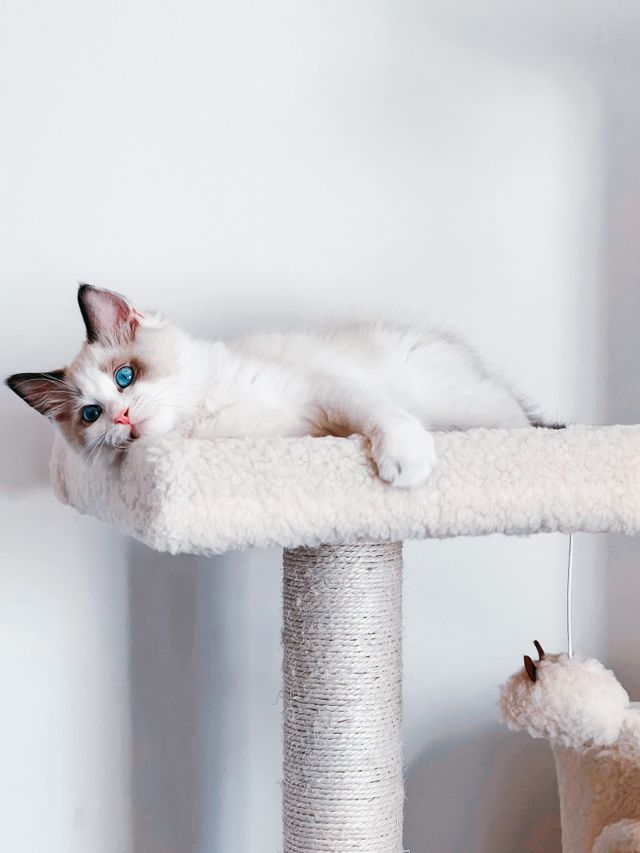
In kittens it moves brutally fast: sudden profound lethargy, fever, refusing food, vomiting, then severe often bloody diarrhoea and collapse, sometimes within a day of seeming fine. A kitten sitting hunched over an untouched bowl, too flat to react, is an emergency full stop.
Adults with vaccine protection essentially never get this. Unvaccinated adults can, usually less catastrophically, but this is not a disease anyone should meet unprotected.
Treatment is intensive hospital care, fluids, anti sickness medication, warmth, sometimes plasma, and it is a genuine fight. Prevention, by contrast, is a routine vaccination course: panleukopenia is a core component of the standard kitten programme and boosters, and modern vaccines are superbly effective.
This is also exactly why responsible breeders run closed doors, shoe changes and disinfection protocols around litters: young kittens are protected first by their mother’s antibodies and then by the vaccine schedule your vet sets, and biosecurity bridges the gap between the two.
Panleukopenia means all the white cells are low, and that laboratory word is the whole disease in miniature: the virus destroys the bone marrow’s production line just as it destroys the gut lining, so the body faces a breached wall and a disbanded army in the same week. The catastrophic diarrhoea is only half the danger; the defencelessness against ordinary bacteria is the other.
That is why hospital treatment leans so heavily on antibiotics despite this being a viral disease: the medicine is not fighting the virus, it is holding the gate for a patient whose guards are gone while the marrow rebuilds.
When panleukopenia strikes a pregnant queen or newborn litter, it attacks the developing balance centre of the kittens’ brains, producing the distinctive wobbly kitten: intention tremors, a drunken sailor walk, a head that bobs when concentrating on dinner. The damage is done once and does not progress.
The heartening half of the story is that these kittens, kept safely indoors with a few adjustments, commonly live full, happy, hilarious lives; the condition is stable, painless and no barrier to affection. It is also one more quiet argument for vaccinating queens before, never during, pregnancy, on your vet’s schedule.
Because parvovirus can survive in a home for a year or more, a household that has lost a kitten to panleukopenia faces a genuine planning question, not a superstition. The safe path has three planks: a deep clean with a disinfectant proven against parvoviruses, a respectful waiting period discussed with your vet, and crucially, protection planned with that same vet before any new cat crosses the threshold, whether that means an adult with a complete vaccine history or a kitten whose course timing your vet maps against the household’s risk.
Handled that way, homes recover completely and safely welcome cats again. Handled with hope instead of protocol, the environment gets a second victim. It is one of the few corners of cat keeping where patience is literally protective.
A panleukopenia patient is nursed in isolation with barrier precautions, and the treatment is intensive support rather than a cure: a drip replacing what the gut is losing, warmth, anti sickness medication, careful reintroduction of nutrition, and antibiotics guarding a body whose white cell defences have collapsed.
For owners the ward days are updates and patience: the corner usually announces itself through appetite and white cell counts turning. It is expensive, honest medicine with real wins, and every vet who fights these cases says the same quiet sentence afterwards about the vaccine that would have prevented it.
Rescues and rehoming are where panleukopenia still finds unprotected kittens, so the adopter’s questions are simple and fair: what protection has this kitten had so far, what has the rescue’s vet advised next, and has the site had recent cases? Good organisations answer with dates and paperwork.
Then complete whatever course your own vet maps without drift, keeping an unfinished kitten away from unknown cats and shared ground meanwhile. The gap between arriving home and completed protection is this disease’s favourite window; close it on schedule.
Adult cats are not automatically safe: immunity from a kittenhood course wanes on its own timetable, and the classic victim after kittens is the adult whose boosters quietly lapsed years ago. The fix is administrative, a booster plan agreed with your vet and actually kept.
Some practices offer titre testing, a blood check of existing antibody levels, as part of that conversation for owners who prefer evidence to schedules. Either route lands the same place: protection managed deliberately, on your vet’s advice, rather than assumed from the distant past.
Cats that beat panleukopenia usually recover remarkably completely: the gut lining rebuilds over days to weeks, appetite returns in stages on an easily digested diet, weight follows, and immunity after natural infection is robust and long lasting. The convalescent needs quiet, small frequent meals and unhurried patience.
The household’s remaining job is the environment, deep cleaned to virucidal standard on the vet’s guidance before any unprotected animal ever shares it, because the patient forgives faster than the premises do. Survivor stories are real; they simply all begin with intensive care that started early.
Kitten Lady’s long form film covers what panleukopenia is, how it spreads, the isolation protocol and the disinfection that makes a home safe for future kittens, all in plain language. It is the fuller version of the biosecurity this guide describes; treatment itself belongs to your vet.
Watch on YouTube Kitten Lady, 32 minutes
Panleukopenia is the deadliest of the classic kitten diseases, a parvovirus that collapses immunity and guts alike, moving in hours. Vaccination on your vet’s schedule is near complete protection and the entire strategy. Sudden vomiting, collapse or bloody diarrhoea in an unprotected young cat is a phone ahead emergency, and survivors, with hospital support, do go on to full lives.
They are close relatives with similar behaviour, and some canine strains can even infect cats, though classic feline disease is its own virus. The practical takeaway is shared: hardy, ferocious, vaccine preventable.
People cannot, and dogs have their own parvoviruses; the household concern is other cats and any place an unprotected kitten might later stand. Your vet can map mixed household risk during an outbreak.
It is one of veterinary medicine’s great successes: a properly completed course gives protection close to complete, which is why the disease now clusters where vaccination lapses. The schedule your vet sets is essentially the whole defence.
Only after virucidal deep cleaning and a waiting period your vet agrees, and any newcomer should be fully protected first. This is the one disease where patience about the premises is truly non negotiable.
No: the wobble is not painful and does not progress. These cats adapt superbly and live full spans, needing mainly soft landings, ground level comforts and a family untroubled by an eccentric walk.
Where this fits in the wider jab conversation lives in our first year at the vet guide, and the cat flu guide covers the respiratory half of the core vaccine.
Beyond our library, International Cat Care sets out panleukopenia in accessible depth, with Cornell Feline Health Center covering the clinical side. And to see the culprit itself, the photographs on the feline panleukopenia page show exactly what science is dealing with.