
From our colony to your sofa
Feline Coronavirus & FIP
The common bug, the rare mutation, and the treatment revolution.
Last reviewed
The common bug, the rare mutation, and the treatment revolution.
Last reviewed
Feline coronavirus is one of cat life’s most ordinary passengers: a gut virus that most cats, especially from multi cat backgrounds, meet young, carry briefly or quietly, and clear without anyone noticing more than a soft stool. It is common, unremarkable and no relation to human coronaviruses worth worrying about.
The confusion around this subject comes from a split personality: the everyday enteric coronavirus is trivial, while in a small minority of infected cats the virus mutates inside the body into the form that causes feline infectious peritonitis, FIP, a serious systemic disease. Same family, utterly different stakes.
The mutation happens within an individual cat, most often a young one under stress, which is why FIP is a disease of kittens and adolescents from anywhere cats gather. Understanding that split is the whole foundation: a positive coronavirus exposure is normality, while FIP is the rare exception that now, remarkably, has answers.
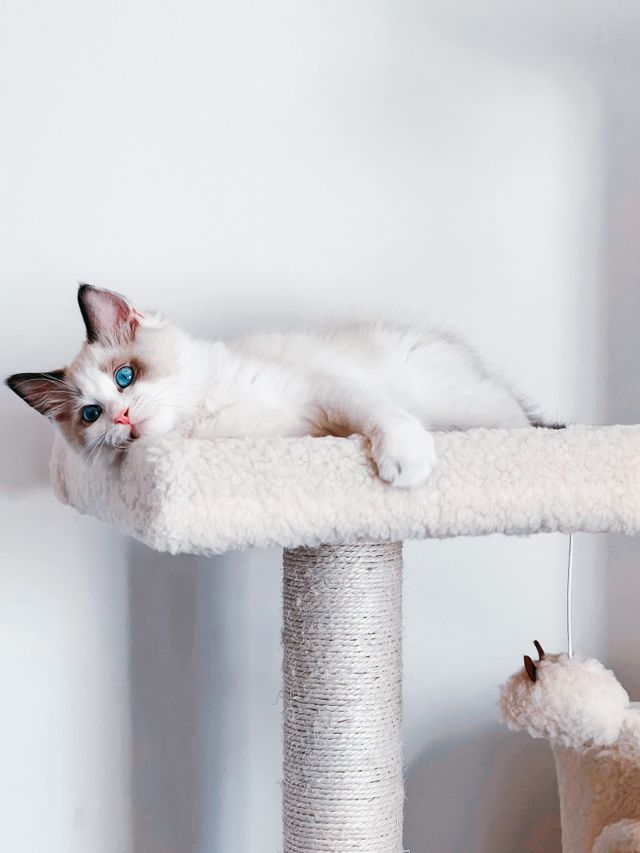
FIP arrives in two classic presentations: the effusive or wet form, where fluid builds in the belly or chest, showing as a swollen tummy or laboured breathing in a young cat losing condition; and the dry form, where inflammation targets organs, eyes or the nervous system, showing as fever that will not settle, weight loss, cloudy or inflamed eyes, or wobbliness.
The common thread is a young cat persistently unwell without a better explanation: fluctuating fever, fading appetite, dulling coat, and bloodwork with a particular pattern. None of these alone spells FIP, which is precisely why the diagnosis belongs to a vet with the full picture.
FIP concentrates its visits sharply: most cases arrive between a few months and two years old, when young immune systems meet high viral traffic and life’s big stresses, rehoming, neutering, vaccination courses, adolescence, all land at once. Cases in settled middle aged cats are genuinely uncommon, with a small second rise in the elderly.
Pedigree cats feature more in the statistics than moggies, partly through multi cat origins, which is honest context rather than alarm: the absolute risk to any individual well raised kitten remains small. Knowing the curve simply tells owners when vigilance earns its keep, in the first two years, and when a fever is more likely to be something ordinary.
Owners are often startled to learn there is no simple yes or no FIP test: coronavirus antibody results only prove the common, harmless exposure most cats have. Diagnosis is assembled from the whole case, the cat’s age and history, examination, blood patterns, fluid analysis where fluid exists, and sometimes advanced testing on samples.
The practical takeaway for owners is patience with the process and wariness of certainty sold cheaply: a vet building the picture step by step is doing it properly. Fluid from a swollen belly, when present, is one of the most useful samples in the workup, which is one reason the swollen tummied kitten needs the clinic, not the wait and see.
For decades FIP was veterinary medicine’s heartbreak, essentially untreatable. That has changed: modern antiviral treatment has transformed outcomes, with many cats achieving full remission, and legal, regulated veterinary routes to these drugs now exist in the UK. It is one of the great good news stories in feline medicine.
Treatment is a genuine project: weeks of daily medication, monitoring bloods, and cost that deserves honest discussion, but the word hopeless has left the room. Any FIP diagnosis today should come paired with a treatment conversation, and owners are entitled to ask for it explicitly.
Coronavirus thrives on shared litter trays: the more cats per tray and per square metre, the higher the viral traffic, the more replication, and statistically the more chances of the FIP mutation somewhere in the group. Crowded rescues and careless breeding setups carry the highest pressure; small, clean, low stress households the lowest.
This is why the disease clusters where kittens are massed and stressed, and why our colony’s tray discipline, space per cat and calm routine are not housekeeping vanity but active FIP risk management. Buyers touring any nursery can read the same signals for themselves.
When FIP strikes a multi cat home, the instinct is panic about the others, and the honest picture is calmer: housemates have almost certainly already met the ordinary coronavirus, and the dangerous mutation itself is not thought to pass cat to cat in any practical sense. The sick cat needs treatment; the others need normality.
Sensible steps after a case are tray hygiene, stress reduction, and a vet conversation about timing before introducing any new kitten, since a recently affected environment plus a stressed newcomer is the combination worth avoiding. Deep breaths beat deep cleans here, though the cleaning does no harm.
No breeder can promise coronavirus absence, and anyone who does is selling something: the virus is too common for promises. What a responsible setup controls is pressure: generous space, trays outnumbering cats and scooped daily, kittens raised in small stable groups, stress kept low, and any persistently unwell kitten investigated properly rather than hopefully.
Our kitten pack documents health history transparently, and our support does not end at collection: a buyer worried about a young Ragdoll’s fever or fading appetite gets a straight answer and a push toward the vet at the right speed. Openness about this disease is part of how its rarity is maintained.
Cornell’s Feline Health Center made this public information film on feline infectious peritonitis: the common gut coronavirus most cats carry, the rare change that turns it into FIP and what owners should know about the disease. Treatment has moved on quickly and UK routes differ from American ones, so pair it with the treatment section above.
Watch on YouTube Cornell Feline Health Center
Feline coronavirus is common and almost always harmless; FIP is its rare mutation and a serious disease of mainly young cats, showing as swollen bellies, stubborn fevers, weight loss or wobbles. There is no single test, so diagnosis is a built picture, and the era of hopelessness is over: modern antiviral treatment achieves remission in many cats. Low stress, clean trays and honest breeding keep the odds long.
The everyday coronavirus spreads readily between cats, but FIP itself arises from a mutation inside an individual, and direct FIP transmission is not the practical concern. The neighbour’s FIP case is not a threat marching toward your door.
Only distantly, as family members: feline enteric coronavirus is a cat gut virus, not a human respiratory one, and this page’s subject has nothing to do with human pandemic illness.
No: antibodies mean exposure to the common form, which most cats from any multi cat background have. The result alone predicts nothing; your vet reads it only alongside the actual cat.
Typically a course of daily antiviral medication over several weeks with veterinary monitoring throughout, tailored to the form of disease. Ask your vet about the current legal treatment routes; the landscape has improved enormously.
It is a significant commitment that varies with the cat’s size, the disease form and the protocol, which is one more argument for lifetime insurance taken out young. Your vet can outline realistic numbers for your case.
A vaccine exists but is not generally recommended by the major feline medicine bodies, and it is not part of standard UK schedules. Prevention lives in husbandry, low stress and tray hygiene rather than the needle.
Cats achieving remission increasingly go on to full, normal lives, with monitoring for relapse in the months after treatment. Recovery stories that were impossible a decade ago are now routine parts of the literature.
A persistently unwell kitten belongs at the vet with our recognising pain and health basics guides in hand, and every disease on this shelf is rarer in calm, uncrowded homes.
For deeper reading, International Cat Care maintains an excellent FIP hub, and the Royal Veterinary College publishes ongoing FIP treatment research.