
From our colony to your sofa
FIV: The Most Misunderstood Diagnosis
The fighting tom’s virus, and the long good lives beyond it.
Last reviewed
The fighting tom’s virus, and the long good lives beyond it.
Last reviewed
Feline immunodeficiency virus is a retrovirus spread almost entirely by deep bite wounds, which makes it overwhelmingly a disease of entire toms fighting over territory. Neutered indoor cats living peacefully essentially never acquire it, and unlike FeLV, friendly contact, shared bowls and mutual grooming are extremely low risk.
That transmission story is why the diagnosis is so misunderstood: FIV positive cats sharing a peaceful home with negatives, without fighting, pass it on rarely enough that many rescues now rehome them into mixed households.
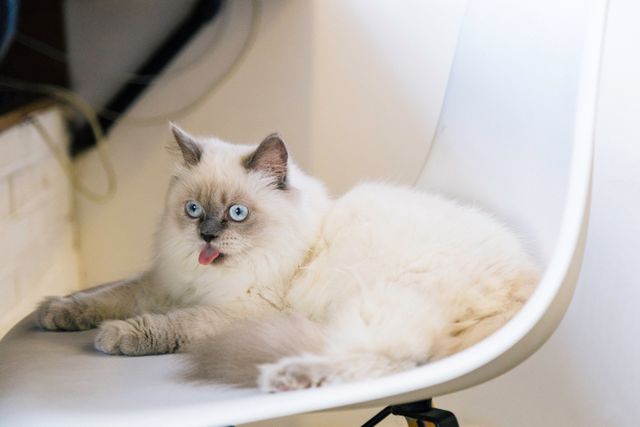
FIV works slowly, gradually thinning the immune reserves over years. Many positive cats live long, entirely normal lives and die of ordinary old age; others eventually show the pattern of a tiring immune system: dental and gum trouble, recurring minor infections, slow weight loss.
The check, as with FeLV, is a simple blood test. Any cat with an unknown past, any fight wound veteran, any new arrival: test, know, and plan from facts rather than fear.
An FIV positive cat’s care plan is mostly excellent ordinary care turned up one notch: indoor or catio living, both to protect them from infections and to protect the neighbourhood, prompt vet attention for small things before they grow, twice yearly checks, good food, and dental care taken seriously.
What the diagnosis is not: a reason for despair, and emphatically not an automatic goodbye. Ask any owner of a fifteen year old FIV positive lap warmer.
FIV works like a very patient embezzler, skimming the immune system’s reserves so slowly that for years the accounts look normal. Most infected cats pass a long healthy phase indistinguishable from any other cat, and many exhaust their natural lifespan before the deficit ever shows.
When it does show, it appears as pattern rather than event: the mouth trouble that keeps returning, small infections lingering longer, weight drifting down. Which is why FIV management is really pattern surveillance, twice yearly checks and an owner who treats small recurring things as information.
FIV testing has one famous trap: kittens under about six months can test positive purely from antibodies drunk in their mother’s milk, without carrying the virus at all. A young kitten’s positive is therefore a question, not an answer, resolved by retesting once the borrowed antibodies fade, typically after six months of age.
The practical rule protects kittens from wrong verdicts: no permanent decisions on a maternal antibody window result, ever. Any vet will gladly explain the retest schedule, and the interval nearly always ends in good news.
If FIV has a signature complaint it is the mouth: gingivitis and the fierce inflammation of stomatitis appear earlier, more often and more stubbornly in positive cats than almost any other problem. The immune system’s thinning grip shows first where bacteria press hardest, along the gumline.
So proactive dental care is not grooming for FIV cats, it is core disease management: home care where tolerated, professional cleaning when advised, and any drooling, pawing at the mouth or one sided chewing reported promptly. Guard the mouth and you have defended the front where this virus most often attacks.
FIV needs a deep bite to travel, so the ordinary traffic of a stable home, shared bowls, mutual grooming, sleeping in one heap, carries very low risk between socially settled cats. Where positive and negative cats live together without fighting, transmission is uncommon.
The risk profile is why vets talk less about separation and more about stability: neutered cats in an established hierarchy rarely deliver the kind of bite this virus requires. Introductions are managed carefully, tensions taken seriously, and your own vet tailors the household plan.
FIV concentrates where serious fighting happens: unneutered toms defending territory, strays surviving rough, cats with the notched ears and scarred faces of a hard history. A positive result in a rescued street cat is common and mostly describes the life he escaped.
It follows that neutering is the great population level prevention, collapsing the fighting economy the virus depends on, and that adopting an FIV positive ex stray is usually adopting a cat whose risky chapter is over. The virus recorded his past; your home writes the rest.
A positive status belongs on the insurance file from the start: disclose it in full, expect FIV related conditions to be handled under whatever terms the policy sets, and read the pre existing condition clauses before choosing cover rather than after claiming.
Where cover is limited, the substitute is a deliberate savings buffer and a practice that knows the cat, because the FIV owner’s real financial strategy is early attention: small problems seen promptly stay small, and the expensive version of this virus is almost always the neglected version.
FIV is one of the most researched viruses in veterinary medicine, studied intensively for decades, and the practical payoff for owners is steadily better guidance: clearer testing protocols, more confident advice about mixed households, and management plans grounded in long term studies of real pet cats.
The direction of travel has been consistently reassuring: positive cats under good care keep matching their negative housemates’ lives more closely than older assumptions predicted. Owning a positive cat today means owning it with better maps than any previous generation of owners had.
FIV spreads almost entirely through deep bites, which makes it a disease of fighting, not of friendship: stable, neutered indoor households rarely pass it between themselves. A positive cat with good care commonly lives a near normal life. The plan is indoor living, prompt attention to small illnesses, dental vigilance and a vet who knows the status from day one.
No: despite the family resemblance in name to human viruses, FIV is strictly feline. Household humans and dogs are entirely outside its reach.
Not in current UK practice, so prevention is lifestyle: neutering, managed introductions and indoor or supervised living. Your vet will confirm what applies where you are.
With indoor living and prompt vet care, commonly a near normal span; many positives die of ordinary old age causes. The diagnosis buys vigilance, not a countdown.
No: most positives are well at diagnosis and stay well for years. The status changes the speed with which small illnesses get seen, which is precisely what protects the years.
Confirmation matters because the first screen can mislead in both directions, particularly in kittens carrying maternal antibodies. A repeat by a second method, on your vet’s timing, turns a result into a fact.
The standard advice is indoors or a secure catio: it protects other cats from him and protects his more vulnerable immune system from injury and infection. Most positives adapt to indoor life remarkably contentedly.
The family resemblance is scientific, not practical: FIV follows its own, usually far gentler course in cats, and most positives never develop serious immune collapse. Comparisons to human disease mislead more than they inform.
The contrast with its sibling matters, so read our FeLV guide alongside, and the indoor life that protects everyone is designed in the catio guide.
Beyond our library, International Cat Care handles FIV in clear owner focused terms, while Cornell Feline Health Center carries the clinical weight. And to see the culprit itself, the feline immunodeficiency virus page pairs the imagery with the research.