
Why Do Cats Knead? Making Biscuits Explained
A kitten habit most cats never grow out of, and a compliment.
Last reviewed
Why do cats knead? Because it worked. Kittens paddle at their mother's belly while they feed, and from the first day the rhythm is tied to milk, warmth and safety. Most cats keep the habit for life and bring it out when they feel exactly that content: on a soft blanket, on a favourite jumper, or on you. It is normal, it is a good sign, and the only real problem with it is the claws.
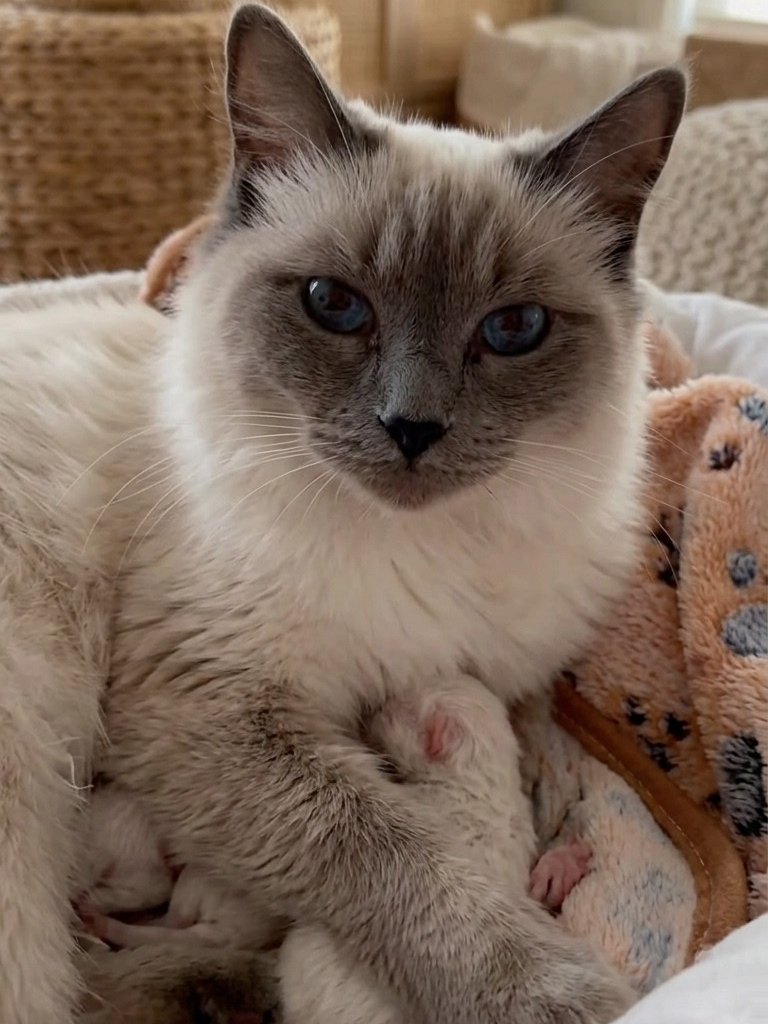
A queen with her newborns. Kneading begins in the nest at feeding time, and many cats never drop the habit.
A habit from the nest
Newborn kittens knead before their eyes are open. Pressing with one front paw and then the other around the teat goes with suckling and is thought to help the milk flow, so from the first days of life the movement is bound up with being fed, warm and next to their mother. Kitten development follows those first weeks.
Pet cats carry a good deal of kitten behaviour into adult life, kneading and purring at people included. Behaviourists call this keeping of juvenile habits neoteny, and it is a large part of why cats live so easily alongside us.
Why an adult cat still does it
- Contentment. Kneading comes out when a cat is settled and safe, often just before a sleep. The purr and the half closed eyes that go with it say the same thing. Cat body language reads the rest.
- You are family. A cat that kneads on your lap is treating you as part of its own group. It is about as high a compliment as a cat pays.
- Scent. Cats have scent glands in their paw pads, and kneading leaves a trace of their own smell on the blanket, the bed or the person. To a cat, something that smells of itself is something safe.
- It works. You stroke the cat, talk to it and stay put. Cats repeat what pays.
Some cats dribble while they knead, a leftover from feeding time. If your cat has always done it, it is harmless. Drooling that is new is a different matter and worth a look at the mouth: dental care covers the usual causes.
And some cats never knead at all. That is normal too, and says nothing about how happy the cat is.
How to keep the habit and save your legs
A big Ragdoll in full flow is a lot of paw, and even a careful kneader lets the claws out a little. Do not push the cat off or tell it off: it has no idea it is hurting you, and you would be punishing it for trusting you.
- Keep a thick folded blanket or fleece where you sit and put it on your lap first. Many cats soon head for the blanket by choice.
- Keep the claws trimmed. Scratching and claw care shows how.
- If the claws dig in, slide a hand under the paws or lift the cat gently onto the blanket beside you, and fuss it there.
- Reward soft paws. Attention and a treat when the claws stay in teaches gentler kneading over time.
When kneading is worth mentioning to your vet
Kneading by itself is almost never a medical sign. It is worth a conversation with your vet when:
- It becomes very frequent, goes on for long stretches, or looks compulsive, as if the cat cannot stop.
- It comes with sucking or chewing on wool, blankets or clothing, and fabric is being swallowed. Swallowed objects explains why that is dangerous.
- The paws, legs or mouth are getting sore from it.
- It starts suddenly in an adult cat alongside other changes, such as hiding, overgrooming or going off food. Stress and calming and recognising pain help you work out what is behind it.
Compulsive kneading and sucking on fabric is reported more in some breeds, Siamese and Birmans among them. In most cats it is simply a comfort habit that needs a safe blanket and an eye kept on it.
An unneutered female may also knead, roll and call more than usual when she is in season. A cat in heat describes the rest of that picture.
Quick questions, answered
Why does my cat knead me?
Because you are safe, warm and soft, and the cat is content. Kneading starts as a nursing habit in kittens, and adult cats keep it for the moments they feel most settled. A cat that kneads on you is treating you as family.
Why does my cat knead blankets and suck on them?
It is the nursing habit in full: paddling and suckling together, usually on something soft and woolly. In most cats it is harmless comfort. Mention it to your vet if it becomes constant, if the cat is swallowing fabric, or if it makes the mouth or paws sore.
Should I stop my cat kneading?
No. It is normal and it means the cat is relaxed. Protect your lap with a thick blanket and keep the claws trimmed, and never tell a cat off or push it away for kneading, because it cannot connect that with its claws.
Is it normal for a cat not to knead?
Yes. Some cats never do, and it says nothing about how happy they are. Cats show contentment in other ways too: slow blinks, purring, sleeping near you and greeting you with the tail up.
Why does my cat dribble when it kneads?
Kneading is tied to feeding in a kitten's memory, and some cats salivate along with it. If your cat has always done it, it is harmless. Drooling that starts in an adult cat, or comes with bad breath or pawing at the mouth, needs a vet check.
Sources and further reading
- The Conversation: Why do cats knead?: On nursing, scent glands in the paws, juvenile behaviour kept into adult life, and when to see a vet.
Thinking about a Ragdoll kitten?
Our Ragdoll kittens grow up in our home in Ryde, Isle of Wight, with health tested parents and our support for life. See who is available now, or join the waiting list for the next litter.