
Renting With a Cat: Your Rights in England From May 2026
A no pets clause is no longer the end of the conversation.
Last reviewed
Can you have a cat in a rented home? In England the answer changed on 1 May 2026. Private renters now have a legal right to ask for a pet, the landlord must answer in writing within 28 days, and they need a good reason to refuse. It is a right to ask, not a right to a pet, and the details matter: who is covered, what a good reason looks like, and what a landlord can and cannot charge. This page sets out the rules in plain terms and how to make a request that is easy to say yes to. It is a general guide, not legal advice, and the law is different in Scotland, Wales and Northern Ireland.
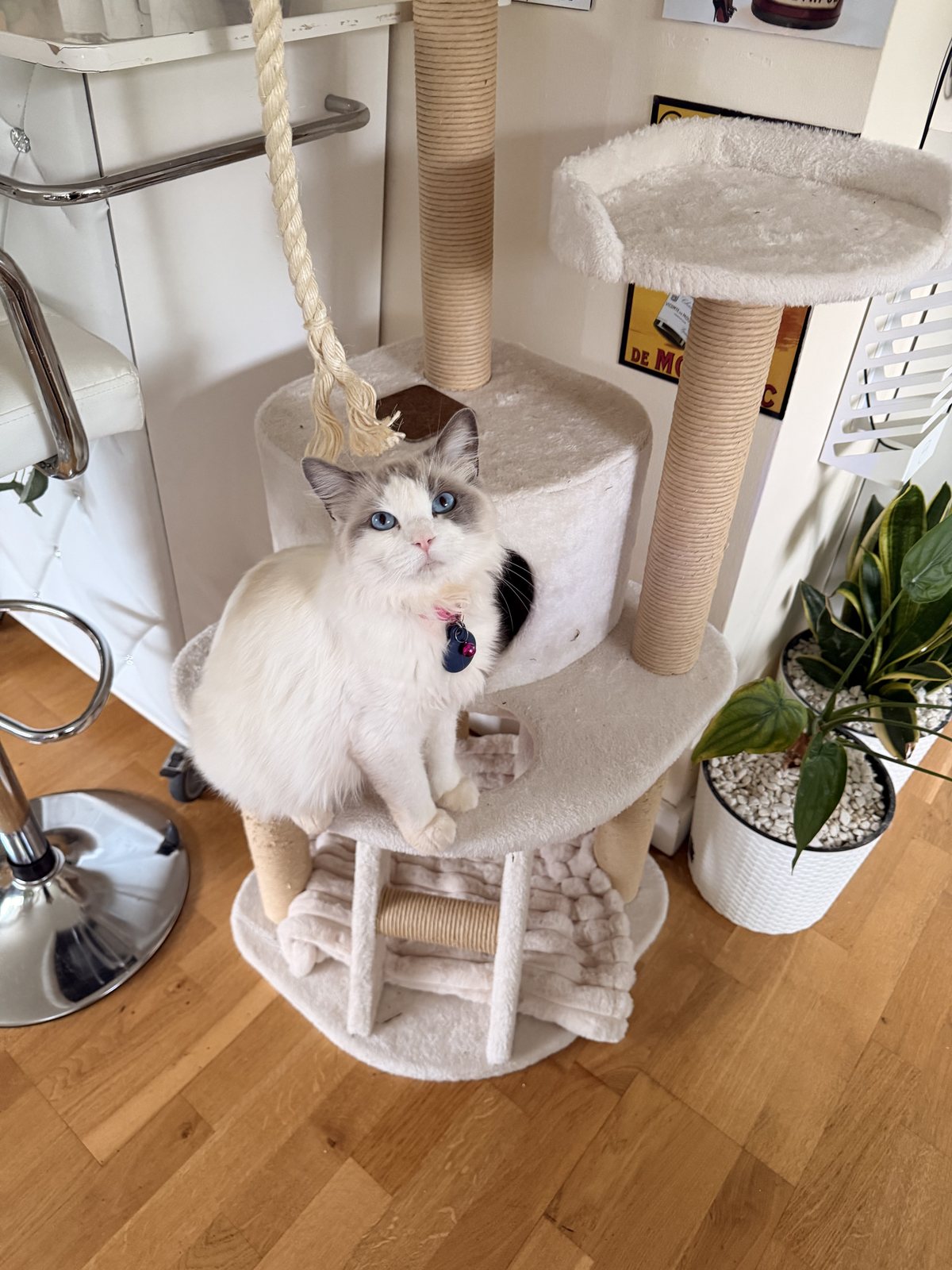
An indoor cat with somewhere to climb and scratch is an easy tenant.
Can a landlord refuse a cat?
Since 1 May 2026, under the Renters' Rights Act 2025, a private landlord in England:
- Must consider a written request to keep a pet.
- Must reply in writing within 28 days.
- Cannot refuse without a good reason.
- Cannot charge extra rent or a bigger deposit for saying yes.
The right is written into every private assured tenancy automatically, even if your agreement says no pets or says nothing at all. You still have to ask, and you still have to wait for the answer before a kitten comes home.
Does the new law apply to me?
- Private renters in England with an assured tenancy: yes. That is most people who rent a whole flat or house from a private landlord or through a letting agent.
- Council and housing association tenants: you can ask, but the 28 day rule and the good reason rule do not apply. Your landlord's own pet policy decides.
- Lodgers living in the landlord's own home are not covered in the same way, so ask your landlord directly.
- People about to sign a tenancy: the formal process only applies once you are a tenant. Before that there is no time limit and no set format, so raise it early and get the answer in writing.
- Scotland, Wales and Northern Ireland: housing law is devolved and the rules differ. Shelter Scotland, Shelter Cymru and Housing Rights in Northern Ireland explain the position there.
- Leaseholders who own a flat: this law is about tenants. Your own lease may restrict pets, so read it before you reserve a kitten.
How to ask your landlord for a cat
The request must be in writing and must describe the pet. An email is fine. Shelter suggests the subject line Request for permission to keep a pet, and has a template letter.
What to include
- What the animal is: a Ragdoll cat, its age, and that it will be one cat or two.
- Where it is coming from.
- How you will care for it and who will be at home.
What makes it easy to say yes
A landlord is entitled to ask about health, behaviour, house training and who pays for damage. Answer before they ask.
- Indoor cat. Ragdolls are kept indoors, so there is no cat flap to fit and nothing coming in from the garden.
- Neutered. Neutering greatly reduces spraying. Say when it will be done.
- Litter trained from the day it arrives.
- Microchipped, vaccinated and treated for fleas and worms on a vet's schedule.
- Insured.
- Scratching posts and a cat tree, so that the carpets and door frames are left alone.
- An offer to have the home professionally cleaned when you leave.
- A reference from a previous landlord or your vet, if you have one.
Keep a copy of what you send and the date you sent it.
How long does the landlord have to reply?
- 28 days from your request to say yes or no, in writing.
- If they ask you for more information within those 28 days, they then have 7 days from when you provide it.
- If the building has a superior landlord, for example a freeholder whose lease restricts pets, your landlord must ask them by day 28 and can wait until 7 days after they reply.
- More time is allowed if you agree to it.
So answer any questions quickly, and chase politely in writing as day 28 approaches.
When can a landlord say no?
Only for a good reason, and it has to be about this home and this pet.
Reasons likely to be accepted
- The landlord, or another tenant in a shared house, is allergic.
- The home is too small for a large pet, or for several.
- The animal is illegal to own.
- The landlord's own lease bans pets, or the superior landlord was asked and refused.
Reasons that are not good enough
- The landlord does not like pets.
- A previous tenant's pet caused problems.
- A general worry about damage.
- A worry that it will be harder to let the property afterwards.
One quiet, neutered indoor cat in a flat with no lease restriction is about as modest a request as a landlord can receive. Flats in blocks are where a refusal is most likely to be reasonable, because the building's head lease may ban pets.
Deposits, rent and damage
- No pet rent. A landlord cannot put the rent up for agreeing to a pet, or make agreement depend on your paying more.
- No pet deposit. Asking for a bigger deposit because of a pet is a banned fee under the Tenant Fees Act 2019.
- Damage is yours to pay for. The landlord can ask you to pay for damage the cat causes, and can deduct it from your normal deposit.
Protect yourself at the start: photograph carpets, door frames and furniture on the day the cat arrives, and keep the pictures with your inventory.
What if my landlord says no or does not reply?
- Ask for the reason in writing if it was not given.
- Answer the worry. Offer a meeting, a reference or a written agreement about cleaning and damage. Many refusals are really questions.
- Get advice. Shelter and Citizens Advice can look at your own case.
- Ask a court to review it. A tenant can apply to the county court for an order where consent has been unreasonably refused. Legal aid is not available for this, you might not win, and it takes time. Your landlord cannot evict you for applying.
Do not get a cat without permission
A landlord can try to evict a tenant who keeps a pet without consent, and although that needs a court order, it is no position for you or a kitten to be in. Permission also covers only the pet you asked about. A second cat means a second request.
If you are reserving a kitten, have the landlord's yes in writing first. A kitten that has to be given up after a month is the worst outcome for everybody.
Keeping a rented home cat friendly and damage free
- Scratching. A tall, heavy post beside the sofa and another by the bed, from the first day. Scratching and claw care explains where to put them.
- Climbing without screws. Freestanding trees and tension pole systems need no fixings. The cat friendly home has more ideas.
- Trays. A large tray on a washable mat, scooped daily. Litter training covers the set up.
- Windows and balconies. Ask before fitting restrictors or mesh, and never rely on a cat's balance. Can Ragdolls go outside? explains the risks.
- Neutering on time, which prevents spraying before it starts. See neutering and spaying.
- Moving on. Moving house with a cat covers the next tenancy.
Quick questions, answered
Can my landlord refuse to let me have a cat?
In England a private landlord needs a good reason, such as an allergy, a home too small for the pet or a lease that bans pets. Disliking pets or a general worry about damage is not enough.
How long does a landlord have to respond to a pet request?
28 days, in writing. If they ask you for more information in that time, they have 7 days from when you provide it.
Can a landlord charge a pet deposit or pet rent?
No. They cannot raise the rent for agreeing to a pet, and a bigger deposit because of a pet is a banned fee under the Tenant Fees Act 2019. They can deduct damage from your normal deposit.
My tenancy agreement says no pets. Can I still ask?
Yes. Since 1 May 2026 the right to ask is part of every private assured tenancy in England, whatever the agreement says.
Does this apply to council or housing association homes?
Not in the same way. You can ask, but the 28 day rule and the good reason rule do not apply, so the landlord's own pet policy decides.
What happens if I get a cat without permission?
Your landlord could try to evict you, which needs a court order. Ask first, in writing, and wait for the answer before bringing a kitten home.
Does the law apply in Scotland, Wales and Northern Ireland?
No. This right comes from the Renters' Rights Act 2025, which applies to England. Housing law is devolved, so check the rules where you live.
Sources and further reading
- Shelter England: Ask your landlord to have a pet: The housing charity's guide for renters, with a template letter. Updated 1 May 2026.
- Shelter England: Pets in private rented accommodation (legal): The detail behind the rules: who is covered, time limits, reasonable and unreasonable refusals, deposits and the court route.
Thinking about a Ragdoll kitten?
Our Ragdoll kittens grow up in our home in Ryde, Isle of Wight, with health tested parents and our support for life. See who is available now, or join the waiting list for the next litter.