
From our colony to your sofa
Male or Female Kitten?
The honest answer to reservation time’s most common question.
Last reviewed
The honest answer to reservation time’s most common question.
Last reviewed
It is the most common question we hear at reservation time, and the honest answer surprises people: once a kitten is neutered, most of the storied differences dissolve, and the individual in front of you matters far more than the chromosome.
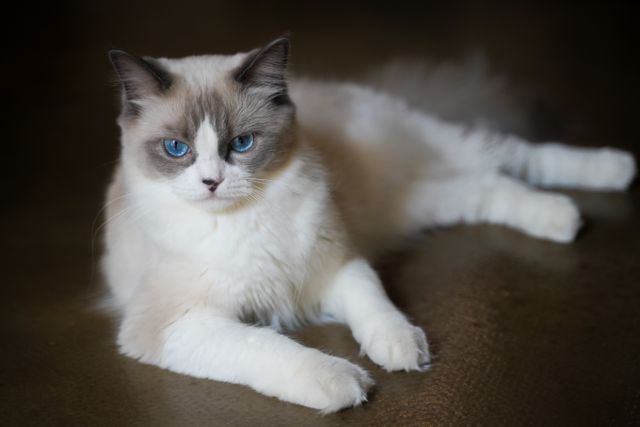
The dependable differences are physical: males run larger, often noticeably so in this breed, and mature more slowly, keeping their kitten software running years into that big frame. Females finish smaller and often seem to grow up sooner, self possessed while their brothers are still falling off windowsills.
Neither is better; they are different silhouettes of the same breed. If a lap filling gentle giant is the dream, males deliver it more often; if an elegant, quicker witted presence appeals, females often fit, with every individual holding veto rights over the stereotype.
Ask people who live with many cats and the consistent answer is that personality varies far more within each sex than between them: bold females, velcro males, aloof examples of both. Neutering, which nearly all pet cats have, flattens most hormone driven differences that folklore is built on.
So the reliable predictors of adult character are rearing, socialisation and the individual kitten’s own weather, which is exactly what you assess on a visit. Choose the kitten whose company you enjoy; the chromosome is a footnote.
For households planning two, the folk wisdom that opposite sex pairs settle most easily has some truth, with two females occasionally running the frostiest politics, but the effect is small beside the factors you control: neutered status, a proper slow introduction, and enough resources that nobody needs to compete.
Littermates of any combination generally sail. For unrelated cats, choose complementary energies, a serene resident suits a gentle newcomer rather than a tornado, and run the introduction by the book. Managed well, every pairing on the board can work.
Most male female folklore describes entire cats: the spraying tom, the calling queen, the wanderer, the diva. Neutering retires nearly all of it, and since pet Ragdolls are neutered as standard, the differences that survive into your living room are far gentler than the stories suggest.
What remains is mostly scale and style: boys generally bigger and often more openly soppy, girls often more self contained and precise about their affection. Both read as headlines about averages; the individual kitten in front of you is the actual news.
Coat genetics tie some colours loosely to sex: tortie patterning is almost exclusively female because it needs two X chromosomes, while red and cream litters lean male. If your heart is set on a tortie point girl or a red point boy, biology has already narrowed the field for you.
None of this changes temperament claims, which colour does not control despite generations of tortitude folklore, but it does mean colour preferences and sex preferences sometimes decide each other. It is worth knowing before you fall for a photograph.
The male’s extra size arrives with small practical footnotes: portions scaled to his frame rather than the packet average, a litter tray genuinely big enough for a large cat to turn in, sturdier cat trees rated for his landing, and a carrier bought for the adult he will become rather than the kitten he is.
Girls’ compactness runs the same list in reverse and often makes them the easier fit for smaller homes and smaller laps. Neither list is a burden; both are simply worth pricing into the daydream before the kitten arrives.
The honest selection method ignores chromosomes and watches kittens: in a busy family home the bold kitten who walks toward noise beats any sex based prediction, while a quiet adult household often suits the gentle observer. We describe each kitten’s emerging character precisely so this match can be made on evidence.
Tell us the home truthfully, children’s ages, other pets, noise level, hours empty, and we will tell you which kittens fit it, whichever sex they are. A decade of companionship is decided by that fit far more than by the answer to boy or girl.
The reservation time classic, and the honest answer: once neutered, most of the famous differences shrink to almost nothing. Boys run bigger on a slower timetable and often play the clown; girls are frequently more self contained; individual personality outranks sex every time. Neutering levels the field on spraying, roaming and temperament, colour genetics writes some of the story since some colours skew by sex, and the practical differences by size are minor. Choose the kitten whose character fits your household.
They are often more demonstrative about it, which is not quite the same thing: many girls love just as hard with more dignity. Affection style varies more between individuals than between sexes.
Any cat can mark under stress, but neutered cats of both sexes very rarely do in a settled home. The spraying reputation belongs to entire toms, which pet Ragdolls are not.
Castration is a simpler procedure than spaying and usually priced lower, a one off difference dwarfed by a lifetime of identical running costs. It is not a sensible basis for choosing.
Well matched temperaments beat any sex formula: easygoing pairs of any combination thrive, and littermate pairs of any mix start with an advantage. The introduction, not the chromosomes, does the heavy lifting.
Neutered cats of both sexes are robust, with each sex carrying a few of its own minor statistical leans. Lineage, weight management and veterinary routine matter enormously more than sex.
Ragdoll boys commonly mature a few pounds heavier than girls, with the biggest boys noticeably grand. Both sexes mature slowly, so the full answer arrives over three to four years.
Ask instead for the kitten who already chooses laps: we watch for exactly that and will point you straight. Lap devotion appears in both sexes and shows itself early.
Size is real: males run larger, and Ragdoll males can be impressively so, which matters if you are dreaming of a particular armful. Folk wisdom paints neutered males as goofy lap loving shadows and females as more self possessed, and averaged across thousands of cats there may be a grain in it, but the overlap is enormous. The dramatic differences belong to unneutered adults, spraying, roaming and calling among them, which is one reason neutering by six months is part of our kitten agreement.
Early socialisation, the individual character a kitten is born with, and how the first year continues the work: these predict the adult cat, and sex barely features. A colony raised kitten handled daily from birth arrives with more sociability than any chromosome can promise, which our temperament guide explores. When families ask which kitten would suit them, we answer with descriptions of characters, the bold one, the thinker, the lap limpet, and never with a sex.
Any neutered combination can live in harmony, and the smoothest pairings are usually littermates or a settled cat with a kitten introduced properly through our second cat method. Whether to take one kitten or two is its own decision, weighed carefully in our one or two guide, and once they live together, the resource arithmetic from our harmony guide matters far more than the sex mix.
Choose the character that fits your home, and let the sex fall where it falls. The one place biology intrudes is colour, since tortie coats are almost always female and red ones usually male, a wrinkle our colours guide explains properly. Beyond that, a neutered pet cat’s sex is the least informative line on the pedigree, and the kitten who chooses your lap during a visit has already answered the question better than we ever could.
For evidence based reading on feline personality, International Cat Care keeps excellent behaviour resources free to browse.