
From our colony to your sofa
Asthma & The Coughing Cat
The hairball that never comes, and the airways that need help.
Last reviewed
The hairball that never comes, and the airways that need help.
Last reviewed
Feline asthma is the great mislabelled disease: a cat crouched low, neck stretched, hacking rhythmically, looks exactly like a hairball in progress, and when no hairball ever arrives the episode gets filed as one of those things. Filed often enough, inflamed airways scar. This page teaches the difference, the diagnosis, and the genuinely good modern management, inhalers included.
Feline asthma is chronic inflammation of the small airways: walls thicken, mucus builds, and the muscles around the tubes twitch shut in response to triggers, narrowing the pipes that move air. It typically appears in young to middle aged adults and runs for life once established.
The picture ranges from an occasional cough to episodes of genuine respiratory distress, and the trajectory matters: untreated airway inflammation remodels and scars, which is why the long ignored hairball cough matters far beyond its noise.
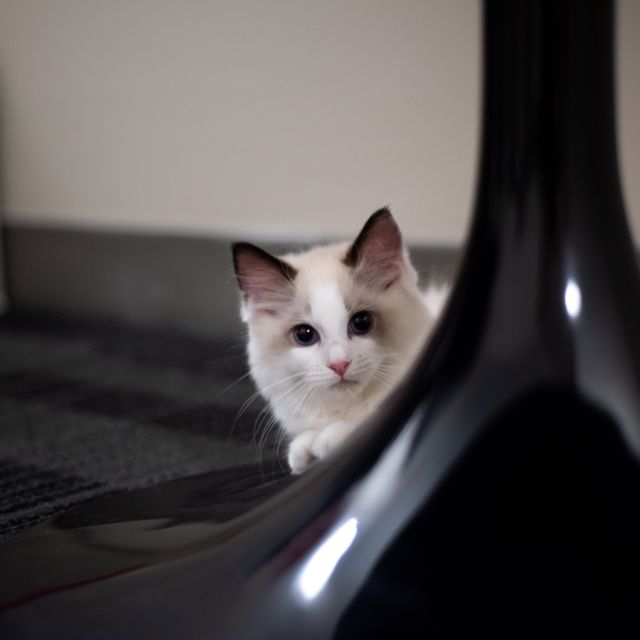
The classic asthmatic cough is distinctive once known: crouched low, elbows out, neck extended forward, rhythmic hacking or wheezing, often ending in a swallow, and producing precisely nothing. A hairball episode ends in a hairball; the asthma version repeats, weekly or daily, empty every time.
Your best diagnostic tool is your phone: film episodes and show the practice, since cats famously refuse to perform in consulting rooms and a thirty second video outweighs ten minutes of description. Note the frequency and any pattern, after play, after litter changes, in certain rooms, since the pattern is the trigger map.
Coughing has other authors worth naming: the respiratory infections our infectious shelf covers, lungworm, picked up via hunting and covered by some parasite protocols, heart disease, and in seniors, airway masses. Each gets excluded on the road to an asthma diagnosis.
The urgent flags outrank all labels: open mouth breathing, blue or grey gums, sides heaving at rest, or breathing fast while doing nothing are emergency signs whatever the cause, and they mean the emergency line now, not the diary. Our breathing related emergency pages say the same, because it is always true.
Asthma diagnosis is assembled rather than instant: the story and video, a chest examination, X rays showing the characteristic airway pattern, and where needed, airway sampling under anaesthetic to confirm the inflammatory cells and exclude infection and lungworm.
Expect a worm treatment trial somewhere in the process, cheap insurance against the great mimic, and blood tests reading the wider picture. It is methodical rather than dramatic, and it ends with a management plan rather than a cure, which modern medicine makes a genuinely good outcome.
The treatment core is anti inflammatory: corticosteroids calming the airway walls, delivered as tablets or, increasingly and preferably, inhaled through a feline spacer, a soft mask and chamber the cat breathes from while the puffer fires into it. Inhaled steroids treat the lungs while sparing the body.
Alongside sit bronchodilators, the reliever medicines that open airways during flare ups, also deliverable by inhaler, and the emergency plan your vet writes for bad episodes. Cats learn the mask with treats and patience in days to weeks; thousands of households puff twice daily as unremarkably as feeding.
Asthmatic airways react to what floats, so audit the house: dusty litters swap for low dust alternatives, a change our litter pages make easy; smoke of any kind, cigarettes, incense, candles, log burner leakage, goes; aerosols, plug in fresheners and strong cleaning sprays retire from the cat’s rooms.
Add the slower layers: regular vacuuming with decent filtration, washed bedding, ventilation without draughts, and weight management, since fat squeezes breathing reserve. No audit cures asthma; a good one reduces the dose the medicine has to carry.
Managed asthma is mostly boring: medication given as prescribed, episodes logged with the phone, rechecks on schedule, and the reliever plan dusted off for the occasional flare, more coughing than usual, effort creeping into rest breathing, which earns a prompt call rather than a shrug.
The long view is honest and encouraging: asthma is controlled rather than cured, most treated cats live full, playful, normal lives, and the disasters cluster among the undiagnosed and untreated. The hairball that never arrives, taken seriously early, is the whole game.
A significant attack looks like this: crouched, straining to breathe, possibly open mouthed, gums darkening. Your job is calm logistics: stay quiet, stop all handling beyond what is needed, give the prescribed reliever if you have one, and ring the emergency line while arranging the calmest possible carrier journey.
At the practice, oxygen and injectable medicines resolve most attacks quickly, another argument for going rather than watching. Afterwards, the plan gets reviewed: attacks are information about control, and control is adjustable. Keep the reliever in date and the emergency number saved; prepared households have shorter emergencies.
PDSA vets show how to record a clear video of your pet’s breathing at home, which is exactly the clip this guide says settles the hairball or asthma question at the consult. Film first, then phone.
Watch on YouTube PDSA Petwise Pet Health Hub
Asthma is chronic airway inflammation wearing a hairball costume: the crouched, neck stretched cough that never produces anything, repeating for weeks. Film it, count the empties, and let the vet assemble the diagnosis, X rays, worm exclusion, sometimes airway sampling. Treatment is anti inflammatories, increasingly by feline inhaler and spacer, plus relievers for flares; the home audit removes dusty litter, smoke and sprays. Open mouth breathing, heaving sides or dark gums are the emergency line now. Managed cats live normal lives.
A hairball episode produces a hairball and ends; the asthma cough repeats, crouched and neck stretched, producing nothing. Film it and count the empty episodes; three empties is a vet appointment.
Genuinely: the feline spacer and mask deliver puffer medicine on a normal breath, and most cats accept it within weeks of treat based training. It is now the preferred long term steroid route.
Dusty litter, smoke, aerosols, fresheners, pollens and stress lead the list, varying by cat: the episode diary maps yours. The home audit removes the controllables.
Untreated severe asthma can be, which is what treatment exists to prevent: managed cats overwhelmingly live normal lives. The dangerous version is the ignored version.
Usually some ongoing anti inflammatory is lifelong, at the lowest dose that holds control, often inhaled to spare the body. Stopping when the cough stops is the classic relapse recipe.
It typically starts in young to middle aged cats, some breeds report more of it, and any cat can develop it: the diagnosis rests on the workup, not the pedigree. Ragdolls carry no special sentence.
Stress is a recognised trigger and calm handling during episodes matters doubly: panic narrows human judgement and feline airways alike. The stress guide’s toolkit quietly supports the lungs.
Typically days to a few weeks of treats and patience: mask near face, mask on face, breaths through the chamber, then the puff. The practice or online programmes walk it step by step.
Many cats flare with pollen seasons or winter indoor dust: the episode diary usually reveals a calendar. Seasonal cats sometimes run seasonal dose adjustments, on veterinary advice.
No: doses, propellants and prescriptions are feline specific, and improvising risks harm. The answer to an emergency is the prescribed reliever and the emergency line.
The infection differentials live in cat flu and pneumonia, the worm mimic in worming, low dust choices in the litter pages, and the emergency signs in recognising pain and the emergencies shelf.
For deeper reading, International Cat Care covers feline asthma and inhaler training, and the Royal Veterinary College publishes respiratory medicine resources.