
From our colony to your sofa
Conjunctivitis: Reading a Sore Eye
Weepy, pink and half closed: what it means and what to do.
Last reviewed
Weepy, pink and half closed: what it means and what to do.
Last reviewed
Conjunctivitis is inflammation of the pink membrane lining the eyelids, and it is the most common eye problem cats get. The causes range from a bit of dust or a scratch through to the viral infections of cat flu, which is why kittens from poor backgrounds so often arrive with sticky eyes.
One eye suggests something local, like a knock or a foreign body. Both eyes suggests something systemic, usually infection, and often with sneezes attached.
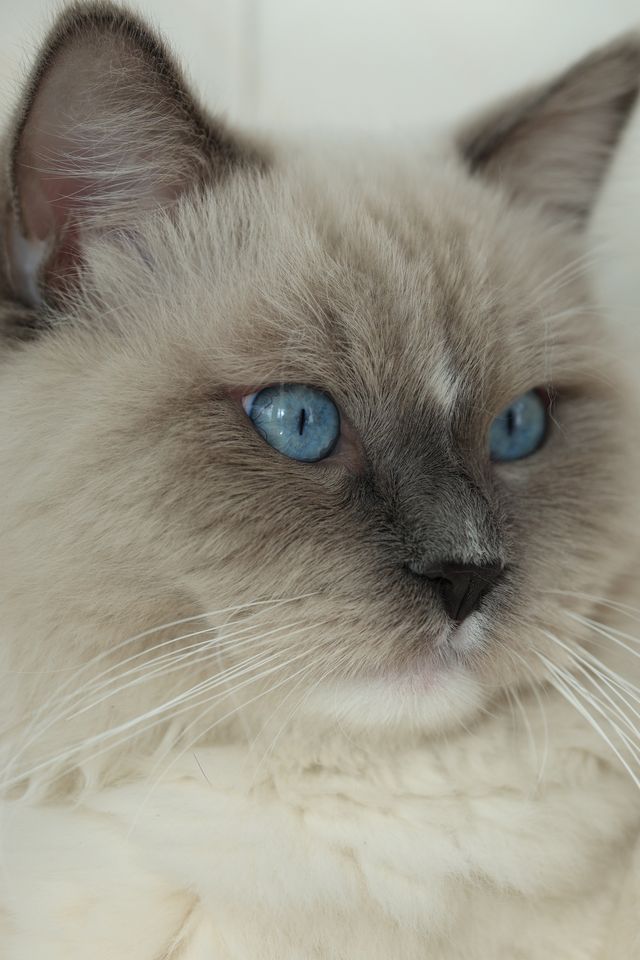
The tell tale pink: an inflamed conjunctiva with watery overflow. For general observation, not diagnosis.
A healthy eye is open, bright and clear, with white sclera and no discharge beyond the odd sleep crumb. Trouble looks like: redness of the pink lining, squinting or holding the eye half closed, the third eyelid creeping across from the inner corner, pawing at the face, and discharge.
The discharge is your colour guide. Clear and watery leans irritant or viral. Yellow or green means bacteria have joined in and the vet threshold has been crossed. Never bet an eye on waiting to see.
Gently bathe away discharge with cooled boiled water on a fresh cotton pad for each eye, wiping from the inner corner outwards. That keeps the eye comfortable and lets you see what is actually happening underneath.
What harms: human eye drops, leftover drops from a previous pet, and anything from the medicine cabinet. Eyes are unforgiving, and the wrong drop in the wrong eye can do real damage. If an eye needs medicine, it needs the right one, prescribed after someone has actually looked.
A comfortable eye is a plumbing achievement: a three part tear film spread by blinking, drained through tiny ducts at the inner corner, with the third eyelid sweeping across as a windscreen wiper and spare shield. Conjunctivitis is what it looks like when any part of that system is irritated into overproduction.
That mechanical view explains everyday triggers people forget: draughts from an open car window, dusty litter kicked up in an enclosed tray hood, smoke, and strong cleaning sprays. Sometimes the cure for a mildly weepy eye is not medicine but relocating the litter tray and retiring the aerosol polish.
The signature move of an eye consult is the fluorescein test: a drop of orange dye, a blue light, and any scratch or ulcer on the cornea glows green. It is quick, painless and definitive, and it is the reason a proper eye exam beats any amount of doorstep guessing, because an ulcer and simple conjunctivitis need opposite treatments.
Swabs join in when infections keep returning, identifying whether chlamydia, herpesvirus or mycoplasma is driving the story. One accurate test round is cheaper than three wrong ointments, in money and in eye.
An eye that flares repeatedly is following a script worth reading: herpesvirus flares track stress, blocked tear ducts overflow constantly rather than episodically, inward rolling eyelids rub persistently, and allergy tends to itch both eyes in season. Each pattern points somewhere specific rather than to stronger drops.
Keep a simple log of dates and triggers, and take it to the vet when the third episode arrives. Chronic eye trouble is nearly always solvable, but it is solved by finding the script, not by treating each performance as a surprise.
The conjunctiva is the thin moist lining of the eyelids and the white of the eye, normally pale pink and invisible in daily life. It is also the eye’s front line, first tissue to meet every virus, bacterium, allergen and speck of grit, and it protests all of them the same way: blood vessels dilating to bring reinforcements, tissue swelling, tears overflowing.
That single alarm response is why so many different problems look alike from the sofa, and why redness is a symptom rather than a diagnosis. The lining can only shout; working out what it is shouting about is the consultation.
Discharge is the eye’s handwriting, worth reading before you ring: clear and watery leans viral or irritant, the eye essentially crying at the problem; thicker mucus strands suggest the inflammation is settling in; yellow green pus means bacteria have joined the party and moves the urgency up a step; and any discharge with squinting or light shyness stops being a reading exercise and becomes an appointment.
Report colour, thickness, one eye or both, and whether mornings glue the lids. Those four observations, offered on the phone, do more triage work than any amount of worried adjectives.
Treatment usually means drops or ointment several times daily, and technique decides whether medicine reaches eye or ear: cat wrapped calm or gently held from behind, chin tipped slightly up, the dropper approaching from above and behind the sight line, one drop into the pocket of the lower lid, then a treat before the cat has finished being surprised.
Expect visible improvement within days, and finish the course anyway, because the half treated eye relapses with interest. Hands wash before and after every dose, the bottle touches nothing, and any eye getting worse on treatment is a recheck, not a heavier hand.
The same red eye means different suspects at different ages: in kittens, the infectious causes dominate, flu viruses and chlamydophila sweeping through litters, often both eyes and the nose together. In adults, a first ever red eye leans toward foreign bodies, allergy, or an injury with a story attached.
Age also sets urgency: kitten conjunctivitis moves fast in small patients and earns the prompt appointment as a rule, while a bright adult with a mildly pink eye and no pain buys a day of observation at most. Either way, one sided and painful outranks everything and goes today.
PDSA vets explain how to take a clear photo of your pet’s eyes to send to or show your vet, which is the fastest way to get a sore or weepy eye assessed the same day. Use it alongside the triage advice in this guide, never instead of the appointment.
Watch on YouTube PDSA Petwise Pet Health Hub
Conjunctivitis is the pink, sticky, watery eye, and in cats it is usually a symptom with an author: flu viruses, chlamydia, irritants or an allergy. Gentle care means wiping with cooled boiled water and separate cotton per eye, never human eye drops. The discharge tells a story, watery to green, and the vet swabs the repeat offenders. Same day calls: pain, squinting, cloudiness, a swollen eye or a miserable cat. Sticky eyes plus sneezing usually means the cat flu page is next.
Frequently yes, since the common causes are infectious: separate bedding and bowls, wash hands between cats, and watch every household eye daily for a fortnight. The census habit catches case two while it is still mild.
The feline culprits rarely trouble people, with chlamydia the occasional mild exception in close contacts. Ordinary hand washing after eye care reduces an already small risk to a negligible one.
Yes, and useful: cooled boiled water on fresh cotton wool, one piece per eye, wiping outward to clear discharge before drops go in. It is comfort and housekeeping, not treatment, so it never replaces the vet when pain or worsening appears.
Wrap the cat in a towel on a counter, approach from behind so the dropper is never seen coming, tip the chin gently up, and land the drop in the lower lid pocket. Pair every attempt with a treat and the second week goes easier than the first.
When pain joins it: squinting, pawing, light shyness, a cloudy surface, a visibly injured eye or a suddenly changed pupil. Any of those move you from booking this week to being seen today.
Sticky eyes plus sneezes usually means our cat flu guide is the one you need next, and recognising pain covers the squint in detail.
To go deeper on feline eye problems, International Cat Care runs a superb illustrated eye section, and Cornell Feline Health Center covers conjunctivitis causes with veterinary rigour.